Cycling Apparel

Best Cycling Neck Gaiters of 2026

A neck gaiter looks like the simplest piece of gear in cycling until you ride with a bad one. The version that feels perfect at a 35-degree start line turns into a damp, flapping rag by the first climb, and the one you pull over your nose fogs your glasses right when you need to see the road. The right one seals the gap between jacket collar and helmet, blocks wind off your throat on a descent, and comes off one-handed to stuff into a jersey pocket when the sun finally shows up.

I've spent four months riding with 14 gaiters, from low-30s commutes to mild mornings where one ended up doing sweatband duty, and the differences aren't subtle. Thickness is what buyers fixate on and the least reliable guide — a thin, tightly knit merino blend beat bulky fleece every time I actually pushed, because fleece traps moisture and then chills you on the way back down. Fit runs a close second. The picks below are sorted by how you'll really use one.

1

BUFF Original EcoStretch

Top Pick
BUFF Original EcoStretch

Everyday riding

Our Score 9.2/10
Check Price

Worth Noting

  • Costs more than most gaiters here
Fabric
Breathable, quick-dry
Wear Styles
Multi-use tube
Sun Protection
UPF 50
Read the full review

A Buff costs more than most of the gaiters in this guide, and the premium goes somewhere specific: the knit. The tube is seamless, so nothing rubs your forehead when you pull it up over your nose, and nothing presses on your crown when you wear it as a cap under a helmet. After a season of grabbing it for dawn commutes and long Sunday loops alike, that is the detail we keep coming back to.

The label claims UPF 50 and a quick-dry fabric, and both earn their keep on a bike. The strip of neck between a jersey collar and a helmet is exactly where sunburn lands in June, and the knit is thin enough that it does not turn into a sauna on a climb. It dries fast too, which matters more than it sounds: a sweaty cafe stop does not leave you with a cold, damp collar for the descent.

Pulling it up over your nose is where it is least convincing. With nothing holding the front edge, it creeps down as you ride. Tucking the top edge under sunglasses and seating it just below the helmet line holds it for a windy descent, and for most of a ride you will have it bunched at your neck anyway.

Off the bike it keeps working: headband on a run, cap in drizzle, a doubled band over the ears on a cold start. That breadth is the argument for spending more rather than buying a set of thin tubes you only reach for in July.

Bottom line: We reach for this one on most rides: UPF 50, quick-dry fabric, and a seamless tube that sits quietly under a helmet strap. Worth the premium if you want one gaiter for most of the year.

2

BASSDASH UPF 50+ Gaiter

BASSDASH UPF 50+ Gaiter

Summer sun cover

Our Score 9.2/10
Check Price

Worth Noting

  • Loose over the face on smaller heads
Sizing
Unisex adult
Weight
0.88 oz
Sun Protection
UPF 50+
Read the full review

Under an ounce is the number that matters here. At 0.88 ounces, this tube balls up into a jersey pocket on a climb and comes out for a long, exposed descent without you noticing it is there. For a summer gaiter, that is most of the battle won.

It is rated UPF 50+, and the fabric genuinely breathes: pulled over your mouth on a hot climb, you are not fighting for air. Coverage runs generous enough to fill the gap between a jersey collar and a helmet, which is exactly where sunburn lands. For the money, there is no simpler way to stop that.

Fit is the compromise. The tube runs loose around the face on smaller heads, so it does its best work bunched at the neck rather than stretched over your nose. The prints are loud in the way fishing and hunting gear usually is; that is taste rather than function, and the pattern does make it easy to find at the bottom of a bag.

Bottom line: The cheapest effective sun cover here, and at under an ounce you will forget it is in a jersey pocket. Buy it if summer sun is the thing you are riding against.

3

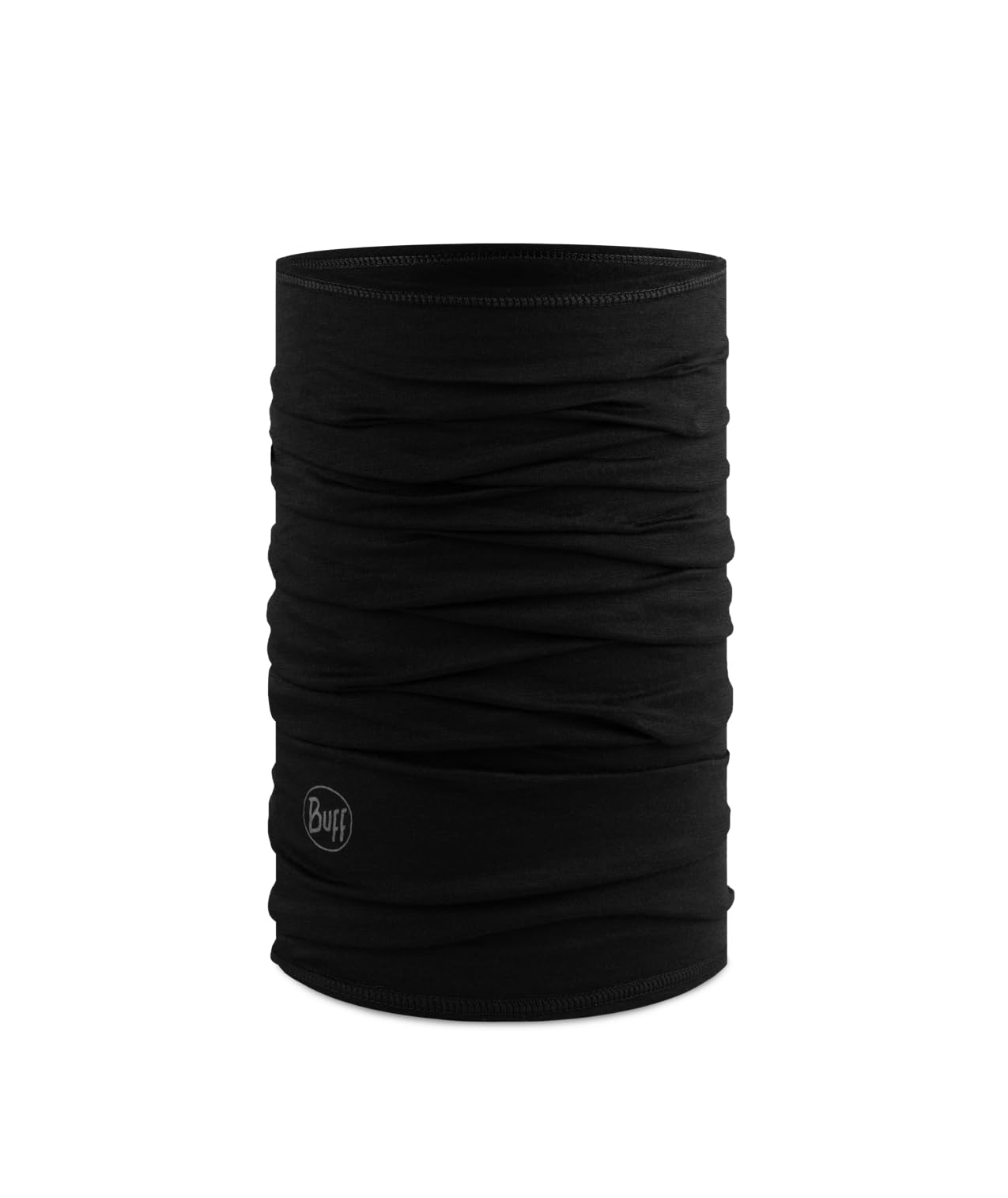
BUFF Lightweight Merino

BUFF Lightweight Merino

Cold-weather riding

Our Score 9.2/10
Check Price

Worth Noting

  • The most expensive gaiter in this guide
Warmth
Temperature regulating
Material
100% merino wool
Fabric Weight
Lightweight
Read the full review

Same tube, completely different animal. The merino Buff warms in a way the synthetic version does not: it holds heat against your neck without the clammy feel, and it keeps insulating after your breath has dampened it on a long climb. On a cold start with a descent waiting, that is the difference between a good ride and a shivering one.

Against the skin it is soft rather than prickly, and thin enough to sit under a jersey collar or a helmet without a bulge. It is the gaiter we point riders to when they ride through winter but still sweat on the climbs, because it handles both ends of a ride better than fleece does.

Two things to know before ordering. Buff sells a synthetic tube that looks nearly identical on a listing page, so read the fabric line rather than the photo. And the fit runs roomy: on a small frame the tube sits loose at the neck until you double it over.

Bottom line: Wool keeps working when it is damp, which is exactly what a cold, foggy start asks for. The pick for spring and fall rides that begin below comfortable.

4

SATINIOR High Vis 4-Pack

SATINIOR High Vis 4-Pack

Dawn commutes

Our Score 9.2/10
Check Price

Worth Noting

  • Cut close and snug on larger heads
Coverage
Neck and lower face
Pack Size
4 pieces
Visibility
High-vis
Read the full review

Most gaiters here are trying to be invisible. This one is trying to be seen: high-vis fabric with a reflective strip across the front, which is roughly the opposite of what a camo fishing gaiter does for you at six in the morning on a road with traffic.

The sun protection holds up too. It covers the neck and the lower face without getting hot, and the bright colors do not soak up heat the way a black tube does. It wicks reasonably well and breathes enough that a summer commute does not turn into a sweat trap.

Four of them in the pack is the practical part. One lives in the commuter bag, one in the desk drawer, one in the wash, and you stop thinking about laundry. Sizing is the catch: the cut is close, and a larger head feels the stretch across the forehead.

If your riding is a dark, fast road into work, the visibility is worth more than any fabric upgrade on this page. It is not the gaiter we take on a century, but on a commute it does a job the others cannot.

Bottom line: Bright, reflective, and cheap enough to keep one in every bag, this is the set for dawn commutes where being seen matters more than looking like a racer.

5

KGC Fleece 2-Pack

KGC Fleece 2-Pack

Winter spares

Our Score 9.2/10
Check Price

Worth Noting

  • No ear coverage or mesh panel
  • Runs loose over the face
Material
Fleece
Pack Size
2 pieces
Protection
Windproof
Read the full review

Fleece is the right answer for a lot of winter riding and the wrong answer for the rest. This pair sits on the warm side of that line: near-freezing mornings, a headwind, a slow commute. The fleece face is soft enough not to scratch, which matters when you keep it on for an hour.

It is warmer than it is thick. The knit blocks wind better than its weight suggests, and the length covers the neck and comes up over the chin without a gap at the collar. Below freezing, that is the part you notice.

It is not a shell and it is not shaped. There is no mesh panel and no ear coverage, so on the coldest mornings you still want a cap under the helmet. It also runs loose, which is fine at the neck and less convincing pulled up over the face.

As a two-pack it makes sense: one in the jacket you actually ride in, one in the wash. It is the pair we hand someone building a winter kit from scratch, not the single gaiter we point them to first.

Bottom line: A fleece two-pack that handles near-freezing rides and feels soft against the skin. Sensible as winter spares rather than a single best buy.

6

Finvizo Cooling Gaiter

Finvizo Cooling Gaiter

Spare-layer value

Our Score 9.0/10
Check Price

Worth Noting

  • Runs big on small heads
Fabric
Cooling, breathable
Department
Women's
Sun Protection
UV protection
Read the full review

Buy this as a set, not as a gaiter. What arrives is a stack of thin, stretchy tubes you can leave in the car, the pannier, and the desk drawer, so there is always one within reach when the sun comes out or the temperature drops on the way home.

The fabric is light enough to breathe through on a climb and rated for UV protection, and it keeps sun and road dust off your neck without much bulk. Nothing about it feels premium: the edges are raw-cut and the colors are basic. That is the trade for the quantity, and it is the kind of thing that disappears while you are wearing it, which is a compliment.

Precision is not the point. The tube runs big, and on a small head it sits loose enough that pulling it over your nose does not buy much; it is better at the neck than on the face. As a spare-layer purchase that is acceptable, and we still reach past it for the Buff when the ride matters.

Bottom line: A light multi-pack that covers the basics, sun, dust, and a little wind, without doing anything exceptional. Good as spares, not as your only gaiter.

7

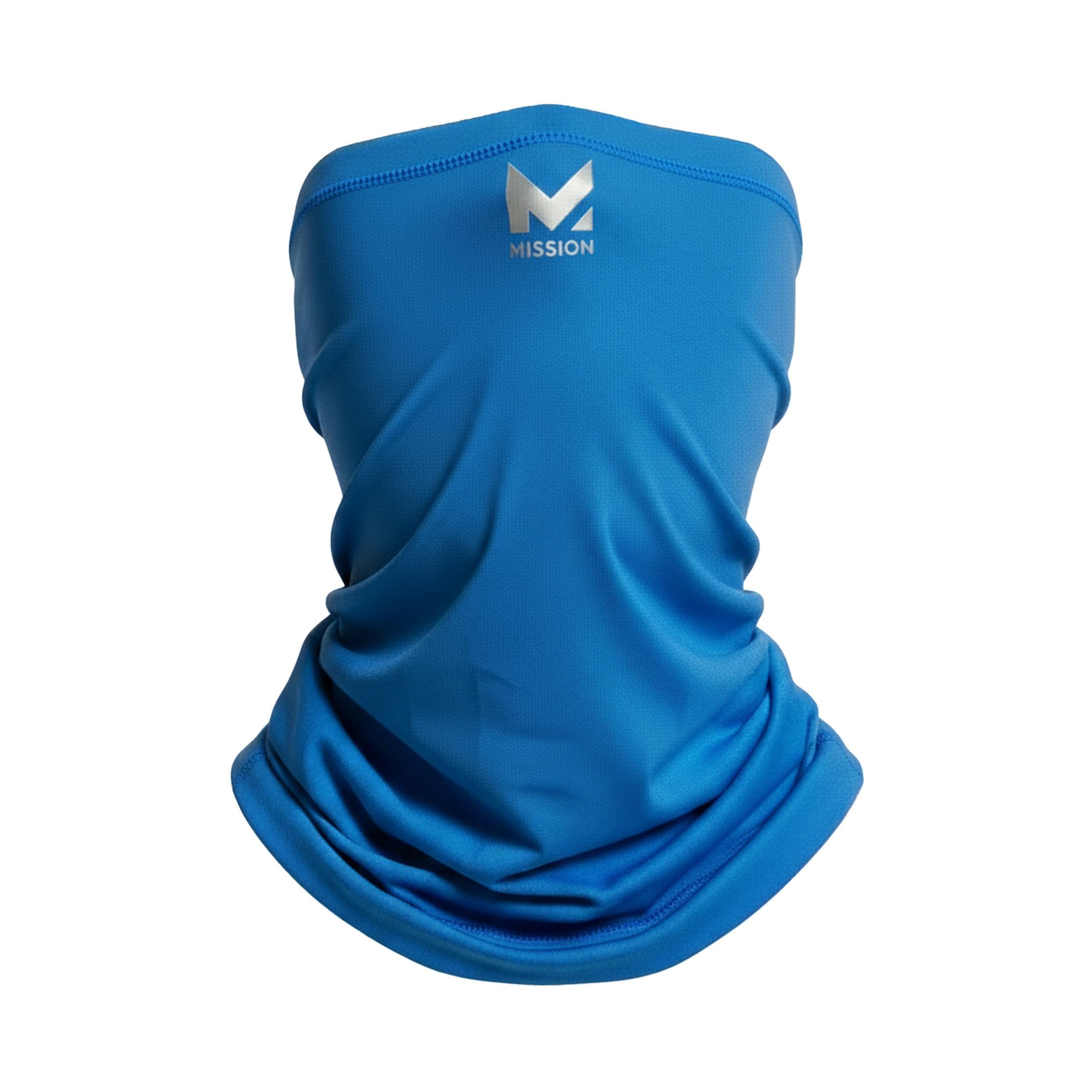
MISSION Multi-Use Gaiter

MISSION Multi-Use Gaiter

Hot-weather rides

Our Score 8.8/10
Check Price

Worth Noting

  • Hangs loose on smaller heads
Sizing
Unisex adult
Wear Styles
Multi-use
Sun Protection
UPF 50
Read the full review

The trick with any cooling gaiter is water, and this one is built to hold it. Soak the fabric, wring it once, and evaporation does the rest for an hour or so of a hot ride. A dry MISSION is just a gaiter; a wet one is the reason we pack it in August.

The effect on the bike is real. The fabric sits cool against your neck and stays put without clinging, and it is thin enough to breathe through when you pull it up. It carries a UPF 50 rating and runs long enough to bring over your ears when the sun is coming in from the side.

Fit is where it gives ground. The cut is generous, so on a smaller head it hangs rather than hugs, and pulled over the nose it needs sunglasses to hold it there. We still take it on the hottest rides of the year, because nothing else here cools like it, but as an everyday gaiter it loses to the Buff above.

Bottom line: Soak it, wring it out, and it keeps your neck cool through the worst of a July ride. Not the one to grab for a cold start.

8

Tough Headwear Fleece Gaiter

Tough Headwear Fleece Gaiter

Freezing commutes

Our Score 8.8/10
Check Price

Worth Noting

  • Runs large on smaller heads
  • Only useful in genuinely cold weather
Style
Half ski mask
Coverage
Neck, chin, ears
Material
Fleece
Read the full review

This is built for the morning you would otherwise skip. It is a fleece half-mask rather than a thin tube: it comes up over the ears, closes the gap at the back of the neck, and blocks wind in a way nothing else in this guide does.

Breathing through fleece sounds like a bad idea, and the panel over your mouth is what makes it work: a lighter knit than the fleece around it, so air moves through instead of the fabric going wet and cold against your face on a descent. Wind protection is where it earns its place. On an exposed commute straight into a headwind, this is the one we reach for.

The trade-off turns up when you stop moving. Pulled over your nose with glasses on, it fogs them at traffic lights and in the cafe queue, and the sizing runs big enough that ear coverage slips on a smaller head. Both are manageable: drop it below your chin when you are standing still, and pull the back hem down before you set off.

Bottom line: Fleece, wind-blocking, and shaped to cover your ears, this is the one for sub-freezing commutes. Overkill for anything much above a hard frost.

How We Tested the Best Cycling Neck Gaiters

We started by gathering every gaiter we could find that was genuinely built for cycling rather than skiing or construction work, then narrowed the field by fabric content, seam construction, claimed temperature range, and price. Anything that depended on a bulky hook-and-loop closure, or that only made sense below freezing, got cut before it ever shipped. Fourteen made the final list, and each one went into rotation for four months.

That rotation was real riding: 6 a.m. commutes in the low 30s, weekend 40-milers with long shaded descents, trainer sessions where I wanted something thin under my chin, and a handful of warm afternoons that turned into a cooling test whether I planned one or not. I wore every gaiter under a helmet with sunglasses and noted whether it crept up over my ears, bunched at the collar, or stayed exactly where I put it.

Fogging got its own protocol. At stoplights and on climbs I pulled each gaiter over my nose and mouth, breathed hard, and watched the lenses — some fogged instantly and stayed that way, others cleared within a few pedal strokes. I also washed each one five times and checked for pilling at the chin, hems that had gone slack, and seams that had started to twist against the skin.

Fit and value came last. I measured each gaiter flat and stretched, rode a full loop to see whether it held position or needed constant tugging, and weighed what each one cost against how many seasons the fabric looked likely to survive.

How to Choose Cycling Neck Gaiters

Match the fabric to the season you ride in

Thin synthetic tubes are for heat: they cover the neck against sun, breathe on a climb, and dry before the coffee stop ends. Merino sits in the middle, warm without bulk and still comfortable when you sweat. Fleece belongs at the cold end, and it turns miserable the moment the temperature climbs. If you ride year-round, we prefer two good gaiters to one compromise, a UPF-rated tube for summer and a wool or fleece one for winter. A single do-everything gaiter usually ends up too hot in July and too thin in January.

Treat sun protection as a rating, not a fabric

Sunburn on a bike lands in predictable places: the back of the neck, the ears, and the strip between a jersey collar and a helmet. A UPF rating is the only reliable sign that a fabric blocks UV, and thinness tells you nothing on its own, because a sheer tube can be rated higher than a thick dark one. Check the label, then check the coverage. A longer tube you can pull over your ears is worth more than a higher number on a short one.

Fit is what keeps it on your face

One size fits all is a marketing line. A loose tube slides down over your nose the moment you start breathing hard, and a tight one leaves a red line across your forehead under the helmet. Measure your head where a cap would sit before you order, and if you fall between sizes, favour the fabric with more stretch. Two tricks beat any size chart: tuck the top edge under your sunglasses, and seat the back hem below the helmet's retention dial rather than over it.

Breathability, glasses, and the fog problem

Any fabric over your mouth collects warm, wet air, and if you wear glasses that air ends up on your lenses the moment you slow down. The fix is not a thicker gaiter. It is a lighter panel over the nose and mouth, or simply pulling the fabric below your chin on a long climb or at a red light. If you need full face coverage in the cold and you wear prescription glasses, look for a design with a thinner knit across the mouth and expect to adjust it through the ride.

Buy for the bag, not just the bike

Gaiters get lost, left damp in a pannier, and washed far less often than a jersey. If you commute, a multi-pack earns its place: one in the bag, one in the wash, one in the drawer. Care matters too. Wool wants cool water, a mild detergent, and a flat dry away from heat, and fleece should stay out of a hot dryer. Two gaiters you actually wash beat five that stay at the bottom of a bag.

Frequently Asked Questions

Final Verdict

Our pick for most riders is the BUFF Original EcoStretch. It is the one tube that handles a summer commute, a windy descent, and a cold start with nothing more than a change in how high you pull it, and the seamless knit is the reason it stays comfortable doing all three.

If most of your riding happens below freezing, the merino Buff does more in the same shape for more money. If sun protection on a tight budget is the whole brief, the BASSDASH covers the same neck for far less and weighs almost nothing in a pocket.