Bikes

Best Folding Bikes of 2026

A folding bike solves a very specific problem: it turns a real ride into something you can carry up a stairwell, tuck under a desk, or drop into a trunk without wrestling a rack. The mechanism is simple — a hinge mid-frame and a folding stem — and 30-odd pounds of bicycle becomes a package you can take on a train. What separates a bike you'll ride for years from one that lives in a closet is how that hinge feels on the two-hundredth close, and whether the thing still rides like a bicycle once you're on it.

I've learned the hard way that folded size gets all the attention while weight quietly deserves more of it — a bike that's awkward to carry is a bike you leave at home. Our team spent eight months with eight folders, riding them to work, up hills, over chipped asphalt, and folding them on platforms and in narrow hallways. The picks below span budgets, body sizes, and storage situations, so start with how you'll actually use yours rather than what looks best in the photos.

1

kaiwrxin 26-Inch Cruiser

Top Pick
kaiwrxin 26-Inch Cruiser

Comfortable cruising

Our Score 9.2/10
Check Price

Worth Noting

  • Vague assembly instructions
  • Folded package is roughly a wheel across
Gears
7-speed
Wheel Size
26 in
Stated Weight
30 lb
Rider Weight Limit
330 lb
Read the full review

Twenty-six-inch wheels are the whole story. They make this the most comfortable bike in the group to actually pedal — rough asphalt, gravel shoulders and long beach-path miles all feel calmer under a bigger wheel. Thirty pounds and a 330-pound rider limit round out the case: this is the one for a heavier rider who wants a full-size feel rather than a scaled-down folder.

The equipment is generous for the money: a seven-speed drivetrain, a front V-brake paired with a rear disc, a front basket, a rear rack and an adjustable seat. On paper it is the best-equipped bike here after the Outroad, and in use the rack and basket turn it into a genuine errand bike rather than a weekend toy.

Where it earns its place is the errand loop. The basket up front gets used more than we expected, the rack takes a crate, and 30 pounds lifts into a hatchback without a grunt. The seatpost also rises higher than we anticipated, so the one-size frame reaches riders who usually get left out.

Bottom line: The pick for heavier riders who want a full-size ride: 330 pounds of capacity, a calm 26-inch roll, and a fold you use for the car, not the closet.
2

ZiZZO Campo 20

ZiZZO Campo 20

Everyday commuting

Our Score 8.8/10
Check Price

Worth Noting

  • No rack, fenders or lights in the box
  • Steel frame adds pounds next to the aluminum Dahon
Gears
7-speed grip shift
Wheel Size
20 in
Folded Size
27 in H x 31 in L x 12.5 in W
Stated Weight
28 lb
Read the full review

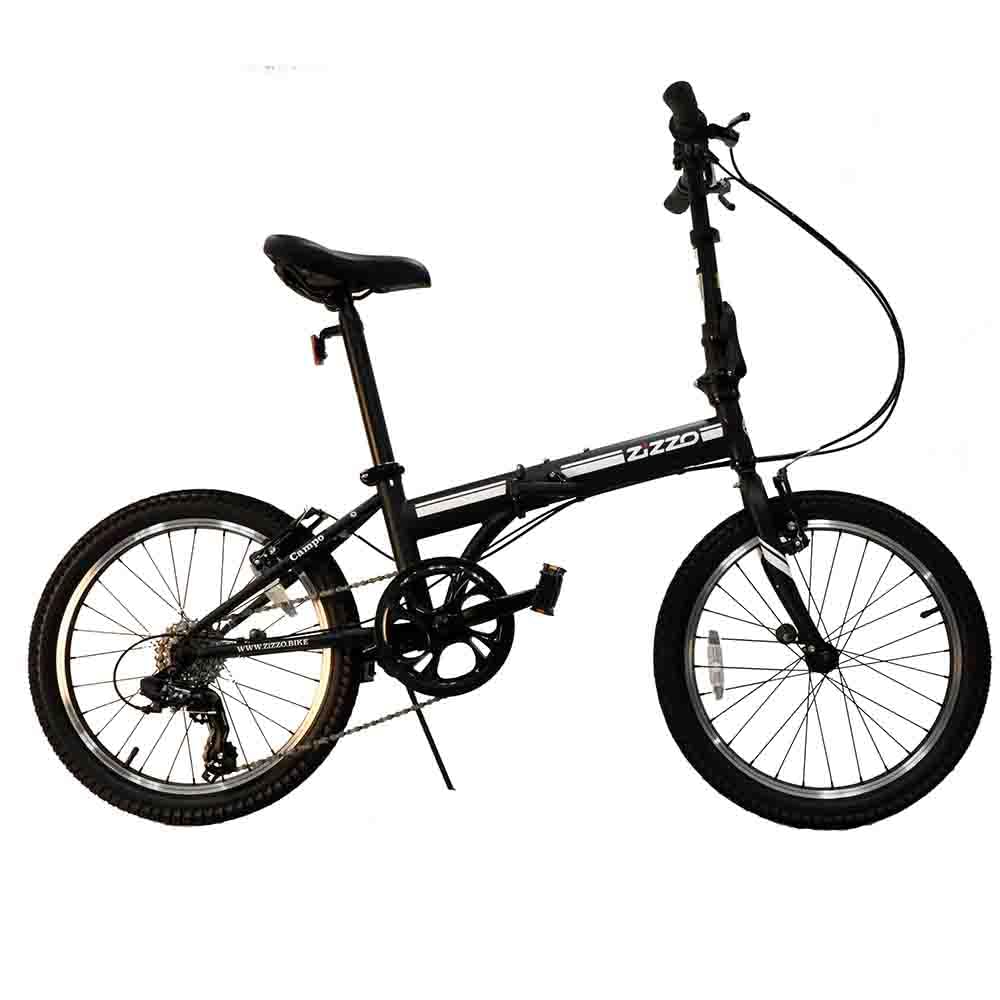
Twenty seconds is roughly what it takes to get the Campo from riding to sitting in a trunk: release the frame latch, drop the seatpost, fold the pedals in, and a magnet catcher holds the two halves together while you lift. We like that the folded bike stays folded, because carrying it one-handed across a parking lot is the step where most folders embarrass themselves.

For most people shopping this category, this is the bike we point to first. The 20-inch wheels and 1.95-inch tires take cracked pavement and curb cuts in stride, the seven-speed grip shifter has enough range for a hilly commute, and the aluminum stem and seatpost adjust far enough that riders from about 4 feet 11 inches upward fit comfortably. Assembly was handlebars, pedals and seat height — nothing that needed a shop.

The 240-pound rider limit is the compromise: the Schwinn Loop and the 26-inch cruiser both carry more, so heavier riders should start there. What we keep coming back to is how little space it takes up in real life. Two of these fit side by side behind the back seat of a mid-size SUV, which is the sort of thing that decides whether a weekend ride actually happens.

Bottom line: Our default folding bike: fast to fold, smooth on city pavement, and light enough at 28 pounds to lift into a trunk without a wrestling match.

3

Schwinn Loop

Schwinn Loop

Tall riders

Our Score 8.4/10
Check Price

Worth Noting

  • 33.2 lb makes the lift into a trunk a two-hand job
  • Handlebar height is fixed
Rider Fit
4 ft 4 in to 6 ft 4 in
Wheel Size
20 in
Stated Weight
33.2 lb
Rider Weight Limit
300 lb
Read the full review

Schwinn builds the Loop around a fit range of 4 feet 4 inches to 6 feet 4 inches and a 300-pound rider limit, and those two numbers are the reason it's here: no other 20-inch folder in this group covers as many riders. Share one bike between a tall adult and a young teenager and it simply works.

We like the step-through aluminum frame for errands. You can swing a leg over with a bag already loaded on the rear carrier, and the detachable nylon bag that comes with the rack swallows a grocery run. The seven-speed twist shifter and linear-pull brakes are plain, familiar parts, and the bike goes together in a few minutes.

Two things ask for attention. The fold latch can work loose while the bike is being carried, so loop a strap around the folded frame before you lift it into a trunk, and plan on adjusting the brakes and derailleur in the first week or two as the cables settle. Do both and the Loop is a great deal of bicycle for the money.

Bottom line: The bike we hand to tall and heavier riders: a 6-foot-4 fit range, a 300-pound limit, and a step-through frame that's easy to mount with a loaded rack.

4

Dahon VYBE D7

Dahon VYBE D7

Stairs and apartments

Our Score 8.2/10
Check Price

Worth Noting

  • Premium price against the ZiZZO and Schwinn
  • Replacement parts are hard to source
Gears
7-speed Shimano
Wheel Size
20 in
Folded Size
31.5 x 13.6 x 26.18 in (L x D x H)
Stated Weight
11.98 kg (26.4 lb)
Read the full review

At 11.98 kilograms — about 26 pounds — the VYBE D7 is the lightest bike here, and that number is the whole argument. This is the folder we reach for when the trip involves stairs: three flights, a narrow hallway, and then a bike that rides like a bicycle once you're through the door.

The aluminum frame explains the weight, and the Shimano seven-speed with a trigger shifter clicks through its gears more precisely than the twist grips on the steel folders here — we prefer it on a rolling commute with a few short climbs. Folded, it measures 31.5 by 13.6 by 26.18 inches, and a pump comes in the box, which is a small thing until the morning you need one.

Two things to know before you commit. The hinge is stiff when the bike is new, and it takes a week of folding before it snaps open easily; work it a few times before you decide it's a problem. The ride is also firmer than the wide-tired Campo's, because the tires are narrower, so you feel more of a cracked bike lane through the bars.

Bottom line: Our pick when the bike has to go upstairs: about 26 pounds, an aluminum frame and precise Shimano shifting.

5

AVASTA Quartet 20

AVASTA Quartet 20

First-time buyers

Our Score 8.2/10
Check Price

Worth Noting

  • 180 lb rider limit is the lowest here
Gears
7-speed
Wheel Size
20 in
Rider Weight Limit
180 lb
Included Accessories
Basket, bell, rack, fenders, kickstand
Read the full review

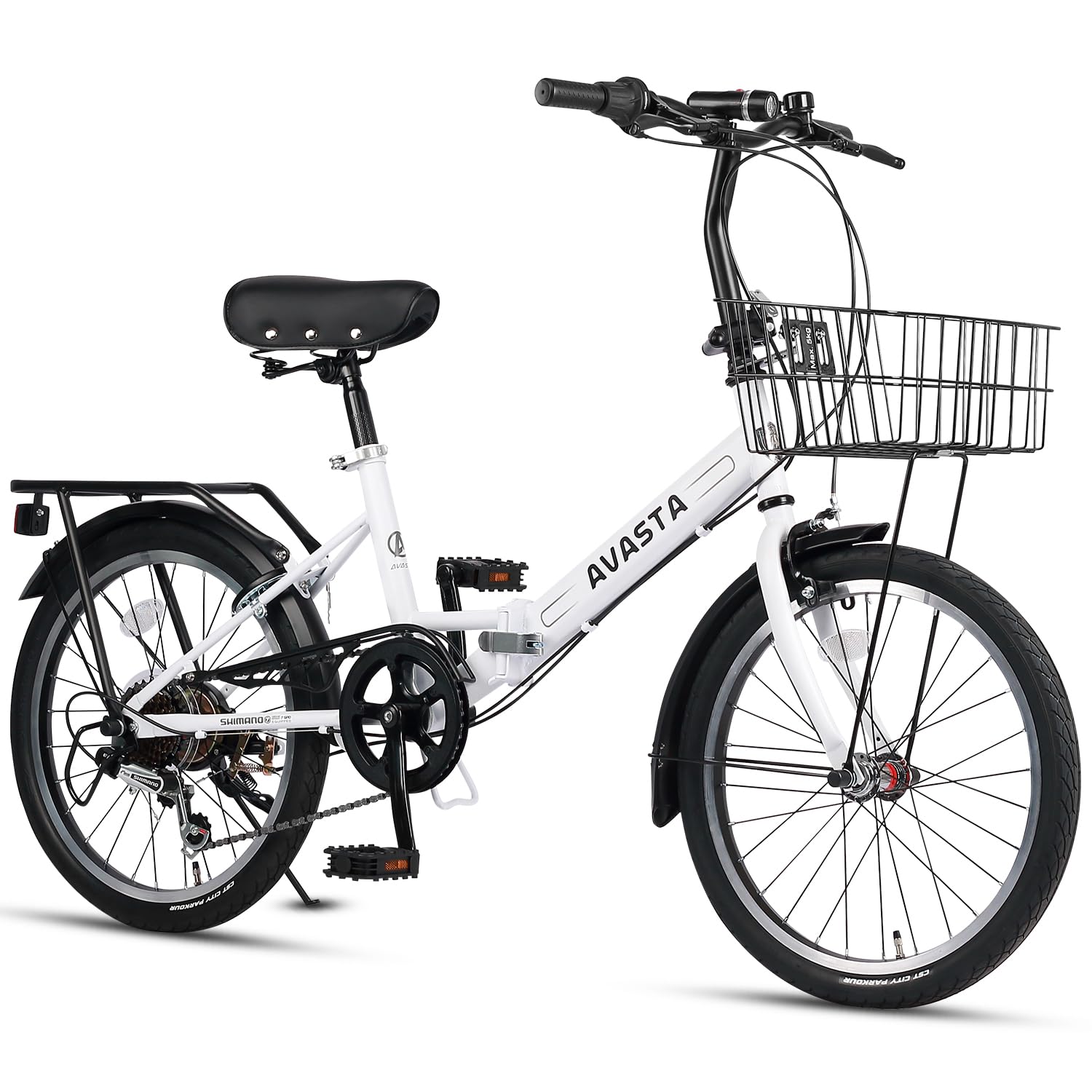
The Quartet is the least expensive way here to get a folder that arrives ready to commute: rear rack, front basket, fenders, bell and kickstand all in the box, with the seven-speed gears and dual C-brakes set at the factory rather than in your living room. Two years of manufacturer warranty backs it, which is the longest stated coverage in this group and the reason we're comfortable sending a first-time buyer toward a brand they haven't heard of.

The catch is capacity. A 180-pound rider limit is the lowest here by a wide margin and rules the Quartet out for plenty of adults who would otherwise jump at it. There's also no published folded size or weight, so check your trunk or closet against a 20-inch folder's usual footprint — the Campo's 31 by 12.5 by 27 inches is a fair stand-in — and if you're anywhere near 180 pounds, put the difference toward the ZiZZO instead.

Bottom line: The budget pick that arrives with the rack, basket, fenders and bell already on, plus a two-year warranty — as long as you're under 180 pounds.

6

Outroad 26 Folding Mountain Bike

Outroad 26 Folding Mountain Bike

Trail riding

Our Score 8.2/10
Check Price

Worth Noting

  • 40 lb is the heaviest bike here
  • No stated warranty
Gears
21-speed
Rider Fit
5 ft 3 in to 6 ft 3 in
Wheel Size
26 in
Stated Weight
40 lb
Read the full review

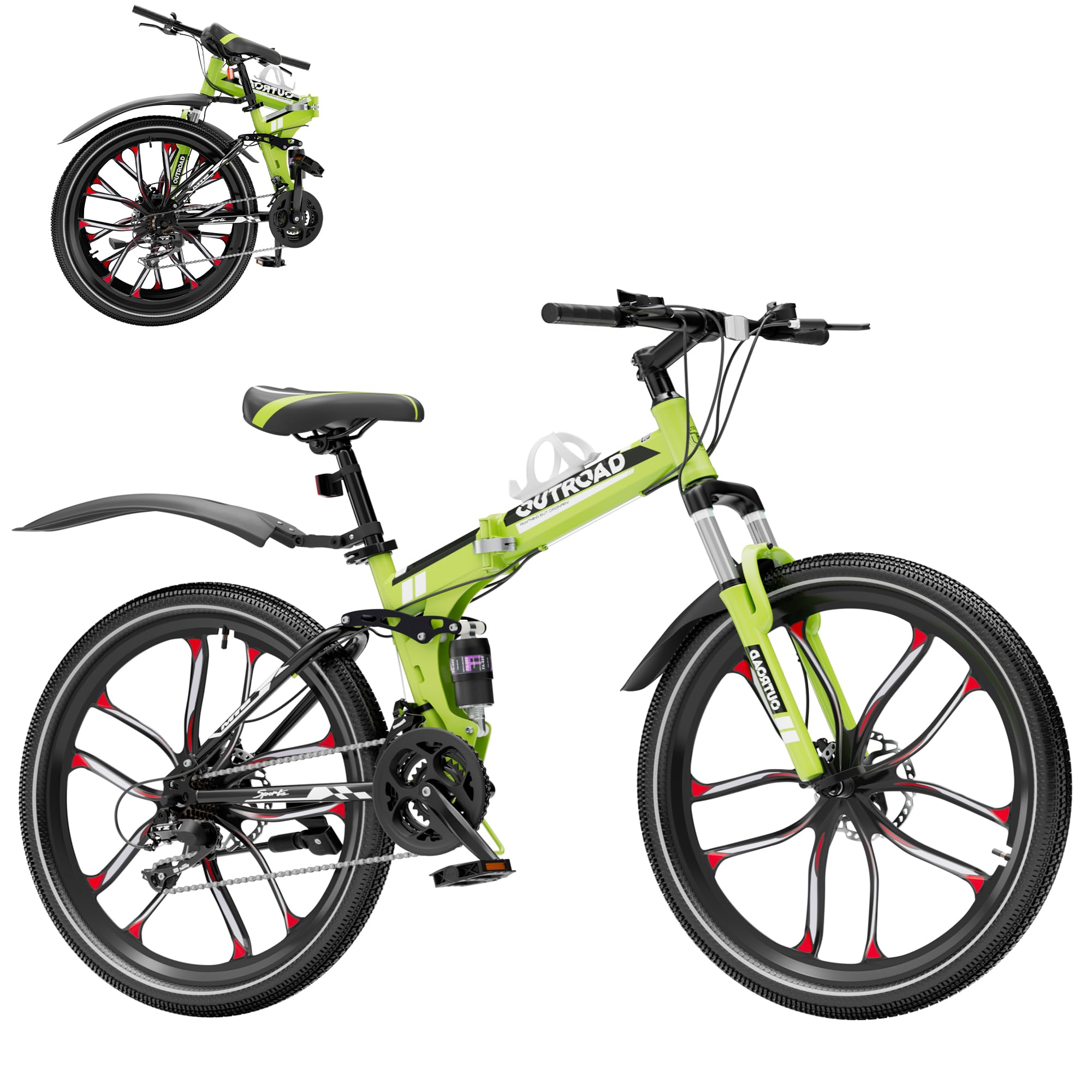
The Outroad reads like a mountain bike on paper — 26-inch wheels, 21 speeds, dual suspension, disc brakes front and rear — and then it folds. The geometry fits riders from 5 feet 3 inches to 6 feet 3 inches with up to 300 pounds aboard, and the dual suspension does what it says on gravel and root-heavy paths.

Assembly is honest about itself: the listing tells you there's about 5 percent left to do, and the tools come in the box. Give the folding latch a hard look before the first ride and check the rotors for rubbing, since a folded bike spends its shipping life pressed against its own hardware.

Our take: treat this as a mountain bike that happens to fold rather than a folder you carry. Twenty-one gears and suspension earn their keep on gravel and trails, the disc brakes are the most capable stopping setup here, and the whole thing disappears into a trunk. What it isn't is a bike you'll fold to get on a train.

Bottom line: Buy it as a mountain bike that stows: 21 gears, dual suspension and disc brakes in a package that still fits a trunk, provided you never plan to carry it far.

How We Tested the Best Folding Bikes

We started by gathering every folder we could find that genuinely ships in the U.S., sorting them by wheel size, folded dimensions, claimed weight, rider height range, and price, then cut the list to eight bikes that represent the real spread — small-wheel commuters, larger-wheel folders, and a couple of budget options. Assembly came first: I timed the unboxing, noted which parts needed tools versus which clicked into place, and checked whether the manual matched what the bike actually required.

Each bike then lived with us for eight months, used the way a folder gets used. I commuted on them, carried them up three flights of stairs, and folded and unfolded each one on a train platform and in a cramped hallway, timing both directions — a 20-second fold is fine in a doorway and miserable in a crowd. Every bike ran the same loop: a hill, a stretch of chipped asphalt, and a wet-morning brake check where I noted stopping distance and whether the pads grabbed evenly or howled.

We weighed each bike on a scale instead of trusting the spec sheet and measured the folded footprint against a closet door and a car trunk. Riders from 5-foot-2 to 6-foot-3 took turns to see how much the seatpost and stem actually adjust. Ride quality came down to whether the frame felt stiff or flexy under hard pedaling, whether small wheels turned cracks into curbs, and whether the hinge stayed quiet after months of folding. Value was the final question: what each bike costs against what it kept delivering once the novelty wore off.

How to Choose Folding Bikes

Measure the Folded Bike, Not the Wheel

Listings lead with wheel size, which tells you almost nothing about storage. A 20-inch folder typically lands around 31 by 13 by 27 inches once folded — roughly the footprint of a large suitcase standing upright. Check that against the closet, the under-desk gap or the trunk lip before you fall for a paint job.

A 26-inch folder folds too, but the package stays about a wheel across, so it's a car bike rather than a closet bike. If the plan is to fold it daily in a small apartment, stay with 20-inch wheels and accept a slightly firmer ride.

Weight Decides How Often You Fold It

The difference between 26 pounds and 40 pounds is the difference between carrying a bike up three flights and deciding to lock it outside instead. If the bike has to go upstairs, onto a roof rack or onto a train, prioritize an aluminum frame; that's most of the reason the Dahon weighs what it does.

If it lives in a garage and folds twice a month, spend the weight budget elsewhere — bigger wheels, suspension, a rack. A heavy folder that never leaves the ground floor is a perfectly good bike.

Match the Fit Before Anything Else

Height coverage varies more than most shoppers expect: one folder here suits 4-foot-4 to 6-foot-4 riders, another starts at 5 feet 3 inches. But the number to check first is the rider weight limit, because it's the one thing you can't adjust. The spread in this group runs from 180 to 330 pounds.

After that, look at whether the handlebar height moves. An adjustable stem buys more comfort on a long ride than an extra gear does, and a fixed bar is the most common reason a rider ends up with sore wrists.

Gears, Brakes and What's Already On the Bike

Seven speeds cover a rolling city commute; 21 speeds and a wide-range derailleur belong on trails. Linear-pull rim brakes are simple and easy to adjust, while disc brakes hold up better in the wet and are worth having on a 40-pound bike.

Then add up what's missing. A rack, fenders and a basket bought separately can cost more than the step up to a better-equipped model, so a folder that includes them is often the smarter purchase — provided the weight limit still suits you.

Frequently Asked Questions

Final Verdict

For most riders, the ZiZZO Campo is the folding bike to buy. It folds in about 20 seconds, rides smoothly on ordinary pavement, and its 28 pounds lift into a trunk without a wrestling match — the three things that decide whether a folder gets used or resented.

One requirement changes the answer. If you're over 240 pounds, or tall enough that most 20-inch folders feel cramped, the Schwinn Loop's 300-pound limit and 6-foot-4 fit range make it the better bike. If the bike lives upstairs, the Dahon VYBE D7's 26 pounds are worth the premium.