Components

Best Gravel Bike Saddles of 2026

A gravel saddle has two jobs that fight each other. It has to soak up washboard chatter for hours, and it has to stay out of the way the moment you stand up to power over a loose climb. Get it wrong and you spend the whole ride negotiating — shifting back, standing to relieve pressure that shouldn't be there, sitting sideways just to finish a long day. The fix isn't more cushion; it's the right shape, width, and firmness under your sit bones.

Here's what first-time buyers get wrong: softer is not kinder. Padding that's too thick compresses under load and puts pressure exactly where you don't want it, which is why plenty of riders end up happier on a firmer saddle with a real cutout. My team and I spent eight months riding 12 gravel saddles — budget nylon shells through carbon-railed splurges — on farm roads, commutes, and loaded overnighters, and the ones that held up had the same quality: they disappeared under us. The picks below span the range, so start with your sit-bone width and go from there.

1

WTB Volt

Top Pick
WTB Volt

Dialing in fit

Our Score 9.4/10
Check Price

Worth Noting

  • Shell reads smaller than the stated width
Weight
11.1 oz
Widths
Narrow, medium, wide
Padding
Medium-thickness DNAx foam
Pressure Relief
Center cutout and Love Channel
Read the full review

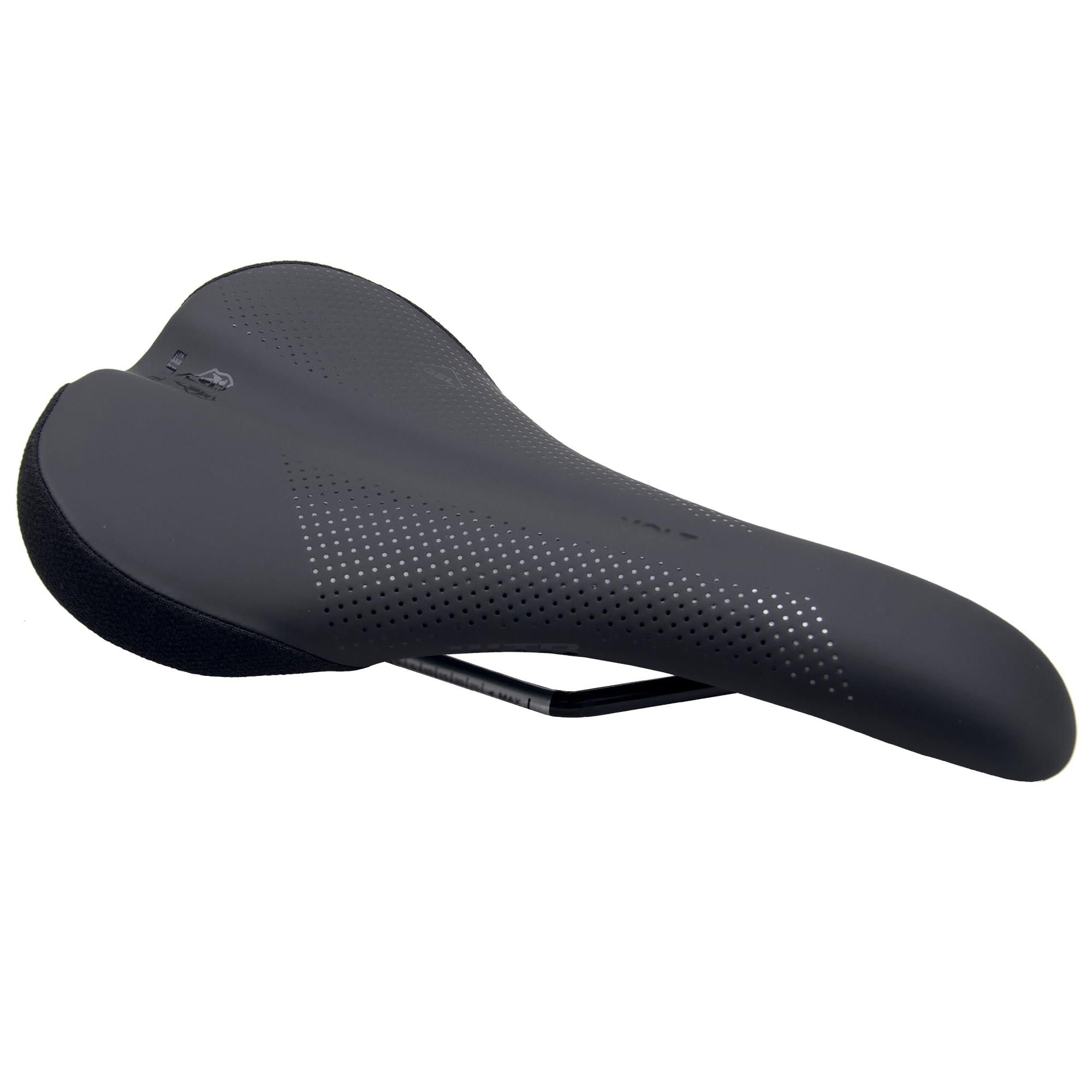
Three widths — narrow, medium and wide — is why the Volt sits near the top of our list for anyone buying a gravel saddle sight unseen. Most saddles give you one shape and hope; this one lets you match the shell to a sit-bone measurement, and it does it for a fraction of what the premium picks here cost. At 315 g it isn't a weight-weenie part, but nothing about it feels cheap.

The shape cradles rather than props you up. Medium DNAx padding and a contoured profile hold the pelvis steady, the center cutout and the love channel give soft tissue somewhere to go, and the microfiber cover has a slight grip to it — noticeable in baggies, less so in a chamois — which keeps you from sliding forward on loose, steep climbs.

The padding is genuinely medium, not plush: riders chasing a soft platform find a firm one, and the shell looks smaller in person than the width numbers suggest. Measure your sit bones instead of guessing between sizes. The Volt rewards a correct fit more than any other saddle here, and it punishes a lazy one about as much.

Bottom line: Buy the Volt if fit is your worry — three widths and a real cutout, for a fraction of what the premium picks cost.

2

Brooks B17

Brooks B17

Classic leather touring

Our Score 9.4/10
Check Price

Worth Noting

  • Needs conditioning to stay supple
  • Slippery under a chamois when new
Length
275 mm
Weight
1.17 lb
Material
Full-grain leather over steel rails
Rider Weight Limit
330.7 lb
Read the full review

The B17's reputation arrives before the saddle does: a few hundred miles, a tin of Proofide, and a hammock of leather that eventually takes your shape. That isn't marketing — it's the actual transaction, and it's why this is the one saddle here you're still breaking in after a month.

What you get for the wait is a full-grain leather top suspended between steel rails, 275 mm long, with a 150 kg rider weight limit — the highest in this guide. The leather spreads load across the whole shell rather than concentrating it on two contact patches, which is why the shape works for riders who never got along with a padded saddle.

We like it most for dry-climate touring and for anyone who wants to buy once. Gravel in the wet is the harder case: leather takes on water, and a soaked saddle that dries without care goes stiff, so a cover or a rear mudguard earns its place on a wet-climate bike. The rest of the time it does something no synthetic saddle here can — it keeps adapting.

Two practical notes. The tension bolt at the nose is what takes up slack as the leather stretches over the years, so treat it gently rather than cranking on it. And check your bag: the hammock rear isn't shaped like a modern saddle's, so some under-seat bags sit awkwardly on it.

Bottom line: Choose the B17 if you want one leather saddle for a decade of dry-weather touring and don't mind a few hundred miles of break-in.

3

Brooks Cambium C17 Carved

Brooks Cambium C17 Carved

Wet-weather gravel

Our Score 9.2/10
Check Price

Worth Noting

  • Firm top with no padding layer underneath
Cover
Waterproof vulcanized rubber and organic cotton canvas
Weight
15.9 oz
Pressure Relief
Carved center opening
Rider Weight Limit
220.5 lb
Read the full review

Vulcanized rubber stretched over organic cotton canvas is the whole idea here, and it's why this is the saddle we leave on the mixed-surface bike. There's no leather to feed, no cover to dry out in the hallway after a wet ride, and no break-in to schedule — it goes on the seatpost and behaves the same in November sleet as it does in July.

The top has real give to it. It flexes under a pedal stroke instead of sitting there like a plank, which is the difference between a firm saddle and a hard one, and the carved opening does its work without the dramatic hole you see on the race saddles. We also appreciated that the fiberglass back plate has molded loops for a saddle bag: a small thing that stops mattering only if you never carry tools and a shell on a bike with no rack.

Two numbers decide whether it suits you. At 450 g it's the heaviest saddle in this guide, and its 100 kg rider weight limit is the lowest of our picks — fine on a bare gravel bike, tight once you add a week of bikepacking kit. The B17's 150 kg ceiling covers loaded touring better; for day rides and credit-card overnights, neither figure gets in the way.

What settles it for us is the maintenance math. Every other saddle here eventually wants something — conditioner, a cover, a check on the tension — and this one wants a wipe. Bolt it on, ride it through the mud, and put the bike away.

Bottom line: Our pick for most gravel riders: the waterproof top needs no upkeep, the carve relieves pressure, and it rides the same wet or dry.

4

Ergon SM Pro

Ergon SM Pro

Bikepacking and touring

Our Score 9.2/10
Check Price

Worth Noting

  • Composite shell can fail after a hard impact
Weight
14.1 oz
Padding
Orthopedic AirCell foam with OrthoCell pads
Shell And Rails
Nylon composite shell, TiNox rails
Rider Weight Limit
220 lb
Read the full review

Ergon labels this one for gravel and bikepacking bikes, and the shape follows through. A wide, flared rear gives you something to brace against when the surface turns to washboard, and the nose stays out of the way when you slide forward to climb. At 0.4 kg with TiNox rails, it's built for load-carrying days rather than race day.

What we came to appreciate is the detail work. The side flanks are finished to reduce friction, so your inner thigh slides rather than chafes over a long day, and the orthopedic AirCell foam with OrthoCell pads is shaped to support instead of squish. It's the most deliberately designed saddle in this guide, and the one we hand to riders planning multi-day routes.

It's firm — the padding supports, it doesn't cushion — which suits a rider with a dialed position and punishes one who's still moving the saddle around looking for it. Worth knowing before you take one down a rock garden: the carbon-reinforced nylon shell is the part to watch after a hard knock, because a heavy landing can flex it enough to pop a rail out of the back.

Bottom line: We recommend the SM Pro for loaded, multi-day gravel: a wide flared rear, friction-free flanks, and enough support for hours in one position.

5

Charge Spoon

Charge Spoon

Budget gravel builds

Our Score 9.2/10
Check Price

Worth Noting

  • Narrow shape leaves wide sit bones unsupported
  • Faux leather looks its price up close
Cover
Faux leather with contrast stitching
Rails
Chromoly
Padding
High-density foam
Pressure Relief
Center channel in the foam
Read the full review

The Spoon is the least expensive saddle here, and it's the one we point at riders who aren't ready to spend real money on an experiment. It's been around long enough to have a following among commuters, cyclocross racers and mountain bikers, and the shape is the reason.

High-density foam over chromoly rails, a slim profile, a shallow pressure-relief channel and faux leather with contrast stitching — that's the whole recipe. The foam is the interesting part: firm and balanced between hard and soft rather than erring toward plush, and it needs no breaking in. The first ride feels like the fifth.

We think it's the smartest cheap purchase here, and not for the reason you'd guess — the shape works across road, cross and mixed-surface riding without feeling like a downgrade. What it won't do is forgive the wrong fit. The profile is narrow, and if your sit bones sit wide, you feel the edges rather than the platform.

The cover gives away that you didn't spend much; the faux leather is convincing at arm's length and less so up close. It wipes clean, though, and the stitching is tidy. For a second bike, a winter build or a first foray into gravel, that's plenty.

Bottom line: Our budget recommendation: firm, slim and shaped well enough that nobody will guess it's the cheapest saddle in this guide.

6

Selle Italia SLR TM Boost Superflow

Selle Italia SLR TM Boost Superflow

Light, fast gravel

Our Score 9.0/10
Check Price

Worth Noting

  • Minimal padding over a firm, flat shell
  • Rail-to-shell junction is where wear starts
Nose
Short nose for thigh clearance
Rails
Tubular manganese
Weight
7.69 oz
Pressure Relief
Superflow cutout
Read the full review

At 218 g this is the lightest saddle in the guide — around a third less than the WTB Volt and well under half the Cambium's weight. On a gravel bike that number matters less than it does on the road, but it says something about how the saddle is built: thin shell, short nose, tubular manganese rails, nothing spare.

The Superflow cutout is the headline feature. It's a large opening through the middle of the shell, and it does what a cutout is meant to do — take pressure off soft tissue when you're rolled forward on the drops or grinding out a long false flat. The short nose clears your thighs when you pedal hard, which matters more on dirt than it sounds, because gravel keeps you shifting around.

Sizing is the thing to sort out before you order. This listing leans on Selle Italia's ID Match sizing rather than a simple width chart, so compare it against a saddle you already know works rather than grabbing the only size on the page.

For gravel racing and fast mixed-surface days, this is the one we reach for when weight and thigh clearance matter more than cushioning. It rewards a rider who already knows their position and has the fit dialed; if you're still hunting for a shape that works, start with the Volt's width options instead.

Bottom line: The lightest saddle we tested here, and the one for gravel racers who already know their position and want thigh clearance over cushioning.

7

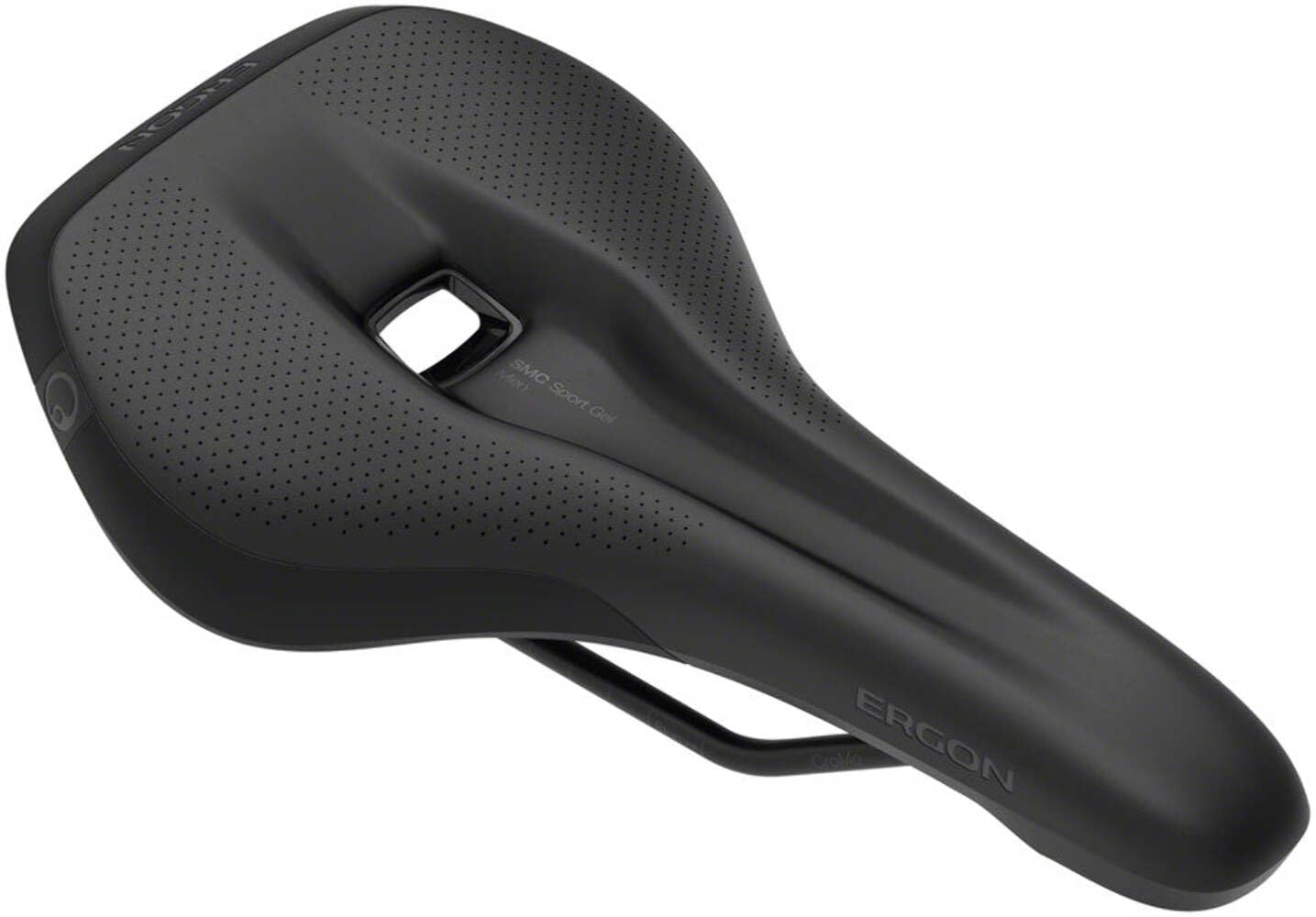
Ergon SMC Sport Gel Women's

Ergon SMC Sport Gel Women's

Women's fit

Our Score 9.0/10
Check Price

Worth Noting

  • Plastic base can crack in a simple tip-over
Cover
Microfiber
Padding
Orthopedic foam with thin gel pads
Shell And Rails
Nylon composite shell, CroMo rails
Rider Weight Limit
265 lb
Read the full review

This is the women's version of Ergon's comfort-oriented mountain saddle, and it's here for riders who've been making do with a perch that never quite worked. One thing to check before you order: the bullet points on this listing still read as the men's version, so go by the title and the model number rather than the copy.

The build is orthopedic comfort foam with thin gel pads under a microfiber cover, on a nylon composite shell with a 265 lb rider weight limit. The foam is shaped rather than squishy — closer to a lightly padded bar stool than a cushion — which is the right kind of firm for long days in one position.

What it gives you is room. The rear is broad enough to spread weight off the sit bones, and there's enough length to shift fore and aft when a climb pitches up. Of the comfort-oriented saddles here, this is the one that stayed pleasant longest without a chamois.

The caveat is the base. It's a plastic frame under that foam, and a simple tip-over onto a hard surface is enough to crack it — worth knowing if your bike lives in a shed or gets laid down at café stops. Treat it like a component rather than a consumable and it's a lot of saddle for the money.

Bottom line: We point riders who've struggled with men's saddles here: a women's-specific shape with room to move, at a mid-range price.

8

Fizik Tempo Argo R5

Fizik Tempo Argo R5

Endurance road-gravel

Our Score 8.6/10
Check Price

Worth Noting

  • Flat, firm platform limits position changes
Nose
Short-nose design
Shell
Carbon-reinforced nylon with Wingflex edges
Width
150 mm
Weight
8.5 oz
Read the full review

A short nose changes where you sit: with less saddle out front, the broad rear becomes the platform and the nose becomes something you steer with your thighs rather than perch on. The Tempo Argo R5 is built entirely around that idea, and for gravel riders who stay seated and turn a steady gear, it's a shape that makes sense.

The details back it up. Wingflex edges flex where your inner leg passes, so the shell gives instead of digging in, and the Type 2 foam compresses progressively — soft at the surface, firmer as you push into it. The 150 mm width suits broader sit bones, and at 241 g with a carbon-reinforced nylon shell it's light without feeling fragile.

Two things to accept. It's flat and firm with very little room to move around, so riders who shift position constantly on long dirt sections notice the constraint. A short nose also concentrates stress at the front of the shell, which is the area to inspect on a hard-used saddle. Riders with a settled position get a clean, quiet platform; fidgeters should look at the Volt or the Cambium instead.

Bottom line: For riders who sit and turn a gear on long mixed-surface days, the Argo's short nose and flexing edges are a genuinely comfortable combination.

How We Tested 12 Gravel Saddles

We started by pulling spec sheets on more than 40 saddles and narrowing them by width options, shell material, rail type, and price, then read through hundreds of customer reviews looking for the complaints that repeat: covers that peel, pressure that never eases, and saddles that feel nothing like they did in the first week. That left 12. I rode each one on my own gravel bike for at least 20 miles before forming an opinion, then swapped them onto teammates' bikes — three riders, three different sit-bone widths — so no verdict rested on one person's anatomy.

Every saddle went out on chunky limestone farm roads, a wet-weather commute, at least one 40-to-70-mile weekend ride, and a loaded overnighter with a frame bag. We set each to the same height and fore-aft position, then noted where pressure showed up — nose, sit bones, or inner thigh — and how far into a ride it appeared. We graded hardness by hand and by feel, tracked whether a saddle softened by ride ten or stayed exactly as it arrived, and paid close attention to the first hour, since a break-in period that runs 300 miles is really just a bad fit.

Fit got checked the boring way: does the maker offer two or three widths, is there enough rail to slide the saddle where you actually need it, and does the shape snag your shorts when you remount on a hill. We inspected stitching and cover-to-shell fit out of the box — sloppy finishing usually shows up later as a peeling cover, and it tells you something about how the whole thing was made — then re-checked after muddy rides for abrasion and corroded rails. Value came down to miles per dollar and how a saddle felt at hour five, not how it looked on the shop floor.

How to Choose Gravel Bike Saddles

Width First, Then Everything Else

Saddle width decides where your weight lands. Too narrow and you perch on soft tissue; too wide and the edges rub the inside of your thighs with every stroke. The picks here handle it differently: the WTB Volt comes in three widths, the Fizik Tempo Argo R5 runs 150 mm, and the Brooks Cambium C17 Carved offers one shape you either fit or you don't. Treat width as the one thing you refuse to compromise on — a cheap saddle in the right width beats an expensive one in the wrong width every single time.

What a Cutout Actually Does

A relief channel or cutout takes pressure off the soft tissue between your sit bones when you're rolled forward. The designs differ more than the marketing suggests: the Selle Italia SLR TM Boost uses a large Superflow opening through the shell, the Cambium's carve is a modest slot, and the Charge Spoon relies on a shallow channel pressed into the foam rather than a hole at all.

Deeper isn't automatically better. What matters is whether the opening sits under the part of you that goes numb. If you've never had that problem, a channel is a nice-to-have; if you have, prioritise it over everything except width.

Firmness, Foam and What Your Shorts Already Do

Padding is the most misunderstood part of a gravel saddle. Thick gel feels kind in the parking lot and turns into a hammock over four hours, letting your sit bones sink until soft tissue carries the load. Almost every saddle here is firmer than a newcomer expects, and that's deliberate: the foam supports, the chamois cushions, and the two work as a pair. Riding without padded shorts makes a little more give reasonable; riding three hours in a chamois usually makes a firmer shell the kinder choice by the end.

Materials and Wet Weather

Gravel is dirty and often wet, which makes the cover a bigger decision than it is on the road. Leather, as on the Brooks B17, molds to you over months and is lovely in dry weather, but it takes on water and needs conditioning to stay supple. The Cambium's vulcanized rubber and cotton canvas asks for nothing and shrugs off rain. The microfiber covers on the WTB and Ergon saddles wipe clean and don't care about mud at all. Buy for the weather you actually ride in, not the weather you hope for.

Weight, Rails and Rider Limits

At 218 g the Selle Italia SLR TM Boost weighs less than half the 450 g Cambium, and on a gravel bike you notice that lifting the bike onto a rack more than you do pedaling it. The rail material and rider weight limit matter more: steel and chromoly are cheap and tough, titanium and manganese save grams, and stated limits range from 100 kg on the Cambium to 150 kg on the B17. If you're near the top of a saddle's range, or carrying bikepacking kit, choose the one with headroom.

Frequently Asked Questions

Final Verdict

The Brooks Cambium C17 Carved is the saddle we recommend first for gravel: a waterproof top that asks for no upkeep, a carved opening that relieves pressure where it counts, and enough flex that it never feels like a plank over a long day on dirt. Its 450 g weight and 100 kg rider limit are the price, and on a bare gravel bike neither usually bites.

If fit or cost is the deciding factor, the WTB Volt's three widths make it the better first purchase. If you're loading the bike for a week, the B17's 150 kg ceiling is the safer place to start.