Indoor Training

Best Recumbent Exercise Bikes of 2026

Shopping for a recumbent bike online is maddening, because the spec sheet tells you nothing about the two things that matter most: how the seat feels 25 minutes in, and whether the frame shakes when you push the resistance up. I learned that the hard way with a hand-me-down bike that wobbled through every pedal stroke and left my knees complaining. A good recumbent fixes both — the wide seat and reclined backrest take the load off your wrists and lower back, so a 30-minute ride is something you'll actually repeat tomorrow.

Over the past six months, my team and I rode eight recumbent bikes through early-morning sessions, weekend long rides, and plenty of reluctant ten-minute spins. Assembly turned out to be where cheap bikes quietly fall apart, so I built each one myself and timed it. The keepers all share a few traits: a seat that doesn't go numb, a frame that stays planted, and a bike quiet enough that nobody in the next room knows you're on it. You'll find them below.

1

TRMDDF W356

Top Pick
TRMDDF W356

Tight spaces

Our Score 9.6/10
Check Price

Worth Noting

  • Console runs on batteries and tracks only basics
Assembly
90% pre-assembled
Resistance
16 levels, magnetic
Item Weight
35 lb
Weight Capacity
400 lb
Read the full review

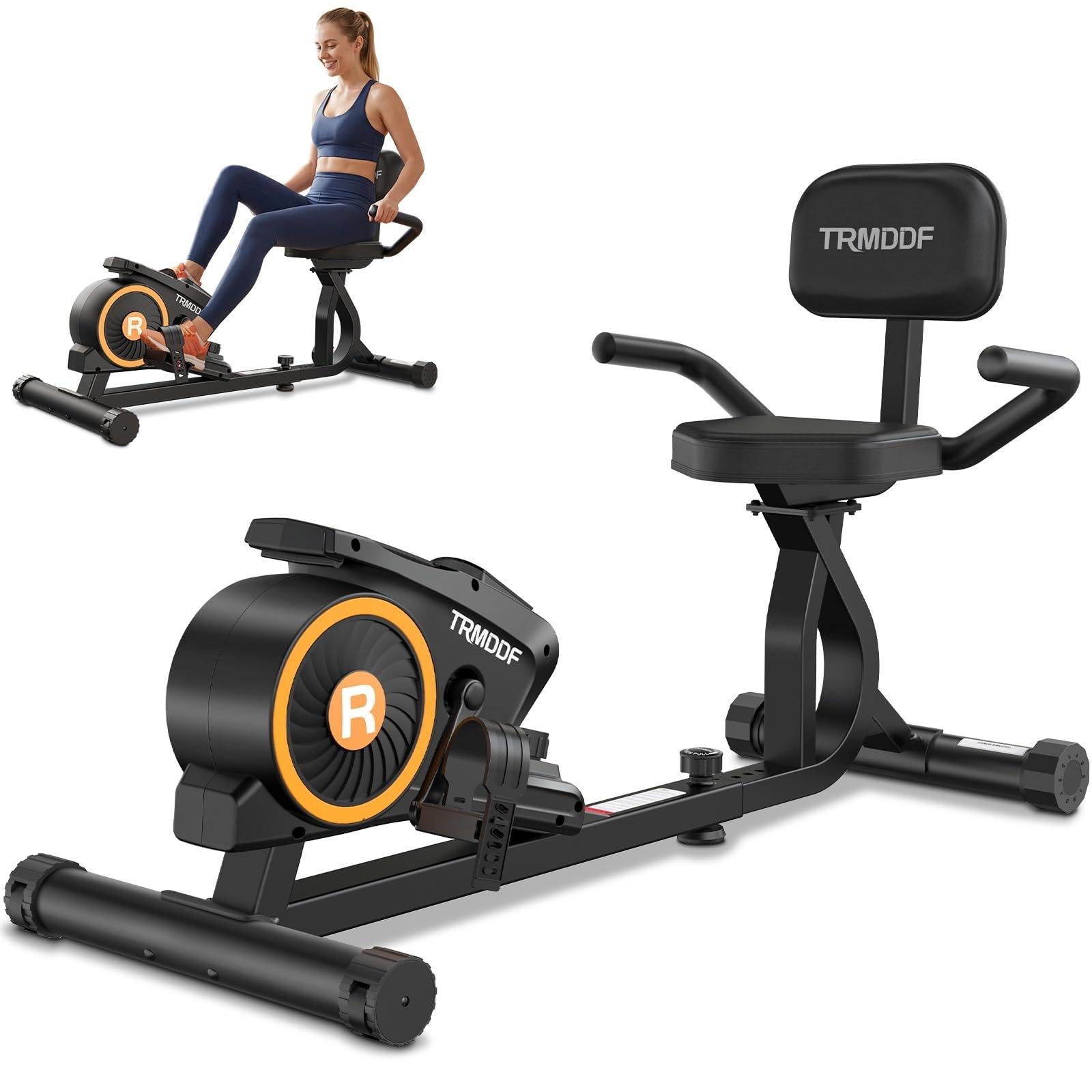
Thirty-five pounds, 90 percent built in the box, and about 20 minutes with the included tools: this is the bike for a studio apartment or a corner that has to be reclaimed between rides. It is the lightest full-size machine here by a wide margin, and the one we suggest when moving the bike is part of the routine rather than an occasional chore.

Sixteen levels of quiet magnetic resistance and a 400-pound rating are more than the price suggests, and the console covers time, speed, distance, calories, and pulse on batteries, so there is no cord to place. The frame is carbon steel rather than the heavier commercial tubing of the 3G, and the finish is plain.

What the light weight costs is plantedness. A bike this light is one you set down and pedal rather than one that feels bolted to the floor, and that is the trade we accept for something you can slide into a closet. Put it on a level surface, set the stabilizer feet, and it holds for steady sessions.

Bottom line: Small-space riders get our vote here: 35 pounds, a 20-minute build, and a 400-pound rating without the bulk of the others.

2

3G Cardio Elite RB X

3G Cardio Elite RB X

Long daily rides

Our Score 9.4/10
Check Price

Worth Noting

  • Premium price dwarfs the rest of the group
  • Console needs a nearby wall outlet
Footprint
49 x 27 in
Resistance
16 levels, magnetic
Seat Adjustment
25 fore/aft, 5 tilt
Weight Capacity
350 lb
Read the full review

Forty-nine inches long and 27 wide, this is one of the shorter bikes here, more than a foot shorter than the Schwinn, yet it carries a commercial-grade frame of 115 pounds on wheels that roll through a standard doorway. That combination is unusual in a machine built this heavily.

The seat is where the money went. Twenty-five fore-and-aft positions and five tilt settings let you dial in reach, the mesh backrest flexes instead of pressing into your spine, and the range covers 5 feet to 6-foot-5. In our sessions that adjustability is what kept us pedaling past the point where we normally start shifting around in the saddle.

Sixteen magnetic levels, FTMS Bluetooth that pairs with third-party apps, and a chest strap in the box round it out, backed by a lifetime frame and seven-year parts warranty, the longest coverage here. The number to weigh is capacity: 350 pounds, less than the 400-pound XVGVSV, so a bigger rider has a clear reason to look elsewhere.

Bottom line: We pick the 3G when the bike will be ridden daily for years: the seat adjustment is unmatched in this group and the frame warranty is the longest.

3

XVGVSV W239

XVGVSV W239

Heavier riders

Our Score 9.2/10
Check Price

Worth Noting

  • 66-pound frame is a two-person lift upstairs
Assembly
85% pre-assembled
Resistance
16 levels, magnetic
Item Weight
66 lb
Weight Capacity
400 lb
Read the full review

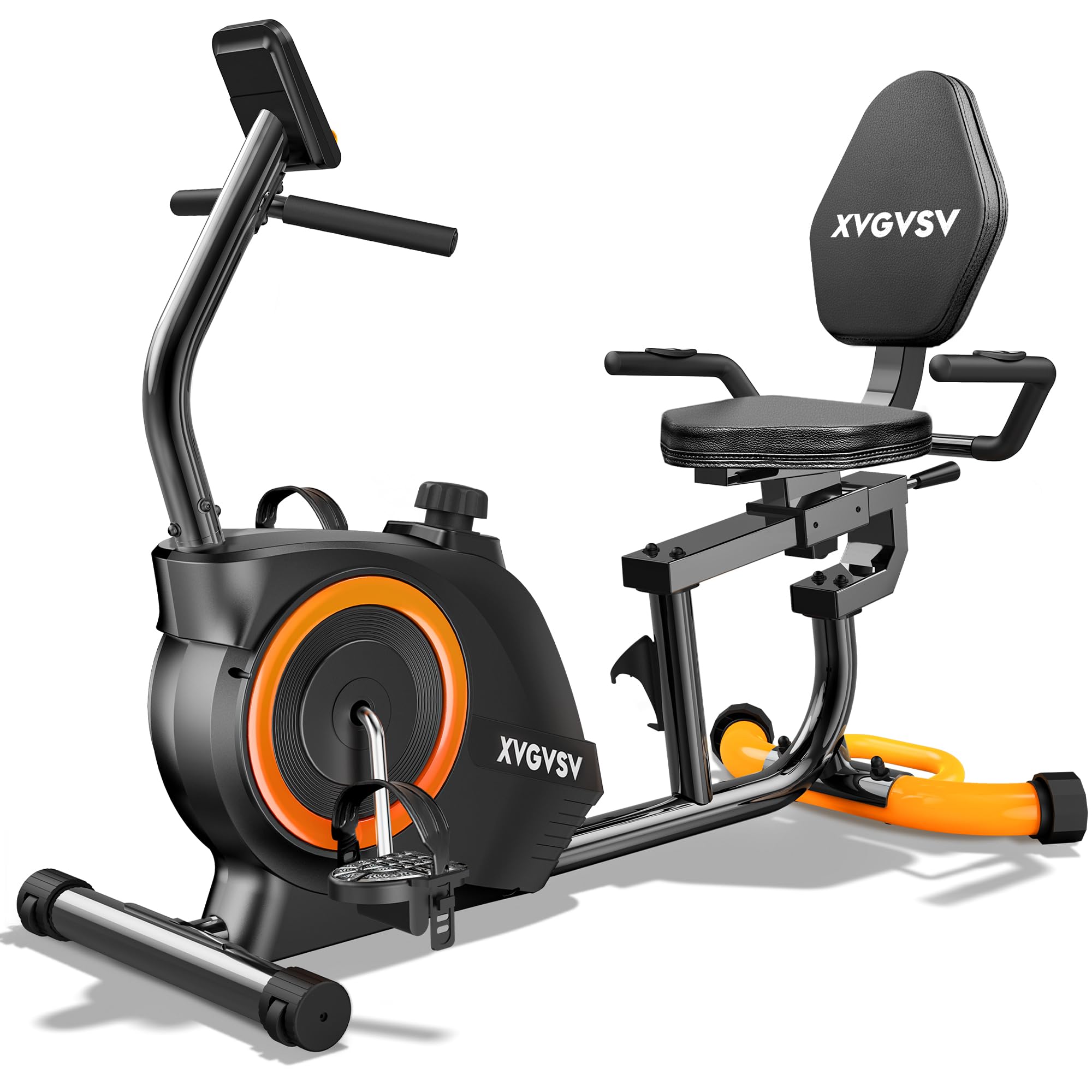
Four hundred pounds of weight rating at the lowest price here is the whole argument for this XVGVSV, and it is a real one if two adults share the bike, if you are a big rider, or if you simply want a frame that sits still under a hard effort. That rating, plus 16 levels and a 66-pound steel frame, is why this is the bike we hand to heavier riders and shared households.

The details that separate it from other inexpensive bikes are small but genuine. The seat slides fore and aft on a lever rather than a twist-and-pull knob, which matters when two people swap every day. It arrives 85 percent assembled, takes about half an hour to finish, and rolls out of the way on front transport wheels.

What the money does not buy is polish. The console sticks to speed, time, distance, calories, and pulse on a plain LCD, so the trainer-led workouts and virtual routes wrapped into the Sunny or the Schwinn are not part of the deal. The padding is adequate rather than plush, and if you plan hour-long sessions a gel cover is worth ordering at the same time. Neither point is a reason to walk away at this price.

Bottom line: When capacity or budget decides the purchase, this is our answer: 400 pounds, 16 quiet levels, and the least money of the group.

4

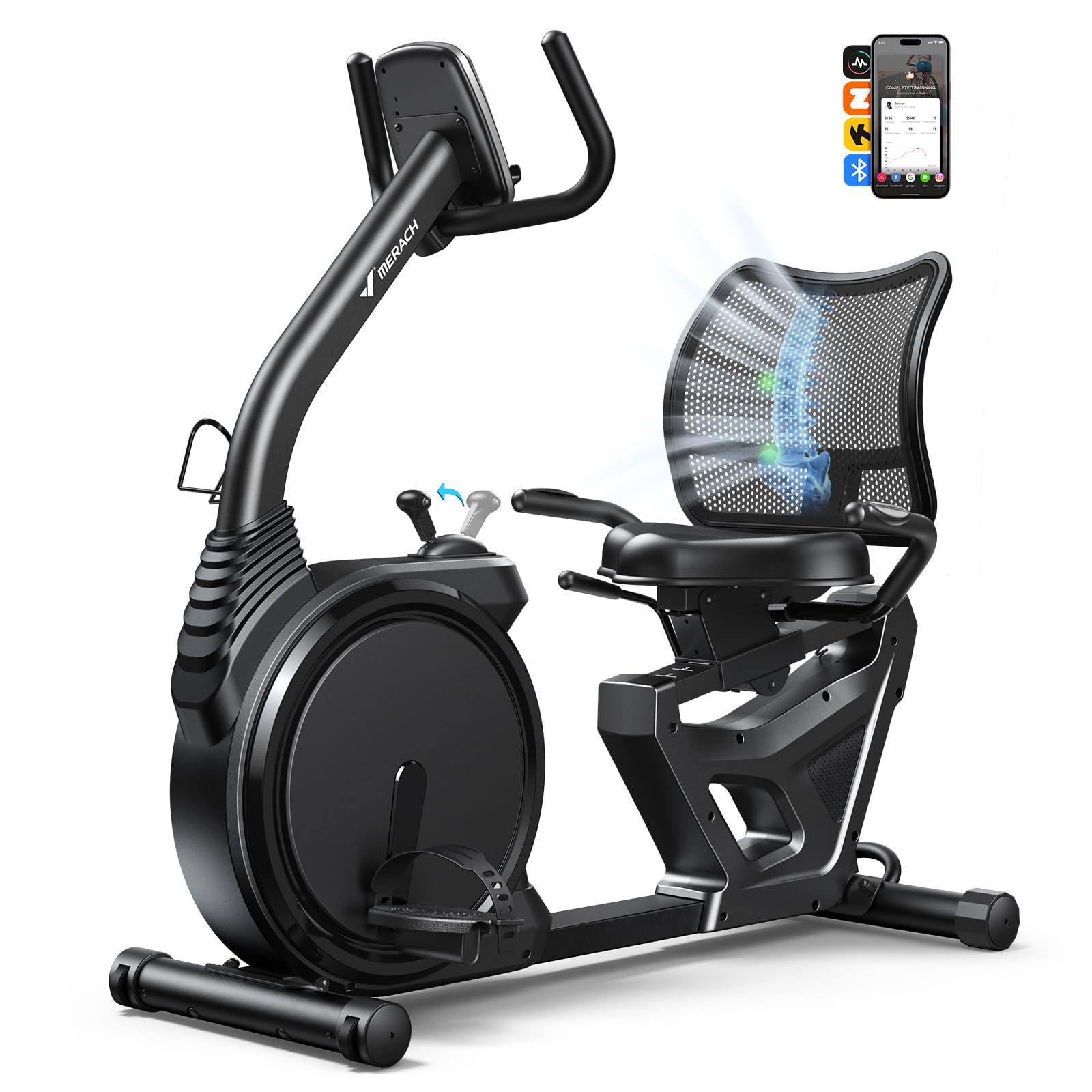
MERACH S19

MERACH S19

Small rooms

Our Score 9.2/10
Check Price

Worth Noting

  • Only eight resistance levels
  • Compact frame can feel tight for tall riders
Resistance
8 levels, shift lever
Item Weight
85.5 lb
Seat Adjustment
8 positions
Weight Capacity
330 lb
Read the full review

Reaching down between your knees to turn a tension knob is the least pleasant part of most recumbent rides. The S19 replaces it with a car-style shift lever on the handlebar, so you can click up a level mid-stroke without breaking rhythm. We ended up using that lever constantly, far more than we expected to on a bike with this few levels.

The rest of the ride backs it up. A dual-belt drive and a 6.6-pound perimeter-weighted flywheel make this one of the quietest bikes in the group, and the eight-position seat with a breathable mesh back stayed comfortable through a full session. Eight resistance levels is the catch: the fewest here, plenty for steady 30-minute work, thin if you want intervals.

Two fit notes before you buy. The frame is compact, so if you are six feet or taller, check leg extension at the front of the seat's travel rather than assuming. And the pedals are flat with no heel cup, so a loose ankle lets your foot drift back mid-stroke.

Bottom line: For a bedroom or a shared living room, we like this one: a shift lever at your fingertips, a near-silent drive, and a mesh seat that adjusts eight ways.

5

XVGVSV W241

XVGVSV W241

Arms and legs

Our Score 9.2/10
Check Price

Worth Noting

  • Seat padding is firm out of the box
Assembly
85% pre-assembled
Resistance
16 levels, magnetic
Training Modes
Cycling plus arm push-pull
Weight Capacity
400 lb
Read the full review

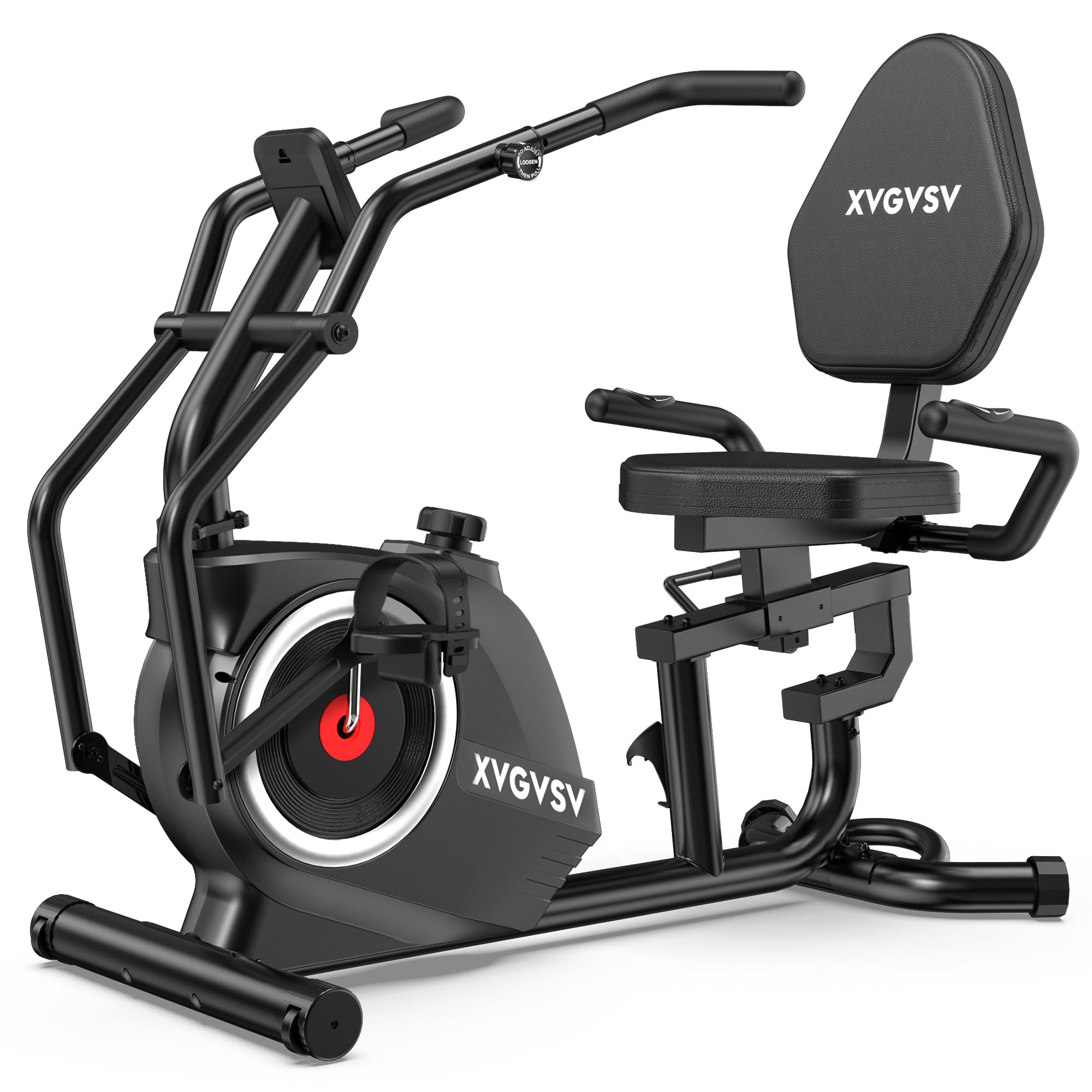
Pushing and pulling the handles while your legs pedal is a different workout from a plain recumbent, and it is the reason to consider this version over the cheaper W239. The handles drive an elliptical-style arm motion, so 20 minutes here asks more of your upper body than the same time spent only pedaling.

Everything else follows the W239's playbook: a 400-pound steel frame, 16 magnetic levels, a quiet drive, 85 percent pre-assembly, and transport wheels. At 66 pounds it moves around a room without drama.

We like it for the rider whose legs give out before their lungs do, or anyone who wants more work out of a shorter session. Give the arm-and-leg rhythm a session or two to settle; coordinating both is the learning curve here, not the resistance.

Bottom line: If you want your upper body working while you pedal, this is the bike here that builds it into the stroke rather than bolting on bands.

6

Sunny Health & Fitness SF-RB424006

Sunny Health & Fitness SF-RB424006

Daily home cardio

Our Score 9.0/10
Check Price

Worth Noting

  • 300-pound rating trails the 350–400 bikes here
Seat Fit
27.2–35.8 in inseam
Footprint
46.1 x 25.6 x 51.8 in
Resistance
16 levels, magnetic
Weight Capacity
300 lb
Read the full review

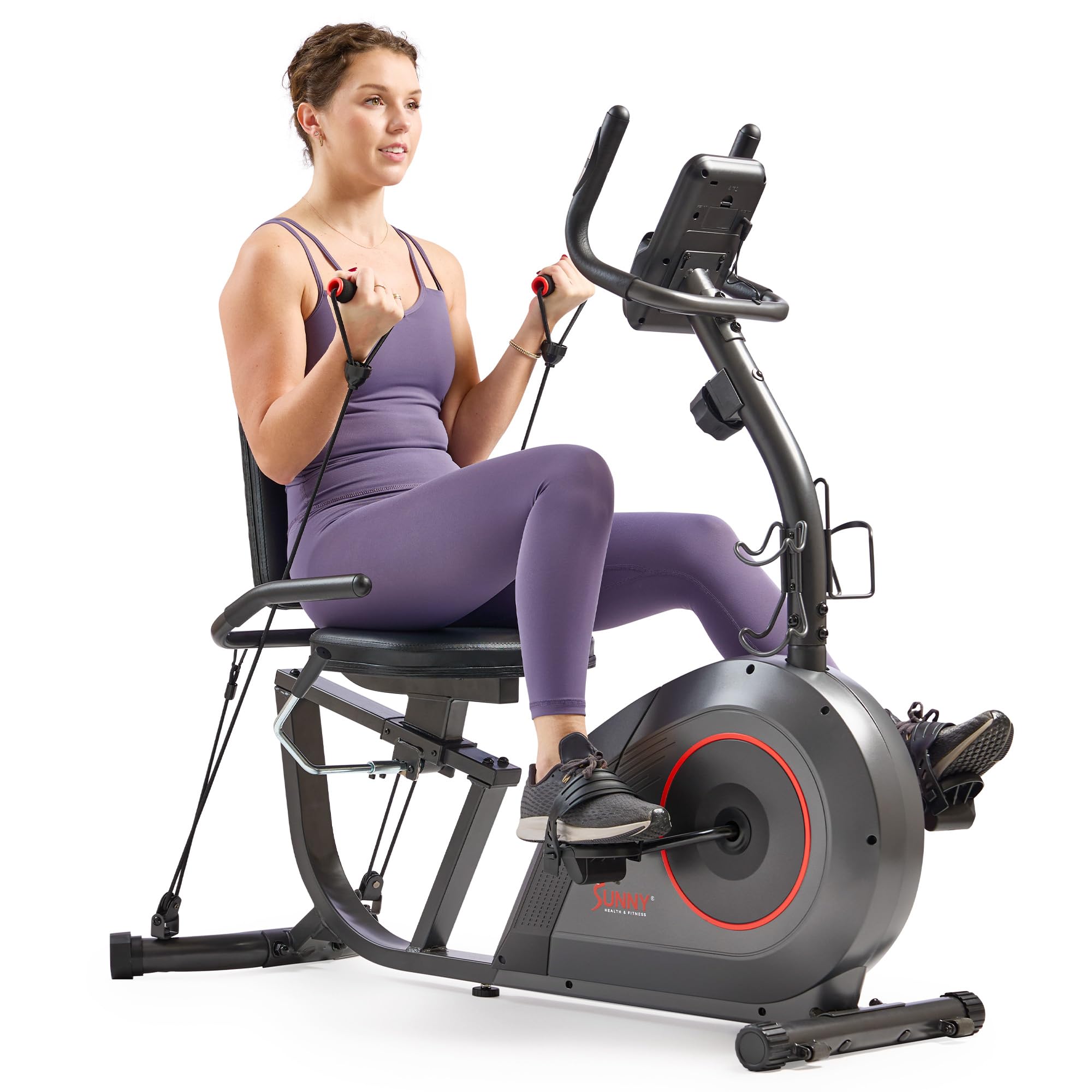
The side handle on this Sunny flips up and out of the way before you sit, which sounds like a small courtesy until you are the person swinging a leg over a fixed armrest. That is why we send households with an older or less mobile rider here first. The seat is wide, the backrest is tall enough to lean back into, and the seat slides through a 27.2-to-35.8-inch inseam range, so a five-foot rider and a six-foot rider can share one bike without wedging a cushion behind them.

On the bike itself, 16 levels of magnetic resistance feed through a belt drive that stays quiet enough for a living room, and the free SunnyFit app adds trainer-led sessions and virtual routes with no membership attached. That combination is what makes it our default: nothing here is easier to live with day to day. The resistance ramp is the thing we noticed first, though. The bottom few levels feel nearly identical, which is kind during a first week or a rehab block and mildly frustrating once you are fit and hunting for the top of the range. Two 20-pound bands on a swivel pulley add arm work while you pedal, something only one other bike here attempts.

Two numbers to check before ordering. The weight rating is 300 pounds, below the 350- and 400-pound bikes in this group, so a heavier rider or a two-person household should look at the XVGVSV instead. And at 64 pounds with transport wheels it slides across a floor easily and turns awkward on stairs.

Bottom line: We choose this one for most homes: mounting takes no help, the seat suits a five-footer or a six-footer, and 16 quiet levels handle daily cardio.

7

YOSUDA LRC-01

YOSUDA LRC-01

Short daily rides

Our Score 8.8/10
Check Price

Worth Noting

  • Unlit display is hard to read in low light
Footprint
45 x 20 x 39 in
Resistance
16 levels, magnetic
Item Weight
58 lb
Weight Capacity
350 lb
Read the full review

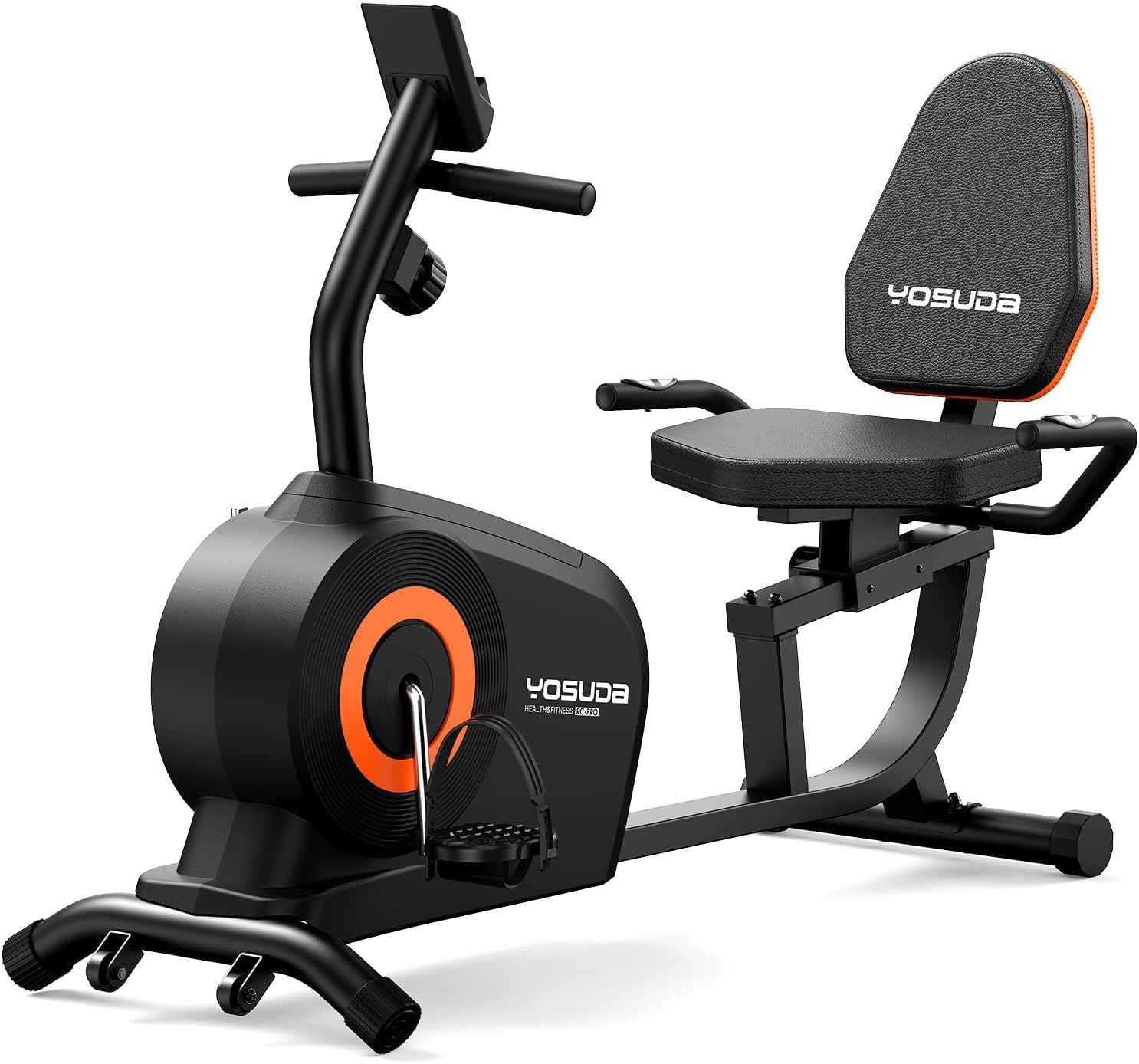
The seat is the first thing to sort out on this YOSUDA. The padding is thin enough that half an hour is comfortable and an hour is not, and a gel cover is the cheap fix, worth adding to the order rather than making a second trip for.

The rest of the package makes sense for a small room: 45 inches long and 20 wide, 58 pounds, with a seat that turns and pulls to lock into one of a series of holes. That last detail is the one we appreciated most, since it lets a shorter rider get close to the pedals without stretching.

Sixteen levels of magnetic resistance run through a belt drive, the console carries pulse grips, and assembly is straightforward if you follow the video, easier with two people and a clear floor.

For a daily 20-to-30-minute habit in a tight space and a tight budget, this is an easy yes. If you want to ride for an hour while a film runs, the Sunny's wider seat is worth the step up in price.

Bottom line: For a compact bike on a small budget, we like this one: 16 quiet levels, a 45-inch footprint, and a seat that slides for shorter riders.

8

Schwinn 230

Schwinn 230

App-led workouts

Our Score 8.4/10
Check Price

Worth Noting

  • Console is not backlit
  • Seat and backrest are hard plastic
Console
5.5 in LCD, 13 programs
Resistance
16 levels, magnetic
Connectivity
Bluetooth, Zwift compatible
Weight Capacity
300 lb
Read the full review

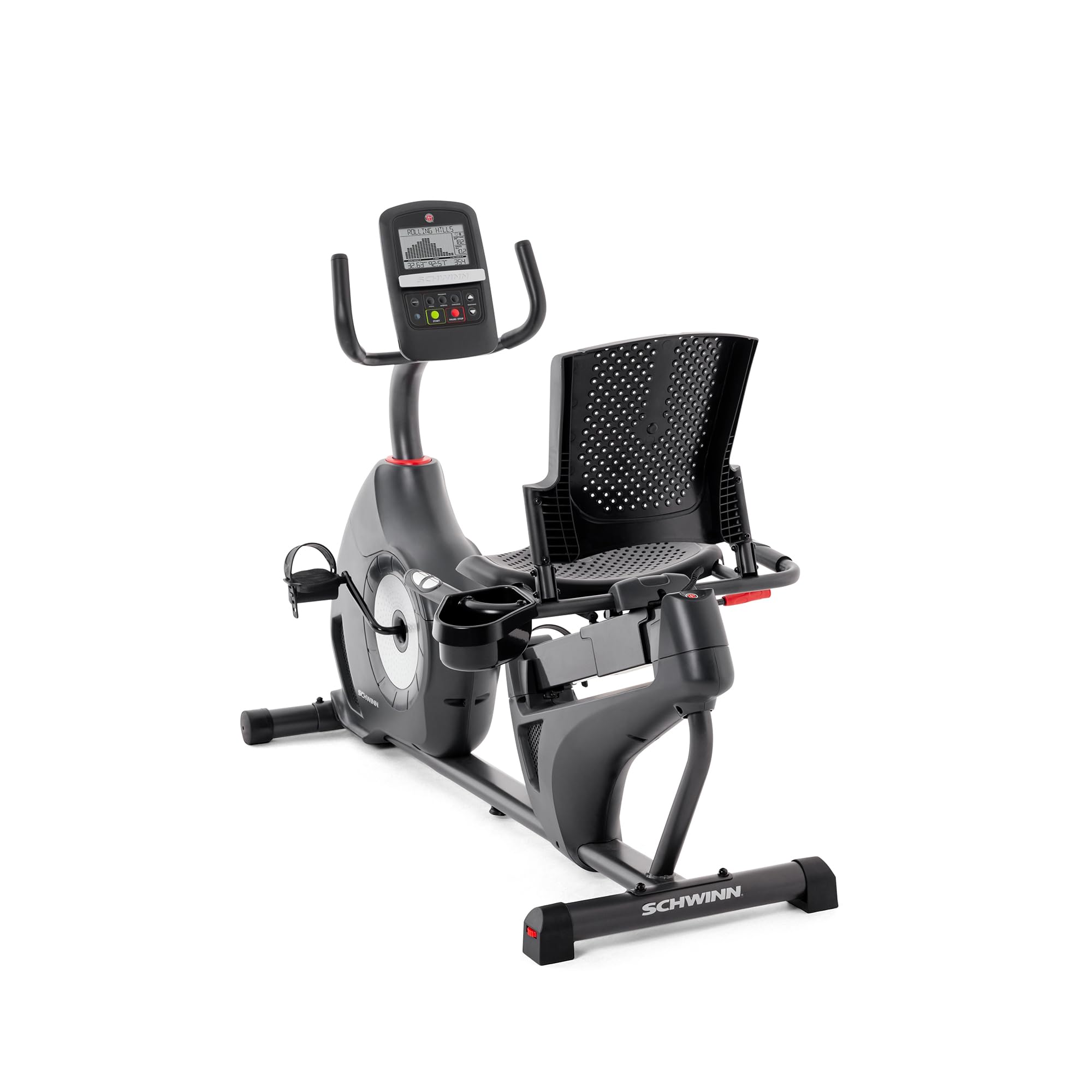
The reason to look at the Schwinn 230 is the screen and what feeds it. It pairs over Bluetooth with Zwift and with Schwinn's Explore the World routes, which adjust as you ride, and that is the closest thing in this group to riding with other people. The route library needs a subscription; Zwift needs its own.

Under the software it is a conventional 16-level magnetic bike with a belt drive, a 5.5-inch LCD, and 13 built-in programs, and it is built like a gym fixture at 80 pounds. It is also 64 inches long, the longest footprint in this guide by a wide margin, so measure the wall before you fall for the app.

Electronics are the watch item: bikes in this line have turned up with a dead console or a heart-rate sensor that quits. The warranty is the counterweight, at ten years on the frame, two on parts, and 90 days on labor.

We recommend it to the rider who wants structured, app-led workouts and a name-brand frame behind them, and who has the floor to give it. If the screen is a bonus rather than the reason you are shopping, the Sunny does the same job in less space for less money.

Bottom line: We recommend it for connected training: Zwift and Explore the World make long sessions pass, and a ten-year frame warranty stands behind the electronics.

How We Tested the Best Recumbent Bikes

We started with a shortlist of roughly 30 recumbent bikes pulled from brand lineups and retailer best-seller lists, then cut anything with a vague weight capacity, a seat that wouldn't slide close enough for shorter legs, or a footprint too wide for a spare-room corner. That left eight bikes, running from basic magnetic-resistance models to ones with programmable consoles. Each was ridden for six months by me and three testers ranging from 5-foot-4 to 6-foot-2, on carpet and on hardwood.

I unboxed and built every bike alone with a stopwatch running, noting how many tools were needed, whether the bolt holes lined up, and how long it took before I could actually pedal. After that, the bikes lived where people really put them: a living room corner, a basement, a spare bedroom. We did 20- to 45-minute rides four or five times a week and ran max-resistance intervals while watching the frame and stabilizer feet for rocking, creaking, or walking across the floor.

Noise got checked two ways: a decibel reading at the pedal and flywheel, and a listen from the next room with the door shut, which is the version that matters at 6 a.m. For comfort, we noted where the seat padding bottomed out around minute 30, whether the backrest stayed cool, and whether the seat slid or the recline drifted mid-ride. On displays, we glanced at the console mid-interval to see if the numbers were readable with sweat in the way, whether resistance levels were shown or just implied, and whether a tablet blocked the readout.

Quality and value ran underneath all of it — weld finishes, pedal threads, and whether anything squeaked by month four, weighed against the warranty and whether the console demanded a subscription to be useful.

How to Choose Recumbent Exercise Bikes

Fit and Step-Through Come First

Measure your inseam before you compare anything else: stand against a wall with a book between your legs and measure from the floor to the spine of the book. That number, not your height, has to land inside the seat's travel. The Sunny spans a 27.2-to-35.8-inch inseam range and the 3G covers 5 feet to 6-foot-5, while a bike with narrower travel will fit one household member and strand another.

Step-over height matters just as much when hips or knees are the reason for buying. A frame you can walk through beats a deep one you have to lift a leg over, whatever the seat range says on the box.

Resistance: How You Change It Beats How Many Levels

Magnetic resistance is standard here, and the count on the spec sheet, eight or 16, tells you less than the control does. A knob between the knees means sitting up and reaching down mid-ride; a handlebar lever on the MERACH S19 or console buttons on the Schwinn and the 3G let you change effort without breaking rhythm.

The trap is a long level list that starts flat. Several 16-level bikes here feel nearly the same through the first three or four settings, so if you want intervals, buy the control you can reach. For steady half-hour sessions, eight well-spaced levels go further than you think.

The Seat Is What You Notice at Minute Forty

Padding compresses, so what holds up is the shape underneath it: a wide seat pan supports the hips, and a mesh backrest lets heat out where a padded one traps it. Fore-and-aft travel matters more than either when two people share the bike.

A gel cover or a replacement seat is a normal first upgrade, so treat the stock seat as a starting point rather than a verdict. Prefer a seat that slides on a lever over one that needs a knob turned and a pin pulled if the bike gets used by more than one person.

Weight Capacity and Frame Steadiness

The maximum user weight is also shorthand for frame stiffness: a bike rated to 400 pounds is built with more steel than one rated to 300, and you feel the difference in how still it sits when you push. If you are near a rating's ceiling, buy the next one up rather than assuming the number is conservative.

Weight is the other side of that coin. A 115-pound 3G Cardio sits like furniture, while the 35-pound TRMDDF is the bike you carry out of the way and set down again, and it feels that way underfoot.

Console, Apps, and Where It Plugs In

A basic LCD showing time, distance, calories, and pulse is enough for most riders. Above that sits Bluetooth: the Schwinn pairs with Zwift, and the 3G uses FTMS to talk to third-party apps. Check what is actually free, since Sunny's app and its workouts carry no membership while Schwinn's route library and Zwift both require subscriptions.

Power is the detail people forget until delivery day. Most bikes here run the console on batteries or pedal power, but the Schwinn and the 3G are corded, so the corner you have in mind needs an outlet within reach.

Frequently Asked Questions

Final Verdict

If we were outfitting one household, we choose the Sunny SF-RB424006. The handle that flips out of the way, the wide seat, the 27.2-inch minimum inseam, and 16 quiet levels cover what most people actually need: getting on without help and pedaling for half an hour without disturbing the room.

Two requirements change the answer. A tighter budget or a heavier rider points to the XVGVSV W239 and its 400-pound rating. A rider who wants the seat to fit like a tailored chair and expects to keep the bike for a decade should look at the 3G Cardio Elite RB X.