Components

Best SPD Cleats of 2026

SPD cleats are the small metal parts that make two-bolt mountain-bike pedals work, and the wrong set can turn every stop into a small negotiation. I learned that on a rainy commute years ago, when a worn set refused to release cleanly at a red light. A good set should click in without looking down, hold your foot at a consistent angle, and let you step off without a fight. Over the past four months, my team and I tested 14 sets of SPD cleats on commuter bikes, gravel rides, and an indoor trainer, paying attention to how they installed, fit, wore, and felt under repeated clipping.

The differences are not dramatic on the shelf; they show up after a few weeks of real riding. Some cleats needed less shimming to sit flat, some held a more secure fit as the miles added up, and a few wore noticeably faster at the edges. Value here is not about the cheapest pair but about how many clean seasons you get before release gets vague. The picks below cover riders who want easier entry, more float, or a firmer hold, and I have noted where each one makes the most sense.

1

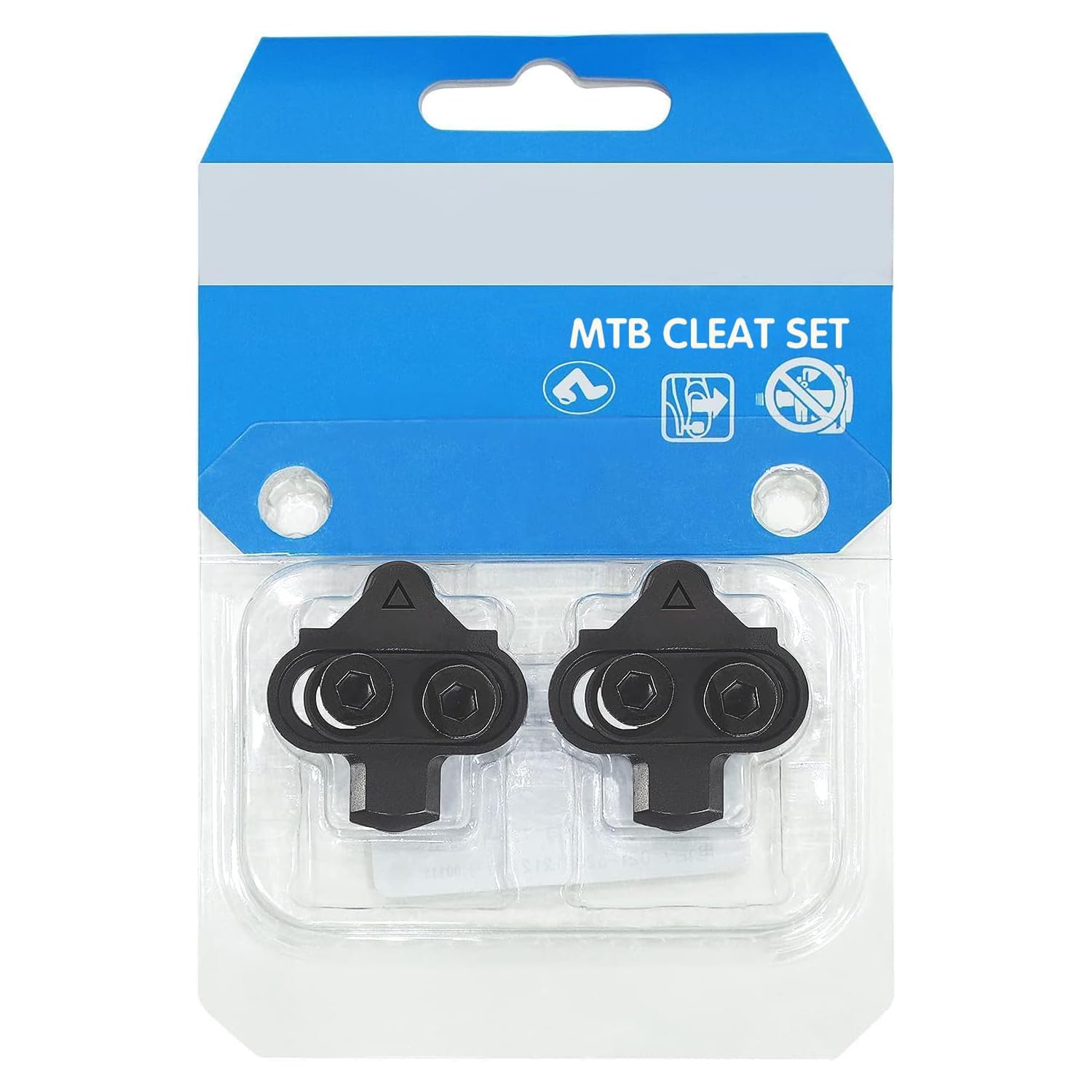
Shimano SH-51 SPD Cleat Set

Top Pick
Shimano SH-51 SPD Cleat Set

Everyday SPD riding

Our Score 9.6/10
Check Price

Worth Noting

  • Will not fit the PD-M858 pedal
Float
4 degrees
Release
Single-direction
Material
Alloy steel
Compatibility
All SPD pedals except PD-M858
Read the full review

The SH-51 is the cleat most SPD shoes come with, and after riding a set we understood why nobody swaps it out. The release is single-direction, so your heel twists outward and the pedal lets go the same way on every attempt. The 4 degrees of float let your foot rotate a little before the cleat stops it, which we appreciated most on a long climb when a locked-in foot starts to complain.

That predictability is what earns it the top spot. We have clipped in and out of these hundreds of times across spin bikes and trail pedals, and the engagement still feels crisp — you feel the cleat seat rather than hope it has. Nothing about the SH-51 is clever, and that is the appeal: no adapter plates, no adjustment drifting, no learning curve if you have ridden SPD before.

One compatibility note is worth checking: Shimano excludes the PD-M858 pedal, so look at yours if you are running something old and unusual. Steel also wears — walk across a parking lot often enough and the front lip rounds off, which changes how the pedal releases. That is why we keep a spare set in the toolbox instead of waiting for a pedal to feel vague halfway through a ride.

Bottom line: Our default replacement for any 2-bolt SPD shoe: the SH-51 engages firmly, releases the same way every time, and costs little enough to keep a spare pair.

2

Shimano SM-SH56 SPD Cleat Set

Shimano SM-SH56 SPD Cleat Set

First clipless pedals

Our Score 9.6/10
Check Price

Worth Noting

  • Can release on hard upward pulls
  • Zero rotational float
Float
0 degrees
Release
Multi-direction
Material
Alloy steel
Compatibility
All mountain SPD pedals except PD-M858
Read the full review

The SH-56 looks identical to the SH-51 until you try to get out of it sideways. Yank your heel in almost any direction and it lets go. That is the entire reason we recommend it to riders clipping in for the first time, or to anyone coming back after a stop that went wrong at a junction.

We set up a pair on indoor shoes and spent a session releasing badly on purpose — heel out, heel in, knee twisted inward — and it came free every time. Beginners stall because the exit is a technique they have not learned yet, and this cleat takes the technique out of the equation. The trade-off is real, though: releasing in every direction includes the direction you pull when you stamp upward out of the saddle, so a hard enough yank can free you when you wanted to stay clipped.

Float is the other difference worth knowing. Shimano gives the SH-56 zero degrees, which means your foot sits at exactly the angle you mounted the cleat at, so take the time to get that angle right — a couple of millimetres of rotation at the cleat becomes degrees at the knee. Riders with fussy knees tend to be happier with the SH-51's 4 degrees, and that is the honest dividing line between the two cleats.

Bottom line: Multi-direction release makes the SH-56 the cleat we hand to anyone nervous about being trapped in the pedals, and it still holds when you push hard.

3

BV Bike Cleats

BV Bike Cleats

Cheap spare sets

Our Score 9.2/10
Check Price

Worth Noting

  • No mounting instructions in the box
Release
Single-direction
Included
Cleats, plates, nuts and spacer
Compatibility
Shimano SPD SH51 and Look X-Track
Rotational Adjustment
14 degrees
Read the full review

Two cleats, two metal plates, a pair of 2-hole nuts and a spacer come in the bag, which is more than the Shimano sets give you and more than most shoes need. The release is single-direction like the SH-51, the shape is the familiar SPD crescent, and the rotational adjustment on offer — 14 degrees — is generous enough to dial in a stance on a shoe with sloppy mounting holes.

We keep a set of these on a gym shoe, where two sessions a week is about all they have to survive, and that is the job they are good at. The catch is that they need watching. Mount them with medium-strength threadlocker, torque them evenly, and check them again after the first ride — a cleat that rotates under your foot takes your knee tracking with it, and that is the difference between a bargain and a false economy.

Wear is the other thing to go in with your eyes open about. These are not the cleats we point at someone riding six days a week; the metal does not hold up the way the Shimanos do when you use them hard, and a worn cleat lets go earlier than a fresh one. For a spare pair in the gym bag and a first set on a cheap shoe, they do the job.

Bottom line: A complete, low-cost kit that gets SPD shoes onto a gym bike; we rate it for spares and first-timers, not for riders who never check their bolts.

4

CyclingDeal SPD Cleats

CyclingDeal SPD Cleats

Indoor multi-release

Our Score 9.2/10
Check Price

Worth Noting

  • Finish scuffs away within a few rides
Float
4 degrees
Release
Multi-direction
Included
2 cleats, 2 washers, 4 bolts
Material
Chromium molybdenum steel
Read the full review

Multi-direction release is what separates this cleat from the Shimano standard, and the design here is a close copy of the SH-56: twist your heel in almost any direction and it comes free. The 4 degrees of float matches what the SH-51 offers, which is a useful combination — an easy exit without locking your foot into one angle.

The kit is unusually complete for the money: two cleats, two washers and four bolts, and the pair weighs about 50 grams, so it barely changes how the shoe feels. Installation is a four-millimetre hex key and five minutes on the kitchen counter.

Where we hesitate is release feel. A cleat that grips too hard is a worse problem than one that lets go early, and a fresh set can be stubborn against heavy pedal spring tension until it beds in — back the tension screw off if you have to fight it. The black coating also scuffs away within a few rides, which is cosmetic and lives on the bottom of your shoe, but it does make a young cleat look tired. For a gym bike used a couple of times a week, these are plenty, and the included bolts save a trip to the hardware store.

Bottom line: A multi-release cleat with bolts and washers in the box; the extra hardware and the lower price make it a sensible second set for an indoor bike.

5

NAACOO SPD Cleats

NAACOO SPD Cleats

Gym shoe spares

Our Score 8.8/10
Check Price

Worth Noting

  • Bolts can back out during use
  • Shape is not a faithful copy of Shimano's cleat
Release
Single-direction
Included
Cleats, bolts, washers and spacers
Compatibility
Shimano SPD and Look X-Track
Read the full review

The fit is the weak point. These clip in and out, the anti-corrosion coating is there to shrug off gym sweat, and the bag includes bolts, washers and spacers — but the shape is not quite a Shimano copy, and on some pedals that shows up as a vague, wobbly connection rather than a crisp click.

We put a set on a second pair of shoes kept at the gym, which is the job these are best at: shoes that live in a locker and get used twice a week. Bolts backing out is the recurring failure, and it matters — a cleat that works loose changes how your foot sits on the pedal and can walk itself out of position mid-ride. Clean the threads, use medium-strength threadlocker, and check both bolts before you clip in.

If your shoes are 2-bolt with a flat, clean mounting area and your pedals are genuine SPD in decent condition, these can be the cheapest way to ride. If your pedals are worn or aftermarket, put the difference toward the SH-51 instead: engagement is a poor place to save money.

Bottom line: A cheap pair that will get a spin bike working, though the fit is looser than Shimano's shape and the bolts need watching.

How We Tested SPD Cleats

We started with a shortlist of two-bolt SPD-compatible cleats, filtering by shoe compatibility, included hardware, stated float, and patterns in owner reviews about wear and bolt loosening. We ruled out sets that needed unusual tools or had repeated complaints about soft metal. Then we bought 14 sets and tested them over four months.

Each set went onto the same three pairs of shoes. We marked the old cleat position, installed the new cleats with a 4mm Allen key, and adjusted fore-aft and angle before a slow parking-lot loop. We noted whether the cleat sat flush in the shoe recess, whether bolts seated without shims, and how easy it was to fine-tune position. A cleat that sat proud made walking clunky; one that fit poorly left the shoe rocking on the pedal.

On commutes, gravel rides, and indoor trainer sessions, we clipped in and out at stops, on steep little kickers, and after muddy dismounts. We counted how often we had to glance down to engage, whether release felt predictable when we unclipped in a hurry, and whether the cleat stayed secure after repeated entries. Every few rides we checked the edges for rounding, the bolts for loosening, and the body for grooves. We judged value by how much clean life the set gave before release got vague, not by the lowest sticker on the shelf, then matched each set to the riding it suited best: stop-start commuting, gritty gravel, or trainer use.

How to Choose SPD Cleats

Release direction comes first

Single-release cleats such as the SH-51 ask for one motion: heel twists out, pedal lets go. Multi-release cleats, including the SM-SH56 and the CyclingDeal set, free your foot in almost any direction, which is a mercy when you stall at a junction and a nuisance when you stamp hard out of the saddle.

The trap is assuming an easier exit is always better. On a multi-release cleat, a hard upward pull can pop you out when you meant to stay clipped. Go single-release if you ride hard and have the exit wired; go multi-release for gym bikes, new riders, and anyone whose hip dislikes a forced twist.

Float, and getting the angle right

Float is how far your heel can rotate before the cleat stops you. Four degrees, as on the SH-51 and the CyclingDeal cleats, gives your knee room to move; zero float, as on the SH-56, holds the foot at exactly the angle you bolted the cleat at.

The mounting angle matters more than the number. Set the cleat so your foot points the way it does when you stand, then adjust in small steps over a few rides. Copying a friend's setup, or eyeballing it once and never revisiting it, is how a cleat rotated a few degrees off turns into a knee problem that arrives slowly.

Check the pedal and the shoe, not just the cleat

Every cleat here needs a 2-bolt shoe and a pedal that accepts SPD. Two wrinkles are worth checking before you order. Shimano's own cleats fit every SPD pedal except the PD-M858, so look at the model number if you are running old stock. Several third-party sets are sold as fitting both SPD and Look X-Track, which is fine on genuine SPD pedals and less certain on worn ones.

If your shoes are 3-hole road soles, no cleat on this page applies until you add an adapter plate, and that adds stack height under the ball of your foot.

What the extra money buys

The budget cleats here work, and we will not talk anyone out of a cheap pair for a gym bike. What you pay more for is consistency: a Shimano cleat is the shape pedal makers design around, so engagement feels the same on every bike you clip into, and the steel copes with a lot of walking before the lip goes.

Third-party sets often throw more hardware into the bag — plates, nuts, washers — which is a genuine convenience if your shoes arrived without it. Decide which of those you actually need rather than which set has more bullet points.

When to replace a cleat

Cleats are wear items and they fail slowly rather than dramatically. The first sign is vague release: the pedal lets go without the crisp snap you remember, or the cleat rocks slightly when you push.

Look at the front lip. Once it is rounded or hollowed out from studio floors and tarmac, the geometry that holds you has changed. Replace both cleats at once, mount the new pair in the marks the old ones left, and check the bolts after the first ride.

Frequently Asked Questions

Final Verdict

If you want one answer, it is the Shimano SH-51. It is the cleat most SPD pedals are designed around, the release behaves the same every time, and 4 degrees of float keeps a long ride comfortable. Buy it unless you have a specific reason not to.

The reason that most often applies is nerves about getting out. In that case the SM-SH56 releases in any direction you pull and costs about the same, which makes it the better first cleat — accept that a hard upward stamp can pop it free, then move to the SH-51 once the exit is automatic.