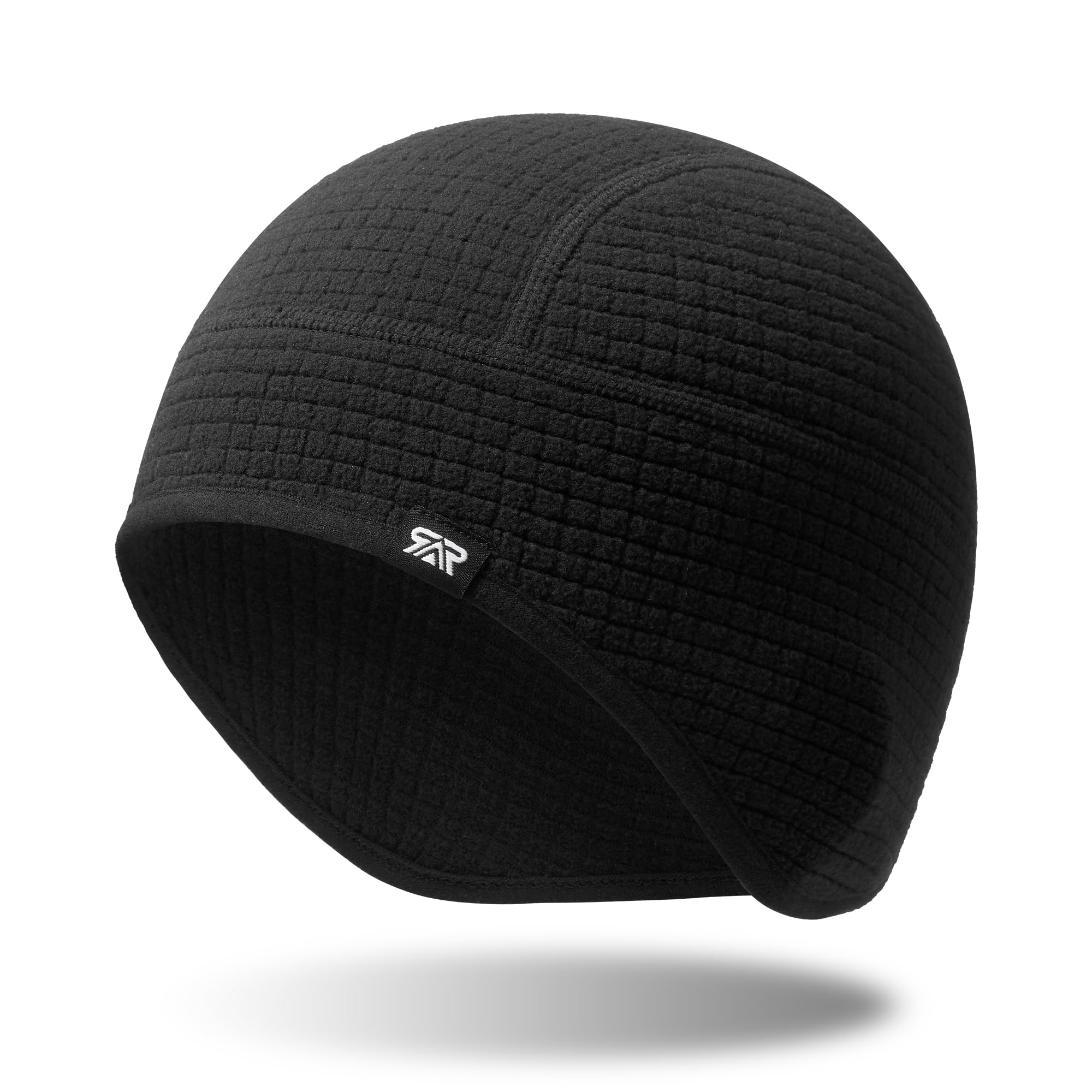
Cycling Apparel

Best Winter Cycling Caps of 2026

The coldest two inches of any winter ride are the strip of skin between helmet and collar, which is why a cycling cap is the cheapest warmth in the sport. The trouble is bulk: a cap thick enough to stop wind can push your helmet up off your forehead and deaden the traffic noise behind you, while a thin one leaves your ears aching by mile three. The right one solves all of that at once — flat enough that your helmet fits the way its designers intended, warm enough to carry you through a 30-degree start, and honest about who it actually fits.

I've spent plenty of cold mornings regretting my ears. Over the past four months my team and I rode in 14 caps — fleece-lined, merino, windblock-paneled — and the differences came down to things you can't see in a product photo: how much room the brim leaves for glasses, whether the ear band stays put when you turn your head to check a lane, and how the fabric behaves after ten washes. What every good one has in common is that you forget you're wearing it. The picks below are the ones that earned a permanent spot in the helmet bag.

1

MELASA Helmet Liner with Glasses Slots

Top Pick
MELASA Helmet Liner with Glasses Slots

Snug helmet fit

Our Score 9.4/10
Check Price

Worth Noting

Fit
Snug
Ear Coverage
Covers ears
Glasses Slots
Yes
Wind Protection
Wind-blocking
Read the full review

Wind sneaking through helmet vents is the problem this MELASA liner solves. The cap sits close to the head, covers the ears, and puts a thin layer between you and the cold air that comes through the front vents. The eyeglass slots are the other detail that makes it feel purpose-built: the arms of our glasses slip into the openings instead of pushing the cap up.

The fabric is soft and not itchy, and the cap stays put under a bike helmet without needing constant adjustment. It is warm without being heavy, and the snug fit keeps the ear panels close where they can do the most good.

We also like that it does not crush hair or leave a hard pressure point behind the ears. The slots are small and neatly placed, so they do not turn into cold-air vents when you are not wearing glasses.

Our judgement is that this is the best snug glasses-friendly liner in the group, especially for riders who dislike a loose cap flapping under the helmet. It is a specialist pick rather than the default, but the close fit is the reason we keep coming back to it. The glasses slots are the detail that makes it feel purpose-built rather than adapted.

Bottom line: For a snug, quiet liner that keeps glasses arms where they belong, the MELASA is the specialist pick we hand to riders who dislike loose caps under a helmet.

2

HASAGEI Thermal Running Hat

HASAGEI Thermal Running Hat

Large heads

Our Score 9.2/10
Check Price

Worth Noting

  • Wind can reach ears on exposed rides
Fit
Roomy for large heads
Fabric
Soft thermal knit
Helmet Fit
Under-helmet liner
Ear Coverage
Covers ears
Read the full review

A lot of winter caps assume a medium head and leave it at that. The HASAGEI is the one in this group that feels roomy from the first pull-on, with a soft stretch that settles over the ears instead of pressing them flat. We noticed the extra room most when we put a helmet over it; there was no red line across the forehead and no fight with the retention dial. The cap comes down over the ears without a tight band, which is the part we appreciate on longer rides.

The fleece is soft and warm for still, cold mornings, and the cap stays put when we move around. It looks more like a running beanie than a bike-specific liner, which we do not mind, and the ear coverage is enough for typical winter rides. The material is not heavy, so it works well for running as well as cycling.

Our judgement is that this is the pick for larger heads and anyone who has found one-size liners too tight. It is not the most technical-looking cap, but the comfort is what we notice on a long winter base ride. The roomy fit is the reason it stays in our rotation. If your last liner left a red line across your forehead, start here.

Bottom line: If most one-size liners leave a red line across your forehead, the HASAGEI's roomy stretch and soft fleece make it the winter cap to try first.

3

Tough Headwear Ear-Flap Skull Cap

Tough Headwear Ear-Flap Skull Cap

Cold-weather commuting

Our Score 9.0/10
Check Price

Worth Noting

Fabric
Thermal stretch fleece
Helmet Fit
Under-helmet liner
Ear Coverage
Long ear flaps
Nape Coverage
Extended
Read the full review

Ear flaps are the first thing we look for on a winter cycling cap, and this Tough Headwear liner gives them more room than most. The flaps run long enough to cover the nape as well as the ears, and the crown sits flat under a bike helmet. We wore it on cold commuting mornings and found the fleece soft against the forehead without making the helmet feel tight. The flaps are not so thick that they bunch under the straps, which is the usual problem with ear-flap caps.

What earns it the top spot is the balance. It is warm enough for freezing starts but not so bulky that we overheated on a steady climb, and the stretch keeps it in place when we pull the helmet on. On milder mornings the flaps can be folded up, which makes it useful beyond deep winter. The one-size stretch is forgiving, though very large heads may want the roomier HASAGEI instead.

We also like that it does not look out of place off the bike, which is more than we can say for some helmet liners. The cap has a simple, tidy shape that works with or without a helmet, and the seams sit flat enough that we forget it is there. The long flaps are the detail that keeps it in our bag from first frost through early spring.

Bottom line: With long ear flaps, a low-profile crown, and enough stretch to sit under a bike helmet, this is the winter liner we reach for on the coldest commuting mornings.

4

Hikenture Skull Cap with Glasses Holes

Hikenture Skull Cap with Glasses Holes

Glasses wearers

Our Score 9.0/10
Check Price

Worth Noting

  • Runs large on smaller heads
Fit
Generous
Helmet Fit
Under-helmet liner
Ear Coverage
Covers ears
Glasses Holes
Yes
Read the full review

The small slits at the temples are the reason to pick this Hikenture liner. We think it is the best choice here for glasses wearers because the arms of our glasses slide into the openings instead of lifting the cap or pinching at the temples. The rest of the cap is a thin thermal layer that sits flat under a bike helmet and keeps the ears covered without adding much bulk.

Warmth is better than its thinness suggests. We wore it on cold rides and found it comfortable without turning into a sweat trap, and the ear panels come down far enough to take the sting out of a cold headwind. The fabric is soft, not itchy, and it stays put when we pull the helmet on.

We also like that the slits are small enough that they do not turn into vents; the cap still feels warm across the forehead. The cap is easy to pull on and the ear coverage is generous without feeling sloppy under the helmet. For anyone who has been tucking glasses arms over a beanie, the slits solve a small annoyance every ride.

Bottom line: For riders who wear glasses, the temple slits and thin warmth make this the easiest Hikenture liner to live with under a helmet all winter.

5

QINGLONGLIN Windproof Fleece Cap

QINGLONGLIN Windproof Fleece Cap

Windy cold rides

Our Score 9.0/10
Check Price

Worth Noting

  • Thin for severe cold
Fit
Snug stretch
Fabric
Fleece
Windproof
Yes
Ear Coverage
Covers ears
Read the full review

For a windproof layer at a value price, the QINGLONGLIN is the one we reach for on gusty rides. The fleece is soft, the fit is snug without being tight, and the cap covers the ears and forehead well under a bike helmet. It also has a clean look that does not scream bike gear when you stop for coffee.

We noticed the windproof front panel most on open roads, where a plain fleece cap would let the cold through. The stretch is generous enough for a larger head, and the seams sit flat rather than puckering across the crown. It is warm for its weight, and the ear coverage stays in place when we pull the helmet on. The cap is easy to pull on and does not leave a tight band across the forehead.

Our judgement is that this is the best windproof value in the group for riders who face steady wind but do not want a bulky liner. If you need maximum warmth, the Tough Headwear ear-flap cap is the safer choice. It is a good example of why a thin cap can outperform a thicker one when the wind is the real problem. The snug, wind-blocking fit is what keeps it in our bag.

Bottom line: When wind is the real problem, this QINGLONGLIN fleece cap delivers a snug, wind-blocking layer at a value price, as long as you do not need deep-freeze warmth.

6

ROCKBROS Winter Cycling Cap with Visor

ROCKBROS Winter Cycling Cap with Visor

Low winter sun

Our Score 8.8/10
Check Price

Worth Noting

  • Fabric rustles against the ears
Visor
Yes
Helmet Fit
Thin under-helmet
Ear Coverage
Ear flaps
Wind Protection
Wind-resistant
Read the full review

A visor changes the job this cap does. The ROCKBROS winter cycling cap is the one we choose when low sun is as much of a problem as cold air, with a brim that sits above glasses and shades the eyes without blocking the road. The cap itself is thin enough to go under a helmet, with ear coverage and a wind-resistant front panel.

We think it is the best visor option here for winter road and commuter rides. The brim is just the right size for the low winter sun, and the cap blocks wind on fast descents better than a plain fleece liner. The ear flaps are thin enough to sit under helmet straps, and the cap stays put when we turn our head.

If you ride where a low sun is a real hazard, the brim is worth it; if you want a pure fleece liner, the Tough Headwear is the simpler choice. The cap also looks more like a traditional cycling cap than a beanie, which we like for road rides. The brim sits exactly where we want it above glasses, which is the detail that makes it feel purpose-built.

Bottom line: The ROCKBROS winter cap is the pick when low sun is part of the ride; its visor and wind-resistant front make it more useful than a plain liner on exposed roads.

7

OutdoorEssentials Fleece Skull Cap

OutdoorEssentials Fleece Skull Cap

Budget riders

Our Score 8.6/10
Check Price

Worth Noting

  • Runs small for larger heads
Fit
Runs small
Fabric
Thermal fleece
Weight
Lightweight
Ear Coverage
Covers ears
Read the full review

The least expensive cap in this group is also the one we reach for when the forecast is cool rather than freezing. The OutdoorEssentials is a thin fleece skull cap that weighs very little, packs into a jersey pocket, and covers the ears without making a helmet feel tight. We think it is the best budget pick here for mild winter riding and cold-weather running.

The fleece is soft and the stretch is easy to pull on, and it stays in place on a steady ride. The ear panels come down far enough to take the edge off a cold morning, and the cap does not leave a sweaty band across the forehead. It is not the cap for a hard freeze; the material is thin, and we treat it as a cool-weather layer rather than a deep-winter barrier. That also makes it a good choice for hard efforts when a heavier liner would leave us clammy.

We like it as a spare that lives in a bag, and it is the one we hand to a rider who wants a simple liner without spending much. The simple shape sits well under a helmet without a lot of fuss. The thinness is the point, not a flaw, as long as you match it to the weather.

Bottom line: This is the budget liner we keep in a jersey pocket for cool starts, mild winter rides, and hard efforts when a heavier cap would be too much.

How We Tested the Best Winter Cycling Caps

We started with every winter cap we could pull from cycling brands and a handful of outdoor ones, then filtered by fabric (merino, fleece-lined synthetic, windblock panels), ear coverage style, and whether the maker published a real head circumference range instead of "one size fits most." Price mattered, but only as a tiebreaker — a cap has to justify itself against a cheap skullcap plus a headband. That left 14 caps, which we rode in for four months, from the first cold snap in late November through the wet, gray end of March.

Every cap went under two different helmets on the same 11-mile commute, once in dry cold and once in drizzle. We counted how many clicks we had to back the retention dial out to fit each one, whether the brim sat level above our glasses, and whether the fabric rustled or roared at speed — and, more to the point, whether we could still hear a car approaching from behind. Size got checked the boring way: we measured each cap flat and unstretched, then had two riders with noticeably different head sizes wear the same cap on back-to-back days.

Warmth and ear coverage we judged by feel — after each ride we noted whether earlobes came back pink and stinging or comfortably warm, and whether the ear band had crept up over the course of the ride. Comfort came down to seams and tags, since a flat-locked seam and a lump behind the ear are two very different commutes. For value, we washed every cap at least six times on a normal cycle and watched for pilling, brims that lost their shape, and seams that started to separate. The ones that survived all of that without a fuss are the ones we'd buy again.

How to Choose Winter Cycling Caps

Start with helmet fit, not warmth

A liner can be warm and still be the wrong choice if it lifts the helmet or makes the retention dial work harder. Look for a low-profile crown, flat seams, and ear panels that sit close rather than bunching under the straps. Put the cap on, then the helmet, and check that the front sits just above the eyebrows and the dial still has room to tighten. If the helmet rides high or the straps need a big adjustment, go thinner. The Tough Headwear is our benchmark for a cap that stays flat; the Hikenture is roomier and may suit larger heads, but smaller riders should expect extra fabric.

Match warmth to your ride, not the calendar

Fleece is warm, but it is not automatically windproof. A thin grid fleece is enough for cool mornings and hard efforts, while a windproof front panel earns its place on exposed roads and long descents. If you run hot, start with a thinner liner and add a windproof layer; if you commute at an easy pace, ear flaps and a slightly heavier fleece are more useful. The QINGLONGLIN shows the windproof end of the range, while the OutdoorEssentials is the thin, packable option for mild winter days.

Ear coverage is the real winter test

Ear flaps are not just a style choice. They cover the strip of skin between a helmet and a jacket collar, and a longer flap that reaches the nape makes a noticeable difference on windy mornings. Simple skull caps can work if they come down far enough, but if your ears ache within the first mile, look for flaps. The Tough Headwear's long flaps are the most protective shape here; the HASAGEI is roomier but less wind-resistant.

Glasses, visors, and the details that matter

Glasses slots are worth having if you ride in prescription glasses or sunglasses, because they stop the arms from lifting the cap and letting cold air in. A visor is a different tool: it shades low sun and keeps some rain off the face, but it can add wind noise and does not replace a helmet visor. Choose one priority. The Hikenture and MELASA handle glasses; the ROCKBROS visor cap is the one to pick when the sun is the bigger problem.

Sizing, stretch, and what to check before you buy

Most winter cycling caps are one-size stretch, which is convenient but not universal. The same cap that fits a 7 1/2 hat size can be loose on a smaller head, and a generous liner can feel sloppy under a helmet. Measure your head above the eyebrows, compare it with the maker's range, and read the fit notes for large or small heads. If you are between sizes, choose the cap with the roomier cut; if you want a snug under-helmet fit, go the other way.

Frequently Asked Questions

Final Verdict

Start with the Tough Headwear ear-flap cap. It gives the best balance of warmth, ear and nape coverage, and low-profile helmet fit in this group, and it is the one we pack for cold commuting and steady winter training. If you ride in glasses, the Hikenture's temple slits are the detail that makes it the easier choice; if low sun is your bigger problem, the ROCKBROS visor cap earns its place. The top pick remains the default when you want one cap to cover most cold rides.