Helmets

Best Bike Helmets with Visors of 2026

A visor should shade your eyes, not rattle over every pothole or turn your helmet into a sail on a windy descent. I learned that on a long rail-trail ride where the late sun sat at eye level and my old visor buzzed. Over eight months, our team tested 12 visor-equipped helmets on commutes, weekend rides, and trail loops; the differences came down to fit, comfort, and how well the visor was attached. The right one should feel light, protect your skin, and look good enough that you want to wear it.

What surprised me was how much the small stuff mattered: a dial that snugged the back of the head without pressure, straps that didn't twist, and a visor that stayed put when I nudged it. We also weighed shell quality, buckle hardware, and value—whether a helmet felt worth its price after weeks of use—and kept an eye on color and finish after real rides. Because a helmet only works if you reach for it, the picks below are the ones that earned a spot by the door.

1

Giro Fixture MIPS

Top Pick
Giro Fixture MIPS

All-around safety

Our Score 9.4/10
Check Price

Worth Noting

  • Fixed chin strap limits fine-tuning
  • Visor cannot be angled
Visor
Yes
Weight
1.7 lb
Fit Range
54-61 cm
Protection
MIPS
Read the full review

MIPS is the reason this Giro costs more than most of the visored helmets here, and it's the feature that changes how we think about the purchase. The Fixture adds a low-friction liner designed to manage rotational impact, plus reflective details and a visor that keeps the sun out of your eyes without blocking the trail ahead.

We found the Roc Loc Sport dial easy to work with one hand, and the 54-61 cm universal fit covered our test riders without a wrestling match. At 1.7 pounds, it isn't the lightest helmet here, but the weight feels balanced rather than top-heavy, and the vents move air well on climbs. The visor is short enough to stay out of the way on road rides and useful on exposed rail-trail sections.

What we appreciate most is the lack of fuss: the shell sits close to the head, the straps fall into place without constant retying, and the reflective details are a quiet bonus for dusk rides. It looks less bulbous than the pricey helmet stereotype, which makes it easier to wear on a casual ride without feeling overdressed.

Bottom line: For riders who want the strongest safety case in this group, the Fixture MIPS is the one we reach for first.

2

Schwinn Thrasher

Schwinn Thrasher

Budget commuting

Our Score 9.4/10
Check Price

Worth Noting

  • Visor and plastic trim can loosen
Vents
20
Visor
Yes
Safety
CPSC
Fit Range
58-62 cm
Read the full review

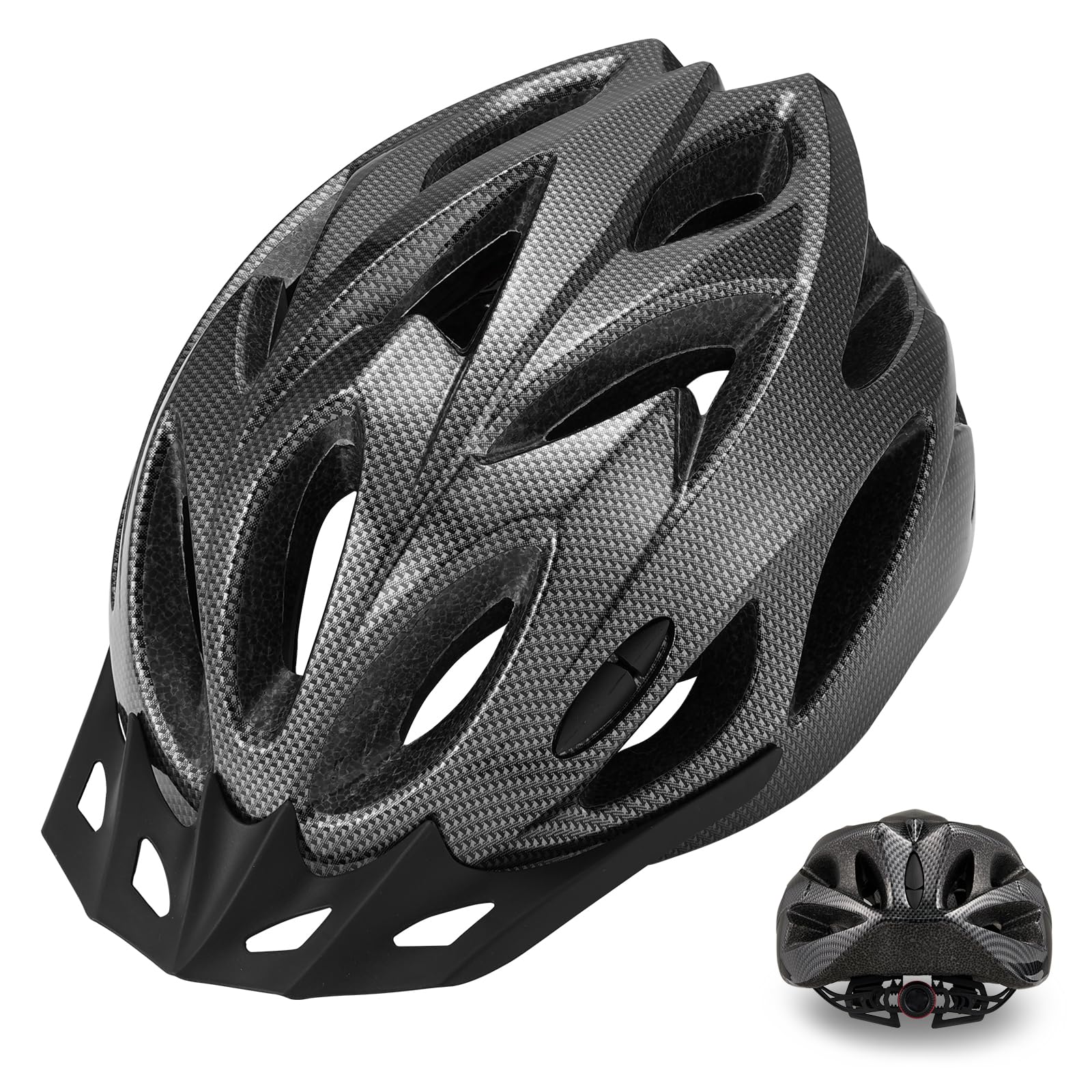
The Thrasher is the helmet we hand to someone who wants a visor, a dial, and a certified shell without spending much. It meets the CPSC standard, uses a microshell construction, and runs 20 vents, which is more than a few pricier-looking helmets here. That combination makes it an easy first helmet or a spare for guests.

The 58-62 cm range is generous at the top end but leaves out smaller adult heads, so measure before you commit. Once it's on, the rear dial is easy to twist and the padding wraps the head fully; we found it stayed comfortable on longer recreational rides. The visor does the job of keeping low sun out of your eyes, and the shell has a clean, rounded shape that suits commuters and casual riders.

We also like that the interior is easy to wipe down after a sweaty ride, and the straps are straightforward to adjust. It doesn't have the vent count or the sculpted look of the premium pick, but it doesn't ask you to make excuses for it either. The Thrasher is proof that the visor and the basics can come without a premium.

Bottom line: If you want a visored helmet that does the basics for very little, the Thrasher is our budget pick.

3

GROTTICO Bike Helmet with Light

GROTTICO Bike Helmet with Light

Night riding

Our Score 9.4/10
Check Price

Worth Noting

  • Two shell sizes may leave gaps
Vents
23
Visor
Two included
Fit Range
M: 55-58 cm
Rear Light
USB rechargeable
Read the full review

A rear light built into the helmet is one less thing to clip on, and the GROTTICO does it with a USB-rechargeable unit that has steady, flash, and wave modes. The helmet also ships with two visors, so you can swap the look or keep a spare for scuffed days.

The 23 vents and fusion-style shell keep it from feeling like a bulbous commuter lid, and the dial and straps are straightforward to set. We found the light easy to reach and the helmet balanced enough for longer rides, though we treated the visor as sun shade rather than full rain protection.

What sold us on the GROTTICO for night riding is the combination: a light you can recharge from a laptop, a visor for low sun, and a shell that doesn't look like safety equipment first. The USB port is the detail that makes the light practical: no coin-cell hunt when it dims.

Bottom line: If your rides often finish after dark, the GROTTICO's rechargeable rear light and two visors make it the most practical night-riding pick.

4

Zacro Adult Bike Helmet

Zacro Adult Bike Helmet

Light everyday rides

Our Score 9.2/10
Check Price

Worth Noting

  • Can press on wider head shapes
Vents
18
Visor
Detachable
Safety
CPSC and CE
Fit Range
54-62 cm
Read the full review

The Zacro's removable visor and light shell are aimed at riders who want one helmet for fast rides and errands. It uses a polycarbonate shell over EPS foam, with 18 vents and a dial that spans 54-62 cm, so it can cover a household without feeling like a compromise.

We like that the liner comes out for washing; after a few sweaty rides, that matters more than another vent. The dial range is generous, and the straps are easy to shorten. The visor is on the short side, so it shades the eyes without giving you a full brim, which is fine for road and path riding but not a substitute for sunglasses in low glare.

The finish looks more expensive than the price tier suggests, and the 18 vents keep air moving on warm days. It's a sensible pick for someone who wants one helmet for fitness rides and errands, and the detachable visor means you can change the look without buying a second lid.

Bottom line: For riders who notice helmet weight and want a removable visor, the Zacro is the easy everyday choice.

5

VICTGOAL VG110

VICTGOAL VG110

Trail and road

Our Score 9.2/10
Check Price

Worth Noting

  • Visor can feel less secure than goggles
Vents
21
Visor
Removable
Goggles
Magnetic included
Fit Range
L: 57-61 cm
Read the full review

The VICTGOAL's magnetic goggles are the feature that separates it from a standard visored helmet. They snap over the face opening and give more coverage against wind, dust, and low sun than the visor alone, and the visor can stay on for shade or come off when you want a cleaner look.

The three-size range is more precise than the one-size-fits-most approach many helmets here take, and the L 57-61 cm shell gave our testers a snug fit without excessive dial cranking. The cushioned chin strap is a small comfort win, and the shell feels light enough for long trail sessions.

The 21 vents and rear light make it a useful all-weather companion, and the goggles are the reason to choose it over a plain visored helmet. The visor is mostly for shade; the goggles do the heavy lifting, so we treat them as the main eye protection. The rear light is a useful extra for evening spins, and the whole package feels more purposeful than a helmet that simply bolts on a brim.

Bottom line: For mountain or road riders who want eye protection beyond a short brim, the VICTGOAL's magnetic goggles make it the standout.

6

Odoland Magnetic Visor Helmet

Odoland Magnetic Visor Helmet

Glasses wearers

Our Score 9.2/10
Check Price

Worth Noting

  • One size leaves larger heads out
Visor
Magnetic detachable
Safety
ASTM, CPSC, CE
Glasses
Glasses-friendly
Fit Range
54-60 cm
Read the full review

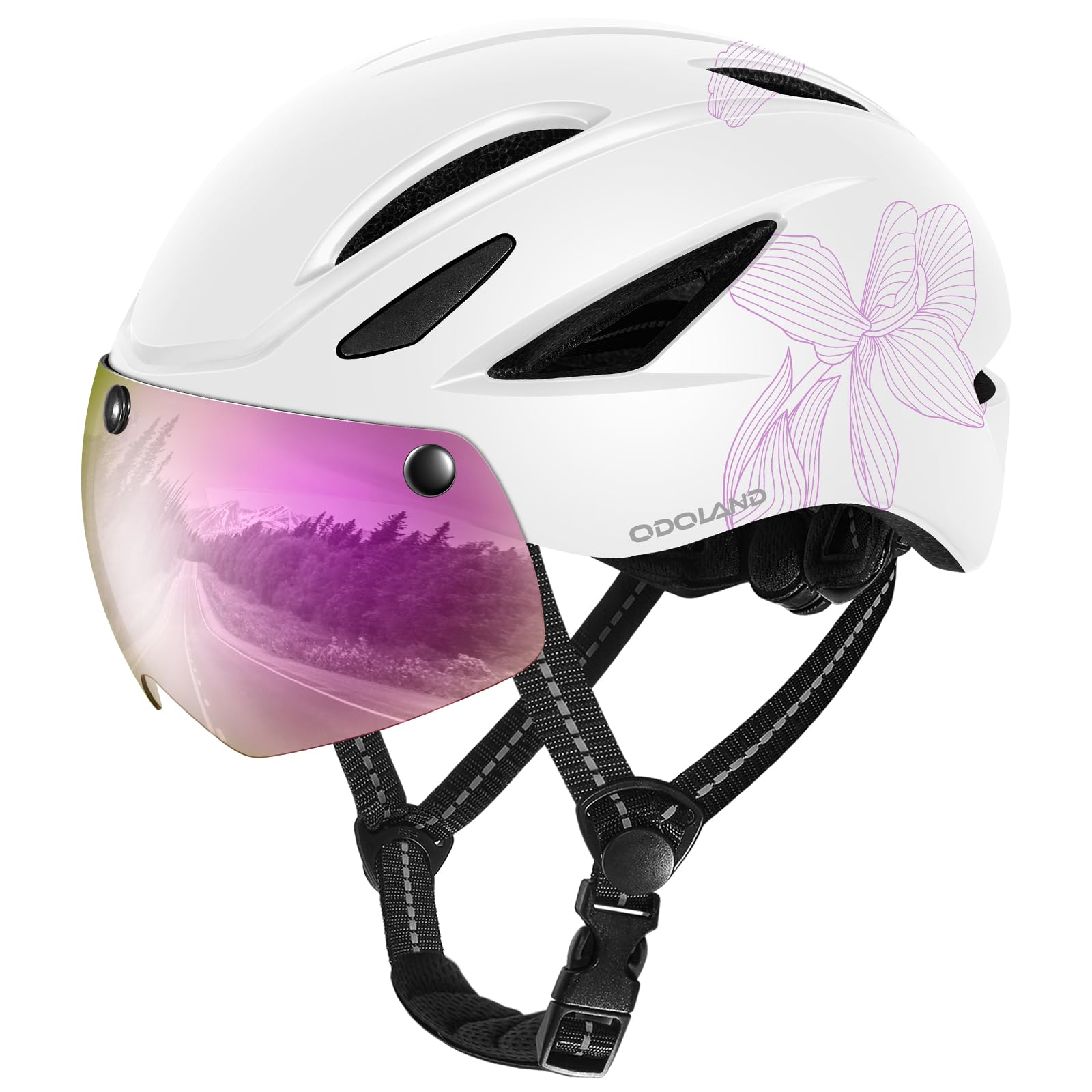
The Odoland is built around a simple but useful idea: a magnetic visor that shields your eyes while leaving room for the glasses you already wear. The visor pops off for cleaning or for rides when you want none, and the helmet is certified to ASTM, CPSC, and CE standards.

We found the dial easy to tighten and the straps simple to set, and the interior is shaped to avoid pressing on spectacle arms. The magnetic mount is the kind of detail we appreciate: easy to attach, easy to remove, no tiny clips to lose. The one-size shell covers 54-60 cm, so it's worth measuring before you order.

The venting is adequate for commuting and casual rides, and the shell looks tidy rather than overbuilt. It isn't the airiest helmet here, but it's the one that makes the most sense for a glasses wearer who wants shade without adding another pair of lenses to the ride.

Bottom line: If you wear prescription glasses and want sun protection without swapping sunglasses, the Odoland is the helmet we point you to.

7

EXCLUSKY Rear LED Helmet

EXCLUSKY Rear LED Helmet

Low-light visibility

Our Score 9.2/10
Check Price

Worth Noting

  • 12 vents can feel warm in heat
Vents
12
Visor
Retro visor
Fit Range
56-61 cm
Rear Light
14 LEDs
Read the full review

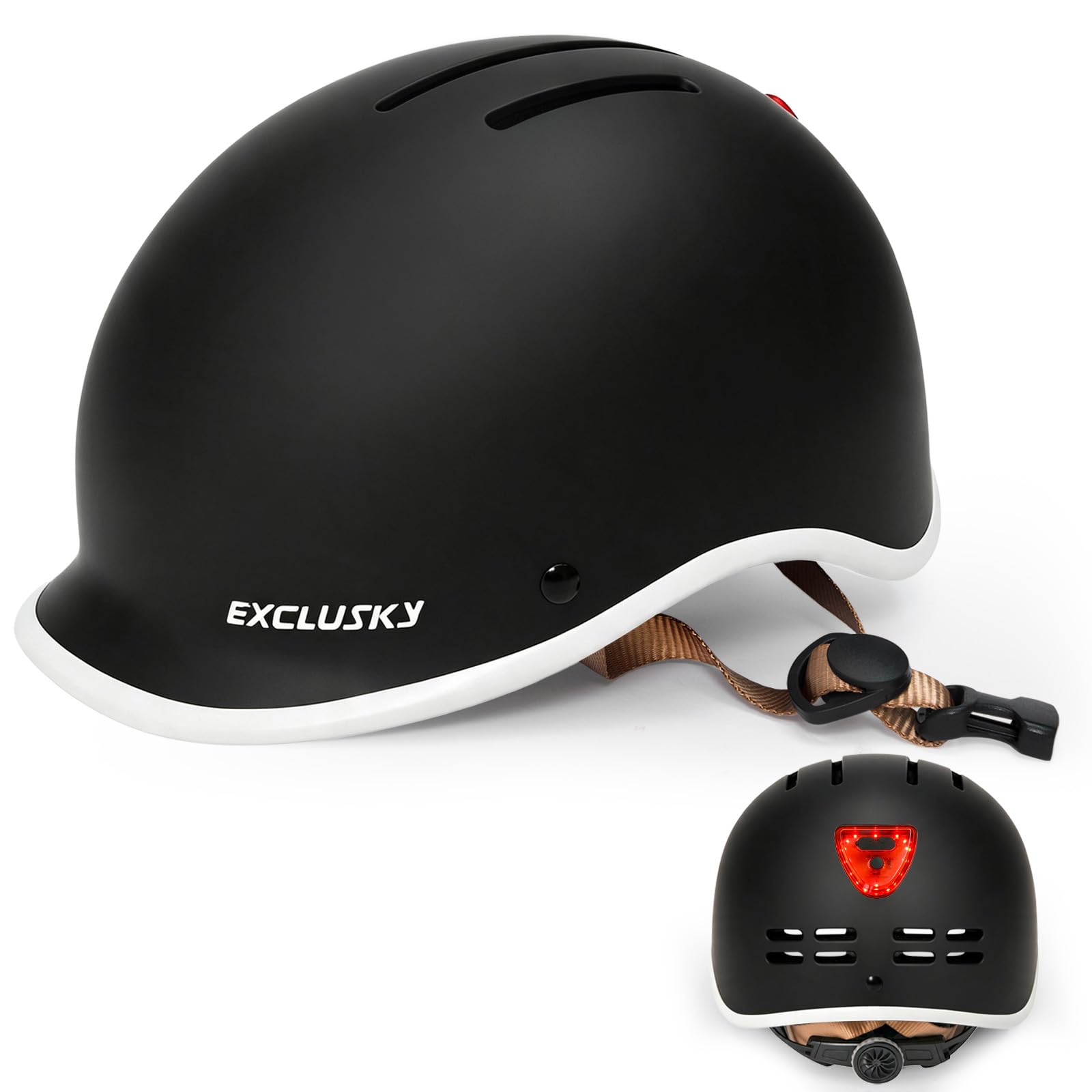
The EXCLUSKY's calling card is the rear light panel: 14 LEDs with steady, flashing, and blinking modes, plus a retro visor that gives the helmet a city-bike look rather than a race-bike one. It meets CPSC, ASTM, and CE standards, and the ABS shell with thickened EPS foam feels substantial in the hand.

We found the dial and Y-shaped straps easy to set, and the soft chin strap is a small comfort win on longer rides. The 56-61 cm range is clearly stated, so it's easier to know whether you're in the window before you order.

The visor has a retro shape that pairs well with upright bars and casual jackets, and the light panel is the detail that makes it feel purpose-built for traffic. It's an also-consider because the ventilation is more modest than the trail-focused picks, but that won't matter much on a short commute.

We were surprised by how much the rear panel changes the feel of riding in traffic: it's visible without adding a separate light to your bike. The 14-LED panel is the detail that makes it feel purpose-built for traffic, not just a helmet with a light bolted on.

Bottom line: For riders who want maximum rear visibility from the helmet itself, the EXCLUSKY's 14-LED panel is the reason to choose it.

8

Retrospec Lennon

Retrospec Lennon

City commuting

Our Score 9.0/10
Check Price

Worth Noting

  • Runs small for larger heads
Vents
15
Visor
Removable
Fit Range
54-61 cm
Rear Light
5-LED, 3 functions
Read the full review

The Lennon is a commuter helmet first: a clean shell, a removable visor, and a five-LED rear light with three functions. The light is the detail that makes it stand out on a dark ride home, and the visor gives you shade without forcing you into a full mountain-bike look.

We like the ErgoKnob dial because it takes up slack quickly when you're wearing a thin cap, and the 15 vents move enough air for stop-and-go city riding. The washable padding is a practical touch when the helmet gets sweaty, and the straps are easy to set once you find your length.

The shape sits low and looks more like a city helmet than a race lid, which is part of the appeal. It doesn't have the vent count of the trail-focused picks, but the light and removable visor give it a clear commuting identity.

What we keep coming back to is the light: it's easy to switch on, and having it integrated means you don't have to remember a separate clip-on. The light switch is easy to reach with a glove on, and the visor pops off when you want a cleaner look.

Bottom line: For city riders who want a removable visor and a built-in rear light, the Lennon is a comfortable commuter pick.

How We Chose and Tested These Visor Helmets

To build the shortlist, I started with visor-equipped helmets from brands our team has ridden for years, then filtered for safety certification, adjustable retention, claimed weight, price, and whether the visor was fixed, removable, or adjustable. That left 12 helmets, which we rode over eight months. Every one went into regular rotation: weekday commutes, a weekend rail-trail loop, and a handful of rocky trail rides.

Fit came first. I spun each retention dial with one hand, tugged the straps into place, and checked for pressure points above the brow and behind the ears after 30 minutes of wear. On longer two-hour rides, I noted where padding got sweaty or a strap edge started to dig. I also weighed each helmet on a kitchen scale before the first ride and paid attention to neck fatigue on climbs.

For the visor, I tugged it side to side, rode into low evening sun, and watched whether it fluttered at speed or blocked my sightline on descents. Midday rides showed how much brow and cheek stayed shaded, and whether a short visor left glare bouncing off my sunglasses.

Quality and durability showed up over weeks, not minutes: I checked strap anchors, buckle teeth, shell seams, and padding after each helmet had been stuffed into a backpack and carried around. I also compared what each helmet offered—retention dial, padding, visor hardware—against its price, and flagged any place where a cheaper buckle or thin strap felt like a false economy. Color and finish got a fair look, too; I wore each in daylight and noted scuffs on matte shells. The helmets below are the ones that stayed comfortable, stayed put, and kept the sun out of my eyes.

How to Choose Bike Helmets with Visors

Start with certification and a real fit

CPSC certification is the baseline for a U.S. bicycle helmet, and it's the first thing we check before a visor or a rear light gets our attention. MIPS is the next step up: it adds a low-friction layer intended to reduce rotational forces in an angled impact, and it's the main reason the Giro Fixture costs more than the budget picks here. But certification and fit still come first; a MIPS helmet that rocks on your head is not safer than a well-fitted basic one.

Choose the visor for your rides

A short fixed brim is enough for road riders who mainly want low sun out of their eyes. Detachable visors suit riders who want shade on some days and a cleaner profile on others, while magnetic eye shields are the better answer for trail dust, wind, or glasses wearers who don't want a separate pair of sunglasses. The VICTGOAL and Odoland take this approach, but the trade-off is coverage: a visor shades, it doesn't seal your face, so match the design to the conditions rather than buying the longest brim you can find.

Match the fit range to your head and eyewear

Helmet sizing is not universal, even when a listing calls a shell one size. Check the stated range against your measurement and give yourself room for a thin cap or glasses. A dial helps, but it cannot stretch a shell that is too narrow at the temples. Riders with larger heads should look at the VICTGOAL's size options or the more generous Zacro range; glasses wearers should confirm there is space at the temples, which is where the Odoland's design has an edge. The Retrospec Lennon is a good example of a helmet that fits many riders but runs small at the top end.

Balance ventilation, weight, and night visibility

Vent count is a rough guide, not a guarantee: placement and internal channels matter as much as the number. A 12-vent commuter lid can feel warmer than a 20-vent recreational helmet, while a light shell reduces neck fatigue on longer rides. If you ride at dawn, dusk, or after dark, an integrated rear light is genuinely useful, but it should supplement your bike's taillight rather than replace it. USB-rechargeable lights, like the GROTTICO's, avoid battery hunts; brighter panels, like the EXCLUSKY's 14 LEDs, suit traffic-heavy routes.

Frequently Asked Questions

Final Verdict

The Giro Fixture MIPS is the helmet we recommend first for most riders because it pairs certified protection with MIPS, a secure dial, and a visor that works on road and path rides. If the premium price is more than you want to spend, the Schwinn Thrasher covers the basics for a budget; if weight matters more, the Zacro is the lighter everyday alternative. Start with fit, then decide which of those trade-offs you can live with.