Helmets

Best E-Bike Helmets of 2026

An e-bike helmet has a harder job than the one hanging in your garage: it has to cover more of your head, sit steady at 20-plus mph, and still be something you'll actually wear. I learned that the sweaty way on a summer commute, when a borrowed lid rattled at every pothole and left a red band across my forehead. What you're really buying is a helmet that disappears on your head—light enough to forget, shaped well enough to look normal, and comfortable enough that you don't leave it at home.

Over the past six months, my team and I have ridden with 12 e-bike helmets on commutes, errands, and longer weekend loops. We judged appearance by whether we'd wear each one into a coffee shop, quality by the straps and dial, fit across different head shapes, comfort on hour-long rides, weight on a kitchen scale, and value by what came in the box. One thing first-time buyers miss: more rear coverage and a bigger visor add protection but can trap heat, so ventilation matters as much as the shell. The picks below are the ones that balanced all of it.

1

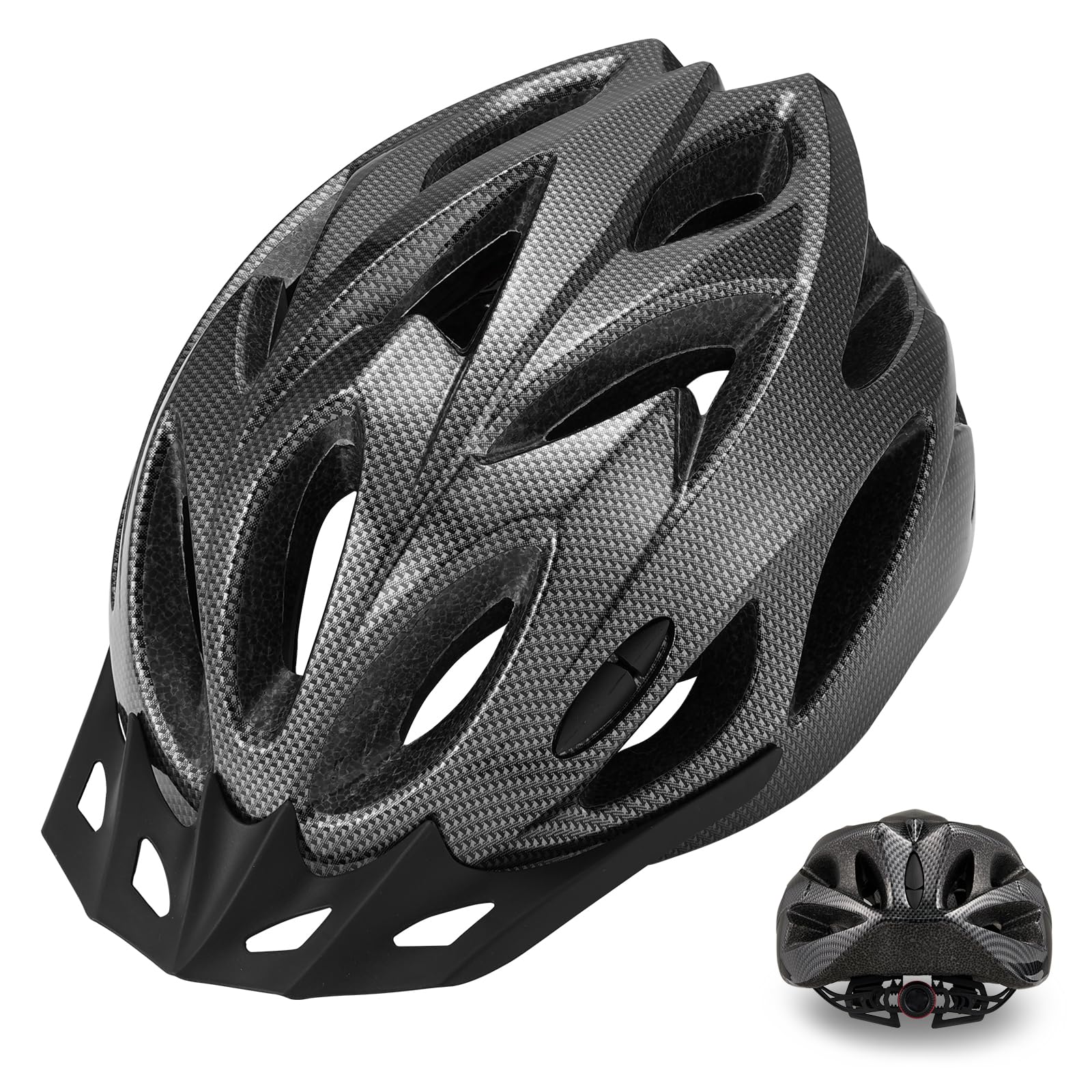
OutdoorMaster Gem MIPS

Top Pick
OutdoorMaster Gem MIPS

Everyday e-bike commuting

Our Score 9.6/10
Check Price

Worth Noting

  • No built-in light or reflective detail
Vents
25
Weight
14.1 oz
Fit System
Dial with two liner thicknesses
Rotational Protection
MIPS
Read the full review

Rotational protection is the decision that separates the helmets in this group, and the Gem is the one that makes MIPS part of a normal commuting budget. The liner is designed to shear a few millimeters against your head in an angled impact — the kind of fall you are most likely to take on pavement. Around it sits a polycarbonate shell over EPS foam, 25 vents, and a removable visor.

Two liner thicknesses, 0.23 and 0.31 inch, sit under the dial, and that pairing is what sold us. Most helmets give you a single shell and let the dial do everything; here you can change how deep the helmet sits on your head before you touch the tension at all. Start with the thick liner, drop to the thin one if the shell rides high, and there is room to run a thin cap underneath when the weather turns.

Weight is the number worth knowing: 14.08 ounces is not the featherweight those 25 vents suggest, and you notice it on a long climb more than on a flat commute where the motor is helping. That is the price of the liner, the second set of pads and the visor, and it is a trade we will take. The vents still earn their keep — this is a helmet that stays dry on a warm ride rather than one you peel off at the lights.

Bottom line: The e-bike helmet we recommend to most riders: MIPS protection, 25 vents and a two-liner fit system, for less than the premium shells in this group.

2

Thousand Heritage 2.0

Thousand Heritage 2.0

Style-first commuting

Our Score 9.6/10
Check Price

Worth Noting

  • No MIPS liner at a premium price
Clasp
Magnetic chin clasp
Weight
1.1 lb
Security
PopLock lock-through
Warranty
Anti-theft and accident replacement
Read the full review

Thread your cable lock through the helmet instead of carrying it around the shop. The Heritage 2.0 hides a channel behind the logo mark that Thousand calls PopLock, and it changes how you use a helmet: lock it to the frame with the bike and it stops being an object you have to hold.

Style is why this helmet exists and it delivers — a low, round profile, a leather-trimmed interior, and a magnetic chin clasp that snaps shut without pinching fingers or catching hair. The dial takes up slack smoothly and the shell stays where you put it. In a group of vented plastic lids, this is the one that looks like it belongs with a jacket.

The money is buying finish, the clasp and the lock-through rather than rotational technology, and it is one of the two priciest helmets here. Thousand offsets some of that with anti-theft and accident replacement guarantees: if it is stolen while it is locked up, or you crash in it, they replace it. That is unusually concrete support, and it makes the premium easier to justify than a nicer surface alone.

Bottom line: Buy it if you want a commuter helmet you will actually enjoy wearing: low-profile shell, magnetic clasp and a lock-through channel that lets you leave it with the bike.

3

VICTGOAL HT-23

VICTGOAL HT-23

Mixed head sizes

Our Score 9.4/10
Check Price

Worth Noting

  • Rear light only, nothing up front
  • No rotational liner
Sizes
M, L, XL (54-63 cm)
Vents
21
Weight
10.9 oz
Lighting
USB rear light, 3 modes
Read the full review

Three shell sizes rather than one. The HT-23 comes in M, L and XL covering 54 to 63 cm, which is the widest span in this group and the reason it is our pick for a household sharing a single helmet — or for anyone whose last helmet sat pinned at the end of its dial's travel.

The magnetic goggles are the surprise. They snap onto the shell on their own or alongside the visor, so you can run the goggles on a cold, gritty morning and leave the visor at home, or wear both into low sun. Both come off with a pull: no screws, no tabs to line up, which matters when you are standing at a rack with gloves on.

At 10.88 ounces with 21 vents it stays comfortable on a warm ride, and the rear light gives you steady plus fast and slow flash over USB. Nothing up front, though, so this is a be-seen helmet rather than a see-better one. For the money it is the easiest way into goggles and a rear light without paying premium prices — provided you are not counting on a rotational liner to go with them.

Bottom line: The pick for shared helmets and awkward head sizes: three shells across 54 to 63 cm, magnetic goggles and a rear light at a midrange price.

4

Giro Agilis MIPS

Giro Agilis MIPS

Fast road riding

Our Score 9.4/10
Check Price

Worth Noting

  • No visor or built-in light
  • The priciest helmet in this group
Shell
In-mold hardbody
Fit System
Roc Loc 5
Ventilation
Wind Tunnel venting
Rotational Protection
MIPS
Read the full review

This is the helmet for the rider who treats an e-bike as a fast bike. The Agilis is a road shell — no visor, no light, no commuting concessions — and the money goes into an in-mold hardbody that wraps the lower edge of the shell in polycarbonate, plus Giro's Wind Tunnel venting.

MIPS sits inside, and Roc Loc 5 is the most precise fit mechanism in this group: one dial adjusting both tension and how high the cradle rides at the back of your head. That sounds like a small thing until you have spent a season with a helmet that only tightens.

Airflow is the other reason to pay. The vent layout moves air across the whole shell rather than leaving a hot patch over the crown, and on a hard assisted climb that is the difference between finishing cool and finishing cooked. What it does not do is solve a commute: no peak for low sun, no light for traffic. It makes most sense for a rider who already has sunglasses and a bar light sorted, and who wants the fit to disappear.

Bottom line: The premium choice for fast riding: MIPS, a two-way Roc Loc 5 cradle and the best airflow here, in a road shell with no commuter extras.

5

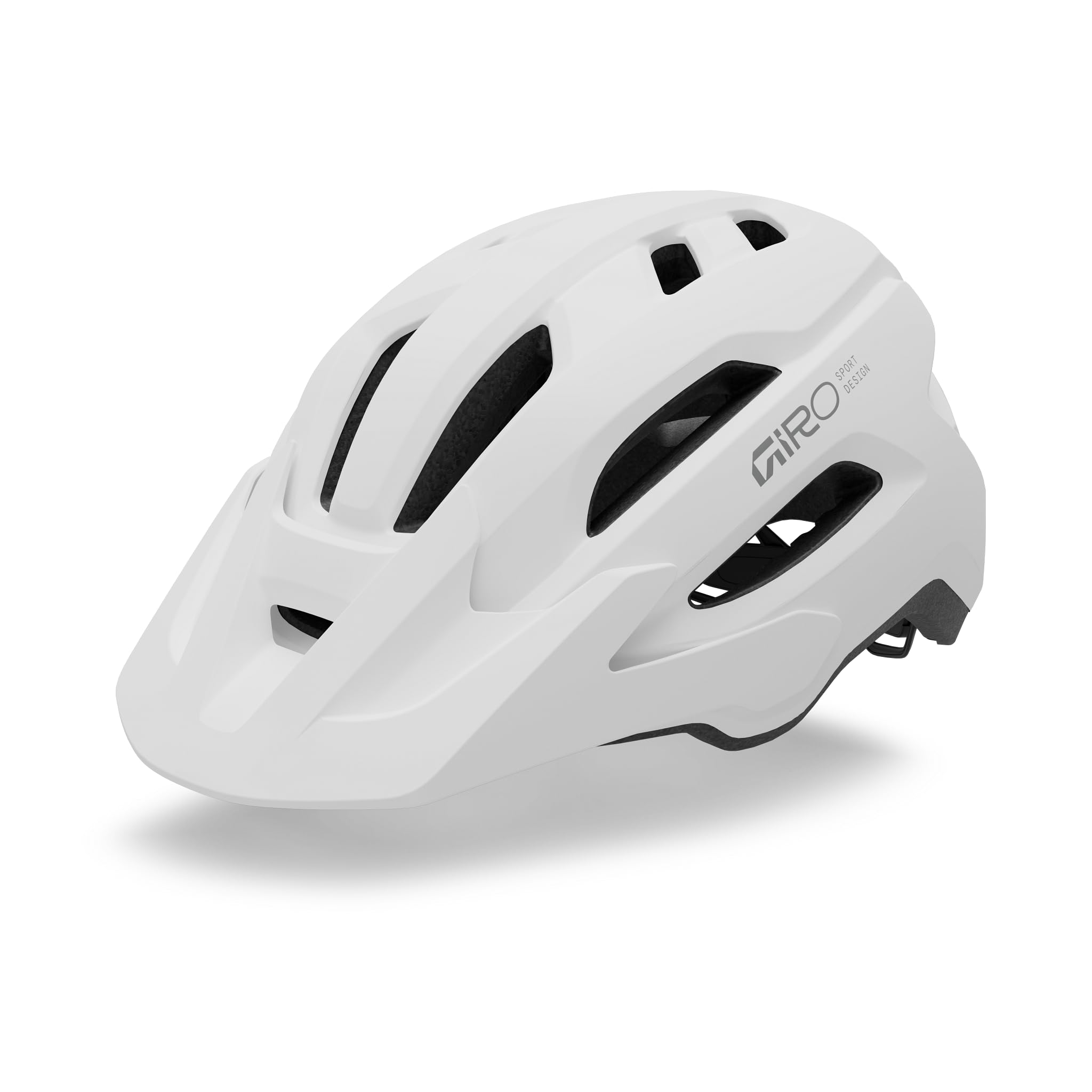
Giro Fixture MIPS II

Giro Fixture MIPS II

Trail-style commuting

Our Score 9.4/10
Check Price

Worth Noting

  • Fixed visor cannot be angled
Fit Range
54-61 cm
Fit System
Roc Loc Sport, 7 cm
Visibility
Reflective details
Rotational Protection
MIPS
Read the full review

There is no light on the Fixture II. The visibility story here is reflective detailing, which only does its job when something is already shining at you: headlights, a streetlight, a torch from a phone. It is a real feature for riding under traffic lights and a useless one on an unlit path.

What you do get is MIPS, an in-mold shell with a fixed visor, and Giro's Roc Loc Sport dial with a 7 cm adjustment range — the widest single-dial span here, and the reason a universal 54-61 cm fit works where one-size helmets usually do not. The click is firm enough that you can set tension by feel with one hand while the other holds the bars.

For e-bike commuting this is a sensible middle: a peak for low sun, MIPS for the impact you hope never happens, and a trail-cap shape that does not look out of place over a jacket. The visor does not tilt, so if you like a peak angled down against a setting sun, that is the one thing you will miss.

Bottom line: The right buy if you want MIPS and a peak without paying premium money — just budget for a separate rear light, because there is not one.

6

Findway Pro

Findway Pro

City errands

Our Score 9.4/10
Check Price

Worth Noting

  • 14 vents is few for hot weather
  • No light and no rotational liner
Shell
ABS over EPS
Vents
14
Security
Lock-through toggle
Fit Range
54-61.5 cm
Read the full review

ABS over EPS rather than the in-mold construction most of this group uses. That changes the character of the Findway: it is a hard, urban-looking shell with 14 vents, closer to a skate helmet in feel than to a vented road lid, and it suits a city bike and street clothes better than it suits a fast ride.

The detail that makes it genuinely useful is the little silver toggle at the back that pulls out so you can thread a cable lock through the helmet. It is Thousand's idea at a fraction of the price, and it is the thing that stops a helmet becoming a nuisance once you are off the bike.

The dial spans 54 to 61.5 cm and the pads pull out for washing and dry fast after a wet ride. It is a short-trip helmet in the way a city bike is a short-trip bike: fine at a relaxed pace in street clothes, less happy when you are working at it. If your commute is ten minutes and your priority is looking normal at the other end, this is the value pick.

Bottom line: A city helmet with the best trick in the group: a lock-through toggle so your helmet stays with the bike, plus quick-dry pads, for budget money.

7

ILM E3-10L

ILM E3-10L

Night riding

Our Score 9.2/10
Check Price

Worth Noting

  • Only 10 vents under a 421 g shell
Vents
10
Weight
14.9 oz
Lighting
USB front and rear lights
Certification
CPSC, ASTM, CE, EN1078
Read the full review

For about what our top pick costs, the ILM makes a different bet: instead of a rotational liner you get a rechargeable light at each end of the helmet and a tinted shield that covers your eyes rather than sitting above them. On a dark commute that is easy to defend. Being seen early matters as much as what happens at the moment of impact, and this is the only helmet here lighting both directions.

It is also the most thoroughly certified of the group, meeting ASTM, CPSC, CE and EN1078, with a one-piece polycarbonate and EPS shell. The shield is the part we missed when we went back to a peaked helmet: it detaches, clears prescription glasses, and does more about wind, grit and low sun than a visor ever does.

Ventilation is where it gives ground. Ten vents under a 421-gram shell is a warm combination, and on a hot afternoon you feel the difference against the 25- and 28-vent helmets here. Against that, the five-year manufacturer warranty is the longest coverage on this page, and the price sits level with the Gem — so the real choice between them is lights versus MIPS, and which one your commute punishes you for missing.

Bottom line: Buy it if you ride before sunrise or after dark: front and rear lights, a glasses-friendly shield and four certifications, at about the same money as our top pick.

8

Zacro Adult Bike Helmet

Zacro Adult Bike Helmet

First helmet

Our Score 9.2/10
Check Price

Worth Noting

  • One shell covering a 9 cm span
Vents
18
Weight
9.17 oz
Fit Range
54-63 cm dial
Certification
CPSC and CE
Read the full review

Two hundred and sixty grams for the least money in this group. The Zacro is what we point at when someone wants the basics done properly — CPSC and CE marked, an 18-vent shell, a detachable visor, and a washable wrap-around pad that pulls out for cleaning.

The dial covers 54 to 63 cm in a single shell, which is a wide net, and the straps have enough tail to lie flat under the chin instead of curling up. At 260 grams it is among the lightest helmets here, and 18 vents is plenty for a commute that does not turn into a hill climb.

What you give up is rotational protection — there is no MIPS liner — and a single shell doing a 9 cm job means heads at either end sit at the limit of the dial's travel. For a first helmet, a spare for a guest, or a lid you leave locked to a rack in the city, none of that is disqualifying. This is the sensible floor of the category, not a compromise on it.

Bottom line: Our budget pick: CPSC and CE certification, 260 grams and a 54-63 cm dial range for the least money in this group.

9

Basecamp BC-069

Basecamp BC-069

Hot-weather commutes

Our Score 9.2/10
Check Price

Worth Noting

  • Single Large size, 57-62 cm
Vents
28
Weight
9.12 oz
Lighting
USB rear light
Fit Range
Large, 57-62 cm
Read the full review

Twenty-eight vents and 9.12 ounces. If your commute is a hot one — a southern summer, or a hill on the way home — that combination is the reason to look at the Basecamp before anything else here. It is the most airflow this group offers with a light already built in.

It is unusually well equipped besides: a USB rear light with three modes, a magnetic visor held on by three magnets, a spare light battery and a carry bag in the box. The cradle adjusts up and down as well as around, which is more than most helmets at this level offer, and the visor flips up out of the way rather than needing to come off.

The catch is sizing: one Large shell covering 57 to 62 cm. If you measure smaller, you are out of luck, and that is a shame, because nothing else here pairs this much ventilation with a built-in blinker. Riders in the top half of that range get the best value in the group for a warm commute.

Bottom line: The hot-weather pick: 28 vents, 9.12 ounces, a rear light and a magnetic visor, provided your head measures between 57 and 62 cm.

10

Retrospec Dakota

Retrospec Dakota

Bike and skate

Our Score 9.0/10
Check Price

Worth Noting

  • 16 oz and 10 vents make it the warmest here
Shell
ABS over EPS
Sizes
S, M, L
Vents
10
Weight
16 oz
Read the full review

The Dakota is a skate helmet doing bike duty, and that is the point. The ABS shell drops lower at the back and around the ears than a road shell does, which is exactly the coverage that matters when you are commuting in traffic and the surface under you is a variable rather than a given.

It comes in three shell sizes — small at 51-54 cm, medium at 54-57, and large above that — so you fit the shell first and trim with the dial second, which is how a helmet should work. Sizing is the thing to get right: the temples run snug, so if you are between sizes or you know your head runs wide, go up.

What you get back for the weight and the vent count is a limited lifetime warranty — the longest coverage commitment here — and one helmet that handles the bike, the board and the scooter in the garage without a second purchase. If you only ever ride pavement, the vented picks do the job with less heat. If your garage has more than one set of wheels in it, this is the one that covers all of them.

Bottom line: The multi-sport pick: a deeper skate-style shell, three real sizes and a limited lifetime warranty, for riders who split their miles between bike and board.

How We Tested E-Bike Helmets

We began by pulling together more than 40 helmets marketed for e-bikes and commuter riding, then cut the list by checking certifications, rear coverage, visor size, ventilation claims, and customer reviews about fit and finish. That left us with 12 helmets to ride for six months.

Each helmet went into my normal routine: a 25-minute commute to the office, a weekend rail-trail loop, a cargo-bike school run with a kid seat behind me, and a few rainy and unusually hot afternoons. I weighed every helmet on a kitchen scale before the first ride and noted neck fatigue after 45 minutes. To judge fit, three of us with different head shapes and hair volumes wore each one, adjusted the dial with one hand, and checked for pressure points behind the ears and across the forehead.

For comfort, we wore each helmet for at least one hour straight, climbed a steady hill to see how ventilation held up, and tried sunglasses and a thin cap underneath. Quality checks meant flexing the strap anchors, tugging the padding, and looking at seam lines and dial smoothness. Appearance got a real-world test: I wore each one into a coffee shop and asked coworkers whether it read as a bike helmet or something I'd wear on purpose. Value came down to what came in the box—spare pads, a light mount, a bag—against what the helmet cost.

How to Choose E-Bike Helmets

Put rotational protection first

MIPS and similar low-friction liners let the shell rotate a few millimeters against your head during an angled impact, which is how most falls on pavement load the brain. On a pedal bike that is a worthwhile upgrade; on a bike that holds a fast cruise without much effort, we rank it above every other feature on this page.

A helmet can be perfectly legal and well made without it. CPSC certification is the U.S. baseline for bicycle helmets and does not assess rotational forces, and the Dutch NTA-8776 standard, written specifically for speed-pedelec use, is not claimed by any helmet here — so if that matters to you, it is a filter you apply yourself. Otherwise, buy the liner.

Built-in lights versus a light you already own

A helmet light sits higher than a bar or seatpost light, which puts it nearer the eyeline of a driver behind a windshield instead of below the hood line. At dawn and dusk that is a genuine advantage, and on a dark commute it is the difference between being noticed and being missed.

The trade is coverage and upkeep: most integrated lights are rear-only, and every one of them runs off a USB battery you have to remember. If you already run a bright rear blinker you like, a lit helmet is convenience; if you don't, it is the easiest way to make sure you are never riding dark.

Fit is a range, not a size

Measure your head in centimeters just above the eyebrows and compare that number with the shell's stated range rather than with a letter. One shell spanning 54-63 cm is doing a lot of work with a dial, and heads near either end tend to sit at the limit of its travel; helmets sold in two or three shell sizes fit better through the middle of each range.

Thickness options help too — the OutdoorMaster Gem ships with two liners, so you can change how deep the shell sits before touching the tension at all. Whatever you choose, the shell should sit level and low enough to cover the forehead. A helmet tipped back is protecting the wrong part of your head.

Visors, shields, and glasses

A peak keeps low sun and rain out of your eyes. A full shield keeps out wind and grit as well, and that matters more the faster you go — the ILM and the VICTGOAL both use magnetic shields that clear prescription frames and pull off without tools.

If you wear glasses, check the clearance before you commit; a shield that presses on your temples is worse than no shield. And a peak that only shades the top of your face is a sunshade, not eye protection.

Heat, weight, and how far you actually ride

Vent count is a rough proxy for airflow and weight is a rough proxy for fatigue, and the two pull against each other. A 9.12-ounce shell with 28 vents, like the Basecamp, suits a hot, hilly commute; a 16-ounce skate-style shell with 10 vents, like the Retrospec, suits a short trip where coverage and looks matter more.

Twenty minutes each way in a mild climate and almost anything here will do. Forty-five minutes in July and ventilation becomes the feature you notice every single day.

Frequently Asked Questions

Final Verdict

The OutdoorMaster Gem MIPS is the helmet we recommend to most e-bike riders. Rotational protection is the feature that matters at assisted speeds, and the Gem pairs it with 25 vents and a two-liner fit system for midrange money.

If dark commuting is your reality, the ILM E3-10L is the better buy: front and rear lights and a tinted shield do more for you at 6 p.m. in November than a MIPS liner does in a crash you never have. Everything else comes down to fit — measure before you order, especially if you sit at either end of a stated range.