Helmets

Best MIPS Bike Helmets of 2026

MIPS sounds like a marketing badge until you know what it actually does: it's a thin low-friction layer between the foam and your head that lets the shell rotate a few millimeters in a crash, giving your brain a fraction more time to slow down on an angled impact. What it isn't is a fit system, a ventilation plan, or any guarantee the helmet will feel fine on hour three of a ride. A helmet that pinches your forehead, sits too high, or shifts when you glance over your shoulder ends up hanging in the garage, and that's the failure that actually matters.

I rode a helmet with a cracked liner for two seasons longer than I should admit, so comfort earned as much of my attention here as safety claims did. My team and I spent ten months in 12 MIPS helmets — commuting, grinding out weekend rail-trail miles, and taking a few lift-served laps — and the pattern held: past a certain point, your money buys fit hardware, weight, and airflow, not protection, since every helmet here clears the same safety standard. The differences live in how the MIPS layer is built in, which is what decides whether a helmet feels sleek or sits on your head like a bowl.

1

OutdoorMaster Gem MIPS

Top Pick
OutdoorMaster Gem MIPS

All-round riding

Our Score 9.6/10
Check Price

Worth Noting

  • Sold in a single Medium size
Size
Medium
Vents
25
Weight
14.1 oz
Included Liners
Two thicknesses
Read the full review

Two liner sets, one noticeably thicker than the other, are what made the Gem our top pick. Fit is the thing that decides whether a helmet actually gets worn, and swapping the liner changes how deep the shell sits before you touch the dial, so a single Medium shell settles onto a wider spread of heads than its size label suggests. We also like that it solves that problem without charging for it: this is the least expensive helmet here, and it still carries MIPS, 25 vents, and a removable visor.

On the bike, the vents are what you notice. Air moves across the crown rather than just at the brow, so on a long slow climb you aren't pushing the shell back every few minutes. The polycarbonate-over-foam construction is the standard build at this level and the removable visor is what turns it into a trail helmet or a road helmet depending on the day, which is why it ended up on more of our rides than anything else in the box.

One practical note before you order: the liners are swapped by hand, so getting the fit right is a two-minute job at home rather than a mid-ride adjustment. Try the thick one first, then the thin one, and keep whichever disappears on your head. The visor pulls off with a firm tug and pushes back in just as easily, so the fair-weather setup and the shady-trail setup are the same helmet.

Bottom line: Our top pick for most riders: two liner thicknesses make the fit easy to dial in, 25 vents keep it cool, and it costs less than everything else in this lineup.
2

Giro Fixture MIPS

Giro Fixture MIPS

Trail and commute

Our Score 9.4/10
Check Price

Worth Noting

  • Fixed visor cannot be tipped up
Size
Universal adult (54-61 cm)
Fit System
Roc Loc Sport, 7 cm range
Construction
In-mold polycarbonate
Reflective Details
Yes
Read the full review

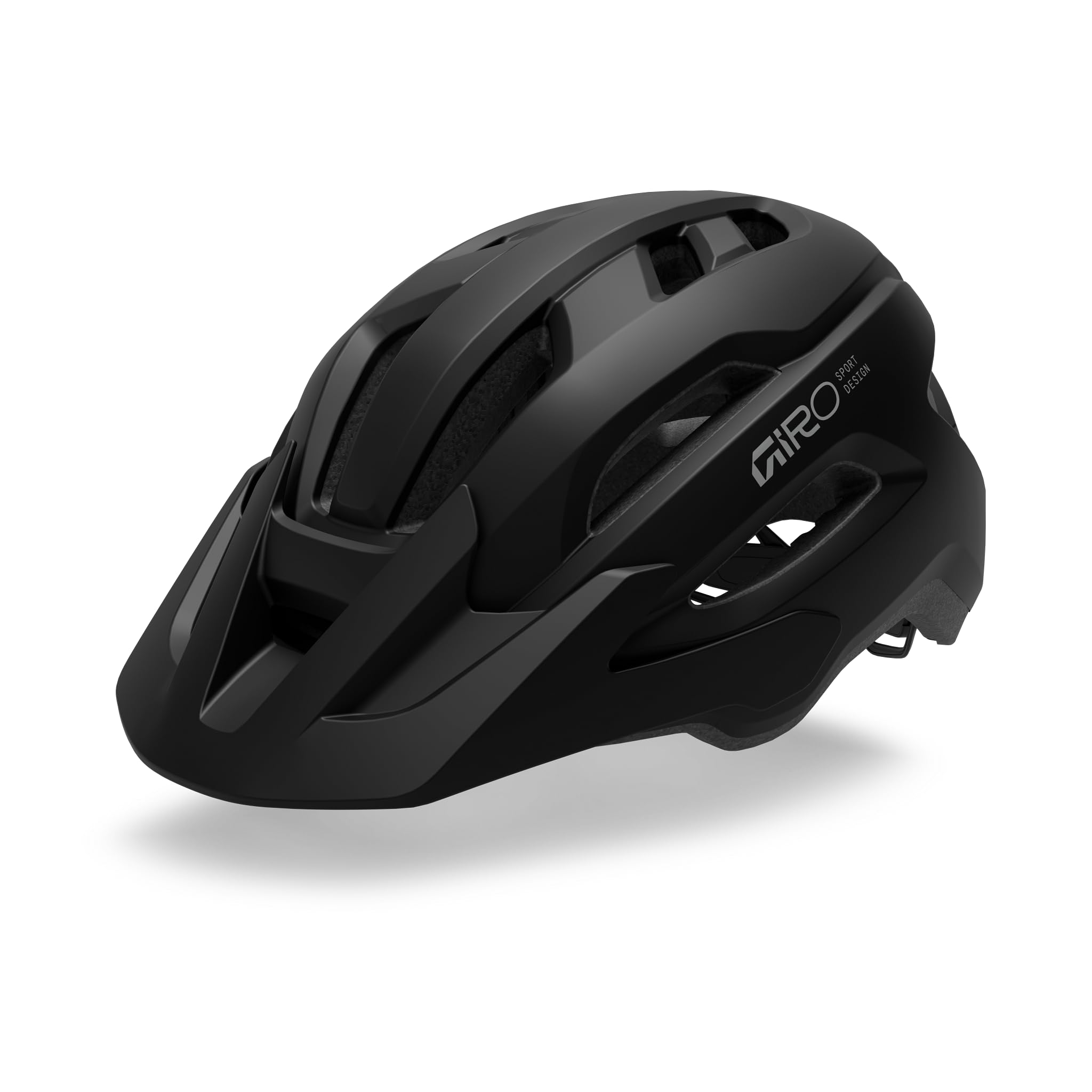
Where the Gem leans on swappable liners, the Fixture leans on Giro's Roc Loc Sport dial and a universal 54-61 cm shell meant to fit nearly any adult on the first try. That's a different bet: fewer loose parts to keep track of, more range built into the fit system itself. Around that you get in-mold construction, a visor, and reflective detailing that picks up headlights, which is the detail that matters if your commute ends after dark.

We think this is the best trail-and-commute value in the group. Fusing the polycarbonate directly to the foam keeps the weight down and lets Giro cut more vent openings than a glued shell would allow, and the visor is long enough to actually block low sun without turning the helmet into a mushroom. The dial clicks in small, definite steps and works one-handed, which counts for something when you're already rolling.

The chin strap is where it gives ground. There's less strap adjustment here than the rear dial deserves, so if you have a long jaw or a short face the buckle can end up somewhere you feel it rather than somewhere you forget, and no amount of dialing fixes that. It's the clearest place the money saved shows, and it's worth a minute in front of a mirror before you decide the fit is right.

Bottom line: The trail and commuter pick we keep coming back to: a universal fit that flatters most adults, a light in-mold shell, and reflective trim for the ride home.

3

Giro Agilis MIPS

Giro Agilis MIPS

Road riding

Our Score 9.4/10
Check Price

Worth Noting

  • Costs more than the trail-capable Fixture
Size
Medium
Shell
In-mold hardbody lower wrap
Weight
1.48 lb
Fit System
Roc Loc 5
Read the full review

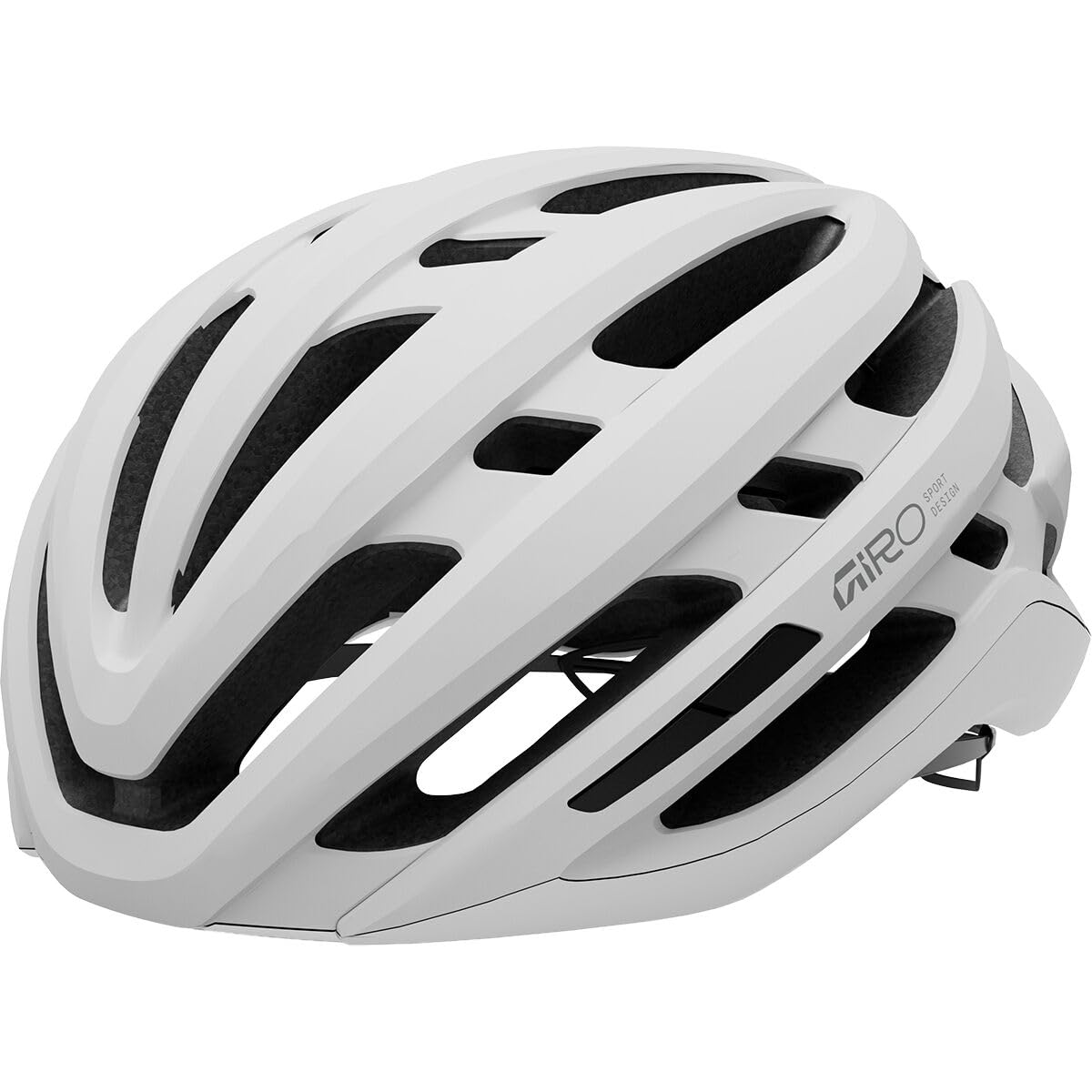
The Agilis is the priciest Giro in this lineup, and the money goes somewhere specific: air. Giro's wind-tunnel venting runs from the brow to exhaust ports at the back, and the Roc Loc 5 retention system is the version Giro builds around stability and weight savings rather than pure range. If your rides are long, hot, and mostly on pavement, that's a trade worth making.

We came away convinced it's the best-ventilated helmet here. The openings are wide and continuous across the crown instead of being a few slits over the forehead, so the airflow keeps up on a climb rather than only once you're moving fast. It's also the sleeker of the two Giro picks, sitting closer to the head with less shell out front, which is most of why it looks right on a road bike and slightly overdressed on a greenway.

The hardbody lower wrap is the quiet win. That second polycarbonate layer runs around the bottom edge of the shell, which is the part that takes the abuse when the helmet lives on a cafe table or the floor of a car, and it stops the foam edge from crumbling the way bare liners do. The downside is the price, which is the real barrier here, and the fact that this is a road-shaped helmet: no visor, no trail coverage, and a profile built to slip through air rather than duck under branches.

Bottom line: If your miles are paved and hot, this is the one: the most convincing ventilation in the set, a light Roc Loc 5 cradle, and a profile worth the premium.

4

Smith Engage MIPS

Smith Engage MIPS

Technical trails

Our Score 9.4/10
Check Price

Worth Noting

  • The most expensive helmet in this set
Size
Large
Vents
20
Visor
Two positions
Protection
MIPS with Koroyd zones
Read the full review

Koroyd is what sets the Engage apart from every other helmet on this page. Smith fuses zones of the honeycomb material into the shell, which is designed to absorb energy in a controlled way while letting air pass through, and pairs it with MIPS. Put it on and the shape tells you the same story: the shell drops lower at the back of the head than the road helmets here, the visor sits further forward, and the whole thing feels built around looking down a trail rather than down a road.

Twenty vents, single-layer webbing that stays flat under the ears, and an Ionic+ lining treated to resist odor once the padding is soaked through. The rear dial takes up the last centimeter or two without any hard spot behind the occipital bone, which is the complaint we pay most attention to in a trail helmet, and the padding inside is soft enough that a bare head works fine without a cap.

The visor is the detail we keep coming back to. It clicks between two positions, so it drops to block low sun on a fire-road grind and lifts out of the sightline when the trail tips down and you need to read the line ahead. Combined with the deeper shell, that's a helmet that behaves like it was designed for riding under trees, which is exactly what it costs the most in this group to get.

Bottom line: For riders who spend their time on real trails, the Koroyd-and-MIPS build, deeper rear coverage, and two-position visor earn the higher price.

5

Triple Eight Gotham MIPS

Triple Eight Gotham MIPS

Skate and bike

Our Score 9.2/10
Check Price

Worth Noting

  • Bulkier and less vented than the bike-specific picks
Shell
Vented ABS
Sizes
Three, 48-61 cm
Weight
1.5 lb
Certification
CPSC and ASTM F1447
Read the full review

If the helmet is going to see as much skatepark as bike path, the Gotham is the one on this list built for it. The ABS shell is harder and rounder than the in-mold bike helmets here, with a brim and vents cut straight into the plastic, and Triple Eight sells it in three shell sizes with two sets of pads in the box. It's certified to the CPSC bicycle standard and to ASTM F1447 for recreational bicycling or roller skating, so the same shell covers both sessions.

Sizing is the thing to get right. These shells run large, so measure your head and lean toward the smaller option if you're between sizes, because the extra pads and the reflective dial only buy back a little. Then set the side-release chin strap so the shell stays level when you shake your head, since a round skate shell that slides back is doing very little for the front of your skull.

What you trade for the versatility is bulk and airflow. The ABS shell sits higher and wider on the head than the in-mold bike helmets here, and the vents can't move the same volume of air on a hot climb, so it's the wrong helmet for a long summer road ride. Where that stops mattering is the moment you're rolling into a bowl rather than up a hill.

Bottom line: Our pick for anyone splitting time between a bike and a board: the hard ABS shell, three shell sizes, and dual certification cover more ground than the bike-only helmets here.

How We Tested MIPS Bike Helmets

We started by gathering every MIPS-equipped helmet we could reasonably get our hands on, then cut the field down by certified safety standard, number of shell sizes offered, availability of replacement pads, and whether the slip-plane was integrated into the liner or floating loosely inside the shell. Helmets with a single shell size stretched across a wide head range, or with no way to buy fresh pads a year down the line, didn't make the cut. That left 12 helmets.

Testing ran ten months across real riding: a 25-minute daily commute in traffic, longer weekend rides on rail-trail and gravel, a couple of days at a skills park, and short sweaty loops at lunch. We measured each tester's head, matched it against every brand's size chart, and deliberately put helmets on people who landed between sizes to see whether the retention dial could close the gap or whether the shell just floated.

Along the way we weighed every helmet on a kitchen scale, turned each retention dial one-handed mid-ride, and wore a thin skull cap under a few to check for forehead pressure points. We tugged each helmet on and off a dozen times to see whether the MIPS layer bunched or slid out of place, stuffed them into commuter backpacks and gym bags to judge how much room they ate, and after every pad wash checked strap anchors, shell seams, and whether the padding had gone flat. Three of the 12 are still in weekly rotation; the ones that aren't are all still in the bin, and the reasons they landed there are the reasons they're absent from the list below.

How to Choose MIPS Bike Helmets

What MIPS does, and what it doesn't

MIPS is a thin, low-friction layer between the liner and your head that lets the shell rotate a few millimeters during an angled impact, which is meant to reduce the rotational force that reaches your brain. That matters for the fall most riders actually have: a glancing hit at a curb, a root, or an open car door rather than a clean drop straight down.

What it doesn't do is rank these helmets. Every pick here has MIPS, so the decision moves on to fit, coverage, and venting. Paying more buys you those things, not another layer of protection, and the least expensive helmet in this group carries the same rotational system as the most expensive one.

Fit is the part you can actually check

Every helmet here adjusts at the back, but the systems are not equivalent. Giro's Roc Loc Sport sweeps about 7 cm of circumference on the Fixture, the Gem uses two liner thicknesses plus a dial, and the Gotham comes in three separate shell sizes with two sets of pads. More adjustment is generally better, especially if you land near the end of a size range.

The trap is assuming the dial fixes everything. A dial tightens a shell; it doesn't reshape one. If the helmet rocks front to back, or presses hard across the forehead while feeling loose at the sides, the shell is the wrong shape for you no matter where the dial ends up. Start with a stated range that covers your head measurement, then use the liner and dial to fine-tune from there.

Match the coverage and visor to the riding

Trail helmets give you a visor, more shell behind the ear, and vents placed to dump heat on a climb. Road helmets cut the visor, pull the profile in, and push air across the crown. Park and skate shells go the other way again: a hard ABS shell, a rounder shape, and far fewer vents, which is why the Gotham is the pick here for anyone splitting time between a bike and a board.

Buy for the riding you do most rather than the riding you do twice a year. A visored trail helmet is fine on pavement; a road helmet without a visor gets old fast under trees on a sunny afternoon.

Vents, weight, and where the money goes

Vent counts are a rough proxy at best. Twenty-five vents spread across the crown move more air than twenty crowded at the brow, so look at placement as much as the number. Weight starts to matter once a ride passes a couple of hours, and it's the place where a heavier shell with more coverage is often the better trade.

Spend on fit and venting before you spend on grams. And don't assume the premium helmets are the ones that will fit you best: the least expensive helmet in this lineup is also the one with the most forgiving fit.

Frequently Asked Questions

Final Verdict

The OutdoorMaster Gem is the helmet we point most riders toward. Two liner thicknesses do fit work that a dial alone can't, 25 vents keep it comfortable when the road tilts up, and it manages all of that at the lowest price in this group. It is the easiest recommendation on the page.

If your riding is mostly dirt and you want a visor plus reflective trim for the ride home, the Giro Fixture is the close second. If your miles are paved and hot, step up to the Agilis for the ventilation and the lighter cradle, because that's exactly what the extra money buys.