Helmets

Best Women's Bike Helmets of 2026

The wrong bike helmet makes itself known fast: a hot spot on the forehead, a strap that saws at your jaw, or a silhouette that makes you feel like a mushroom. The right one disappears—you tighten the dial, tuck the straps, and forget it's there. That's what I was chasing when I started looking at women's bike helmets. The best ones solve the fit problems that keep people from wearing a helmet at all, without making you pay extra for a pretty shell that doesn't hold up.

I've spent the past six months riding with 12 helmets, from quick grocery runs to longer weekend rides, and the differences come down to fit and adjustability more than anything. Women's-specific models aren't just smaller—they often have a different internal shape, which is why a helmet that's technically your size can still press on your forehead. I also learned to check the size chart against a real tape measure, not the size I'd been buying for years. The picks below are the ones that earned a permanent spot by the door.

1

OutdoorMaster Gem MIPS

Top Pick
OutdoorMaster Gem MIPS

Everyday riding

Our Score 9.6/10
Check Price

Worth Noting

  • Medium-only listing limits larger head sizes
Size
Medium
Vents
25
Weight
14.1 oz
Rotational Protection
MIPS
Read the full review

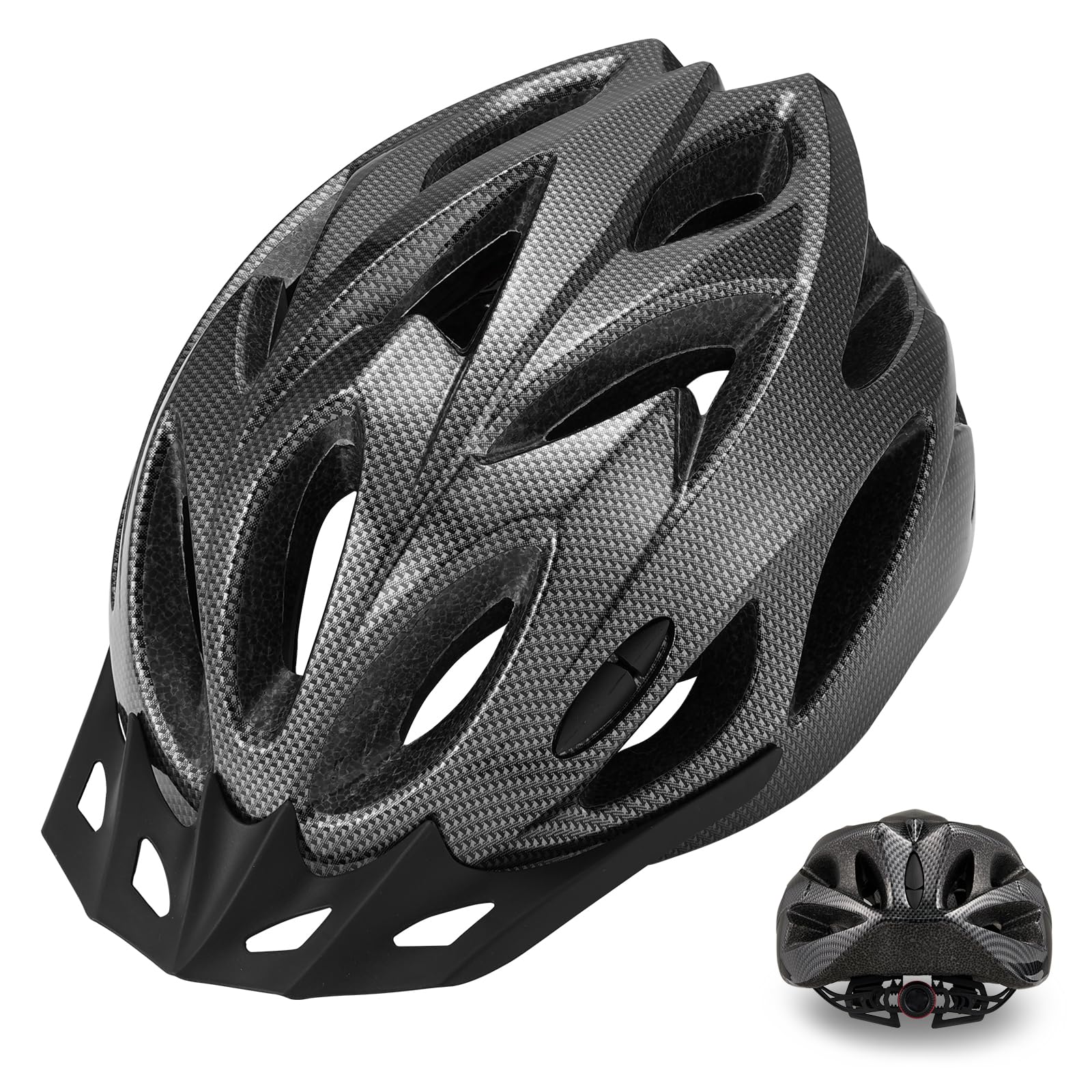
MIPS protection and two liner thicknesses are the details that put the OutdoorMaster Gem at the top of this guide. We rank it first for most women because the MIPS layer is designed to reduce rotational forces in some impacts, and the two liners let you tune the fit instead of hoping one shell shape works. The 25 vents and removable visor make it easy to live with on warm rides.

At 14.08 ounces, it is light enough to forget about on a longer ride, and the Misty Sakura color is a nice change from black without turning into a highlighter. The two liners give the medium shell a little more room to dial in comfort, and the dial and straps are easy to understand. The padding feels substantial without making the helmet feel bulky.

What seals it for us is the balance. You get MIPS, strong ventilation, a visor, and a comfortable liner for midrange money, and the result is a helmet that works for road, path, and rail-trail riding. It is the one we reach for when the ride could turn into a commute or a long weekend loop.

Bottom line: We think the Gem is the helmet most women should start with: MIPS, 25 vents, and two liner thicknesses make it easy to fit and live with.

2

Giro Agilis MIPS

Giro Agilis MIPS

Road riding

Our Score 9.4/10
Check Price

Worth Noting

  • Medium-only size may not suit every rider
Size
Medium
Weight
1.48 lb
Fit System
Roc Loc 5
Rotational Protection
MIPS
Read the full review

The Agilis is the premium road option here, and the price is the first thing to get straight. You are paying for a low-profile shell, MIPS, and Giro's Roc Loc 5 retention system, not for commuter extras. For a rider who spends serious time on the road and wants the helmet to disappear, that trade makes sense.

We rank it near the top of this set for ventilation and fit. The Wind Tunnel ventilation is designed to pull air through the shell, and the Roc Loc 5 dial gives precise, one-handed adjustment that matters when you are already rolling. It is also light at 0.67 kg, though the bigger difference is how secure and polished the whole package feels.

The catch is the premium price, which is the highest in this group. If you want one helmet for commuting and weekend rides, the Gem is easier to justify. If road riding is the main event and the fit is right, the Agilis is the one we prefer.

Bottom line: For committed road riders, the Agilis is our premium pick because MIPS, Roc Loc 5, and strong ventilation make a light helmet feel precise.

3

GROTTICO LED Bike Helmet

GROTTICO LED Bike Helmet

Night commuting

Our Score 9.4/10
Check Price

Worth Noting

  • Rear light adds a charging routine
Vents
23
Weight
10.6 oz
Head Range
M 55–58 cm; L 59–61 cm
Rear Light
USB rechargeable, three modes
Read the full review

A rear light built into the helmet is the feature that makes the GROTTICO worth a closer look. We think it is the best night-ride choice in this set: the USB-rechargeable light has steady and two flashing modes, and it adds visibility without another strap or clip to remember. The helmet also meets U.S. and EU cycling standards, which puts it on firmer footing than a generic shell.

We like the rest of the package, too. Twenty-three vents keep air moving, the 10.56-ounce build is light for a helmet with a light unit, and the two visors let you change the look or leave the shield off. The matte magenta finish is a strong option if you want something visible and a little less serious than black. The dial and straps are easy to understand, and the replacement pads are a practical touch.

The sizing is the main thing to check. The medium covers 55-58 cm and the large covers 59-61 cm, so there is no small option for a petite head and no overlap to fall back on. Measure carefully before choosing; if you land between sizes, the larger shell is the safer bet only if the dial can take up the slack. For a rider who wants a visible, well-vented commuter lid, the fit limitation is the one compromise we accept.

Bottom line: We choose the GROTTICO for dusk commuting because its built-in rear light and 23 vents add visibility and airflow without a separate accessory.

4

Schwinn Thrasher

Schwinn Thrasher

Budget riding

Our Score 9.4/10
Check Price

Worth Noting

  • Visor and rear dial can be fragile
Vents
20
Fit System
Adjustable dial
Head Range
58–62 cm
Safety Standard
U.S. CPSC
Read the full review

The Thrasher is the lowest-priced helmet in this guide, and that is exactly why it earns a place. It is a genuine CPSC-certified adult helmet with a visor, 20 vents, and an adjustable dial, not a toy-sized shell with a bike logo. For a first helmet, a spare for a guest, or a rider who wants to spend as little as possible without giving up the basics, it is hard to argue with.

The fit range is the catch: 58-62 cm starts larger than many women need, so this is not the helmet for a petite or even average-sized head. If it does fit, the dial and straps are straightforward, the padding is comfortable enough for short and medium rides, and the visor is useful in low sun. The shell is simple and the price leaves room for a lock or a set of lights.

We rank it as the budget pick rather than the default because fit comes before price. A helmet that does not sit snugly is not a bargain, no matter how little it costs. If you measure within the Thrasher's range and want a simple, certified helmet for paths and errands, it does the job. If you are below 58 cm, start with the Zacro or the Bell Thalia instead.

Bottom line: The Thrasher is our budget pick for riders who measure 58-62 cm and want a certified helmet with a visor and simple dial fit.

5

VICTGOAL HT-23

VICTGOAL HT-23

Commuting extras

Our Score 9.4/10
Check Price

Worth Noting

  • Rear light requires charging
Size
M (54–58 cm)
Vents
21
Weight
10.9 oz
Rear Light
USB rechargeable, three modes
Read the full review

The magnetic goggles are the feature that sets the VICTGOAL apart. They snap onto the shell over the visor, and the visor itself is removable, so you can run goggles on a windy trail day and strip the whole stack for a simple commute. The rear light adds a three-mode flasher, and the 21 vents and 310-gram build keep it from feeling like a novelty.

We like the look and the flexibility. The pink finish is bright without being childish, and the three sizes give more room to find a fit than the one-size helmets here. The dial and chin strap are easy to adjust, and the goggles are shaped to sit over glasses. The rear light is a useful safety extra for early starts and winter evenings.

The goggles are also the fussiest part. They add a step when you stop, and they can fog if you are working hard and standing still. The shell is not as airy as the 25-vent Gem. None of that is a dealbreaker for a commuter who wants eye protection without sunglasses.

We think the VICTGOAL is a strong choice if you want goggles, a visor, and a rear light in one package, but check the certification label first: the listing emphasizes impact resistance but does not name a standard. If the label is there, it is an easy commuter pick; if a stated standard matters more, choose a helmet that names one.

Bottom line: The VICTGOAL is our pick for riders who want magnetic goggles, a visor, and a rear light in one commuter-ready helmet.

6

Findway Pro

Findway Pro

Urban commuting

Our Score 9.4/10
Check Price

Worth Noting

  • Modest ventilation for long, hot climbs
Shell
ABS
Vents
14
Weight
1.48 lb
Head Range
54–61.5 cm
Read the full review

The Findway Pro looks more like a city helmet than a race lid. The ABS shell has a rounder, urban profile, and the 14 vents are arranged for commuting rather than time-trial airflow. At 0.67 kg, it is not a featherweight, but the weight is spread evenly and the shell feels solid in the hand.

The fit range is broad: 54-61.5 cm, with a dial at the back and straps that are easy to set. The interior pads are removable and washable, which matters if you commute in warm weather or share the helmet occasionally. The listing describes it as safety certified, and the ABS shell and EPS foam are the expected combination for a casual bike helmet.

We rank it as an urban also-consider because it does the city job well without pretending to be a road helmet. The shape is clean, the dial is easy to use, and the price sits at the budget end of this group. If you want a simple, good-looking helmet for errands and bike-path miles, the Findway is easy to recommend.

Bottom line: We recommend the Findway as an urban budget helmet: broad 54-61.5 cm fit, washable pads, and a clean city profile.

7

Zacro Adult Bike Helmet

Zacro Adult Bike Helmet

Wide fit range

Our Score 9.2/10
Check Price

Worth Noting

  • Visor is short for low sun
Vents
18
Weight
7.94 oz
Head Range
54–62 cm
Safety Standards
CPSC and CE
Read the full review

The Zacro lists a 54-62 cm range, which is wider than most helmets here, and it weighs 225 grams. Those two figures explain why it is on the list: it covers a broad spread of head sizes without adding bulk. The 18 vents and detachable visor are sensible everyday features, and the CPSC and CE claims give it the safety basics.

We think it is the best budget choice for a wide range of heads, but the fit is not universal. The shell can press at the temples on a very wide or round head, so the range is a starting point rather than a guarantee. The light weight makes it easy to wear for errands and rail-trail rides, and the removable pads are a practical touch for cleaning.

Where it earns its place is as a second helmet for a family, a commuter you can leave locked to the bike, or a first helmet for a rider who knows the shell shape works. At this end of the range, that is a useful role. It is not the helmet we choose when MIPS is a priority.

Bottom line: We like the Zacro as the budget choice for a wide range of heads, with a 54-62 cm fit, low weight, and a removable visor.

8

ILM E3-10L

ILM E3-10L

E-bike visibility

Our Score 9.2/10
Check Price

Worth Noting

  • Large-X-Large sizing only
Size
Large–X-Large
Vents
10
Lights
USB front and rear
Safety Standards
ASTM, CPSC, CE, EN1078
Read the full review

The ILM E3-10L is the helmet here that leans toward e-bike and commuter duty. It carries front and rear USB lights, a tinted visor, and a 421-gram build that feels more substantial than the featherweight road lids. The lights are the reason to look: a front light and a rear flasher built into the shell make you easier to see without adding separate accessories.

The safety story is stronger than most. ILM lists ASTM, CPSC, CE, and EN1078 standards, and the one-piece EPS and PC shell is designed for shock absorption. The visor is eyeglass friendly and blocks sun, wind, and road grit, which is a real comfort advantage on a fast commute. The liner is removable and washable, too.

The trade-offs are weight and airflow. At 421 grams, it is the heaviest pick in this guide, and 10 vents do not move as much air as the 23- or 25-vent helmets here. On a hot, hard ride you will feel it. On a cooler commute or an e-bike trip where the motor does some of the work, the extra coverage and lights make more sense.

The fit system adjusts, and the visor sits well over glasses, but the shell is built for riders who want a more enclosed feel rather than a bare-bones road helmet. The lights charge by USB, and the visor removes if you want a plainer look. It is a purposeful design, not a universal one.

We rank the ILM as an also-consider rather than a main pick because it solves a specific problem: visibility and face protection for larger riders on faster commutes. If that is your ride, the weight is the price of the lights and shield. If you want a light, airy helmet for weekend road miles, it is not the one we choose.

Bottom line: We rank the ILM as the visibility pick for larger riders, with front and rear lights, a tinted visor, and four listed safety standards.

9

Bell Thalia Women's

Bell Thalia Women's

Smaller heads

Our Score 9.0/10
Check Price

Worth Noting

  • Outer shell edge can lift over time
Vents
16
Weight
10.6 oz
Head Range
54–58 cm
Safety Standard
U.S. CPSC
Read the full review

The Bell Thalia is the one women-specific helmet in this group, and it is built around a smaller 54-58 cm range. That is a meaningful difference if most unisex helmets sit too wide or too tall on you. The shape, the colors, and the 16-vent shell are aimed at casual riders rather than racers, and the CPSC label is there.

The fit is the whole story. The Thalia uses Bell's True Fit system, but the headband is not as adjustable as the dial systems on the other picks, so the shell shape has to be right from the start. On a smaller head it can feel secure and light, and the 0.3 kg weight is easy to live with. On a larger head, or even a medium one, it can feel snug.

We also like the look. The colors are a step away from the black-and-neon default, and the visor is useful without making the helmet feel like a mountain-bike lid. The padding is comfortable for short rides, and the shell has a clean profile.

We recommend the Thalia for a woman with a measured head in the lower half of that 54-58 cm range who wants a simple, women-specific helmet and does not need MIPS or a built-in light. It is not the versatile default for everyone, but for the right head it is a comfortable, affordable fit.

Bottom line: The Thalia is the women-specific helmet we suggest for smaller heads, with a 54-58 cm range, light shell, and cheerful colors.

How We Tested Women's Bike Helmets

We started with a shortlist of helmets marketed to women, then filtered out anything with vague sizing, no fit dial, or a shell that only came in one size. That left 12 helmets, which we rode for six months on commutes, grocery runs, and longer weekend rides. I wore each one with a ponytail, a bun, and loose hair, because a helmet that fits one hairstyle can pinch another.

Fit and size got the most attention. We measured head circumference with a soft tape, compared it to each brand's size chart, and noted where the front edge sat above the eyebrows. At stoplights, we tightened and loosened the dial with and without gloves, then checked after 20 minutes for red marks at the forehead and pressure at the temples. A helmet that needed constant readjusting didn't make the cut.

We weighed each one on a kitchen scale and paid attention to neck fatigue on longer rides. For appearance, we took front and side photos with sunglasses and a ponytail—some looked sleek, others looked like a mushroom. Durability came down to real handling: carrying the helmet by its straps, stuffing it into a tote, and checking for scuffs, loose pads, and stretched straps. For value, we compared what the money actually bought—fit hardware, ventilation, padding—rather than assuming a higher price meant a better helmet.

How to Choose Women's Bike Helmets

Start With a Tape Measure, Not a Size Label

Wrap a soft tape around the widest part of your head, just above the eyebrows and around the back. Write down the number in centimeters and compare it with the helmet's stated range; a medium in one brand can be a large in another. The Bell Thalia's 54-58 cm range is aimed at smaller heads, while the Zacro spans 54-62 cm. If you are between sizes, the liner and dial matter as much as the number: the OutdoorMaster Gem includes two liner thicknesses to fine-tune the fit.

Decide How Much You Value MIPS and a Stated Standard

MIPS is a low-friction layer designed to reduce rotational forces in some impacts, and it is the safety upgrade we look for after fit. The OutdoorMaster Gem and Giro Agilis both use MIPS. A stated standard is the other half: the Schwinn Thrasher, Zacro, Bell Thalia, GROTTICO, and ILM name CPSC or other standards, while some listings do not. Check the sticker inside the helmet if the listing is vague. MIPS is worth paying for, but only after the helmet fits.

Match Ventilation and Weight to Your Ride

More vents and less weight usually make a helmet more comfortable on a hot, hard ride. The Zacro is 225 grams with 18 vents, the OutdoorMaster Gem has 25 vents, and the GROTTICO has 23. The ILM weighs 421 grams and has 10 vents, so it suits a cooler commute or an e-bike ride better than a fast summer climb. If you ride slowly and stop often, a heavier commuter shell with lights can be the better trade.

Treat Lights, Visors, and Goggles as Convenience Features

Built-in lights add visibility without a separate accessory, but they also add charging and a little weight. The GROTTICO, ILM, and VICTGOAL all include rear or front lighting; the VICTGOAL adds magnetic goggles, and the ILM uses a tinted visor. A visor is useful for sun, rain, and road grit, but it can catch wind or feel fussy when you stop. Decide whether you want those extras before you pay for them, and check that the visor or goggles work with your glasses.

Check the Rear Cradle for Hair and Glasses

A helmet can fit by the numbers and still be annoying if the rear cradle pulls your hair or the front edge sits on your glasses. Put the helmet on, tighten the dial, and shake your head gently; the shell should stay level without pinching. If you wear a ponytail, check that the cradle leaves a gap low at the back. If you wear glasses, make sure the visor or goggles do not press the frames into your temples.

Frequently Asked Questions

Final Verdict

For most women, the OutdoorMaster Gem MIPS is the helmet we recommend first. It pairs MIPS with 25 vents, a removable visor, and two liner thicknesses, so it is easier to fit and more comfortable over a long ride than the budget shells here. It is not the cheapest, and it is not the right choice for a rider who wants a built-in light, but it is the best all-around balance in this group.

If your riding is mostly road and you want a premium, low-profile lid, the Giro Agilis MIPS is the step up. If you ride at dusk, the GROTTICO's rear light is worth the extra charging routine. And if you have a smaller head, the Bell Thalia is the women-specific option to try first.