Helmets

Best Mountain Bike Helmets of 2026

A mountain bike helmet has two jobs that pull against each other: protect your head on rocky descents and stay comfortable enough that you forget it's there on the climb back up. I've been riding trails for years, and I still fiddle with straps at the trailhead, because a helmet that fits one rider beautifully can pinch another in all the wrong places. A good one fixes smaller things than you'd think—no pressure points, no sweat river down your forehead, no visor flopping into your line of sight—but you notice every flaw three miles from the car.

Over the past six months, my team and I have ridden in 12 mountain bike helmets, and our testers span a range of head shapes and sizes. Fit and adjustability separated the field quickly; lightweight shells and comfortable padding kept us reaching for certain helmets, while a removable visor and sturdy construction earned extra points. Appearance mattered too—if you don't like how a helmet looks, you won't wear it. The picks below earned a permanent spot in our gear bags.

1

Giro Fixture MIPS

Top Pick
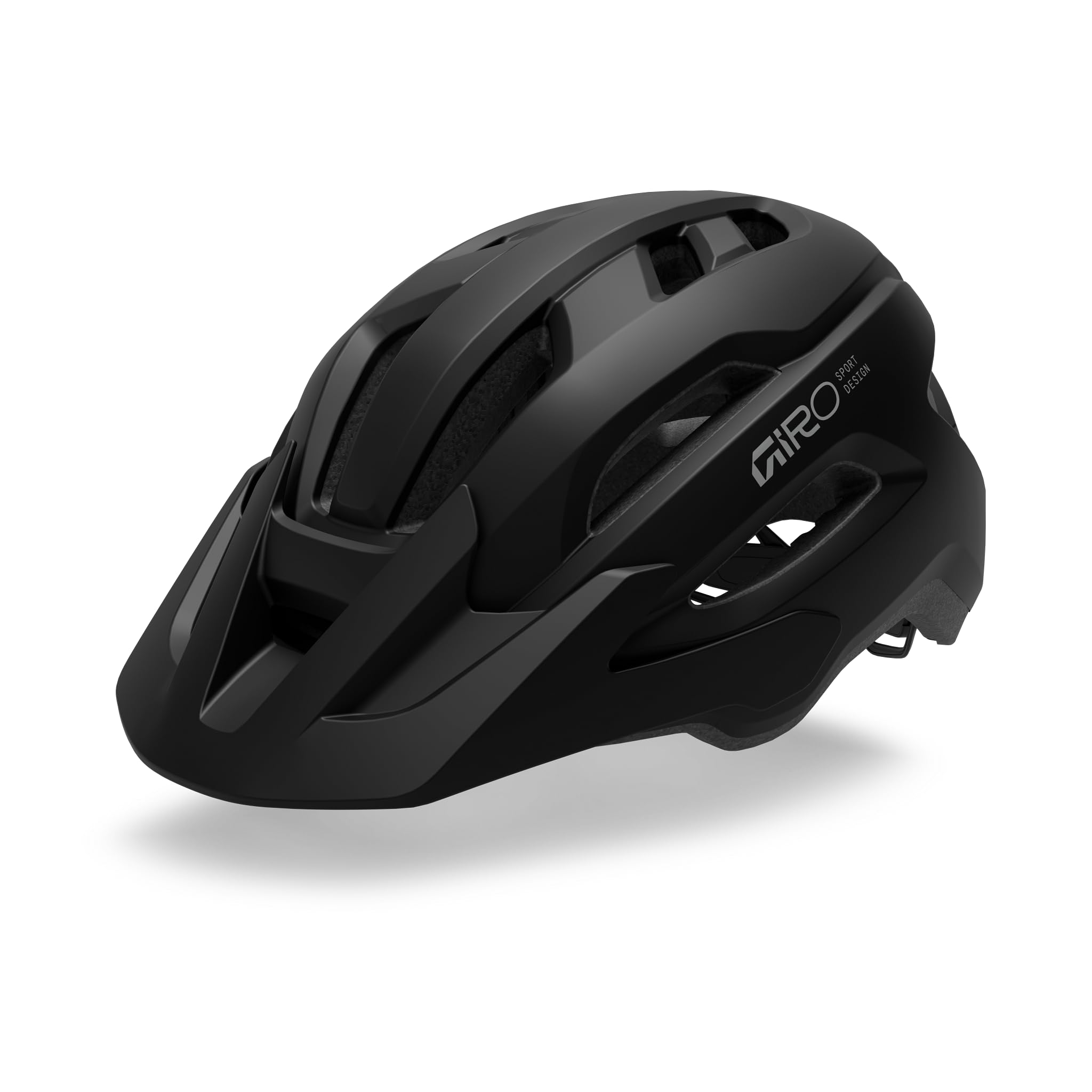
Giro Fixture MIPS

Trail riding

Our Score 9.4/10
Check Price

Worth Noting

  • Chin strap is fixed at the buckle end
  • Visor does not tilt
Size Range
54-61 cm
Visibility
Reflective details
Fit Adjustment
7 cm dial range
Rotational Protection
MIPS
Read the full review

MIPS is the reason this one holds the top spot in our list. The low-friction liner sits between the foam and your head so the shell can rotate slightly in an angled impact, and it is the only helmet in this group that offers one. Around that liner the build is straightforward: a polycarbonate shell fused to the foam, a visor that shades a low sun on exposed trail, and reflective detailing that picks up headlights when a ride runs past dusk.

The Roc Loc Sport dial is the part we noticed most. It clicks through 7 cm of adjustment and tightens with one hand, which matters when the other is on the bar and the trail is asking for your attention. The universal adult shell covers 54 to 61 cm, so most riders land inside it without guessing between a medium and a large.

Color is the one thing to check before ordering, since the green finish reads closer to yellow than the product photos suggest. Beyond that there is very little to think about, which is the highest compliment we can pay a helmet.

Bottom line: We point trail riders at the Fixture for one reason above the rest: MIPS, a dial that spans 7 cm, and a universal shell that fits most heads without guesswork.

2

GROTTICO Helmet with Light

GROTTICO Helmet with Light

Night riding

Our Score 9.4/10
Check Price

Worth Noting

  • No rotational-impact liner
Vents
23
Weight
10.6 oz
Size Range
M: 55-58 cm, L: 59-61 cm
Tail Light
USB rechargeable, 3 modes
Read the full review

A rechargeable light built into the back of the helmet is a small thing that changes how a ride home feels. This one runs in three modes, steady, flash and wave, and charges over USB, so there is no coin cell to hunt for when it dims. On the last stretch of pavement back from the trailhead, it gives whoever is behind you something to see.

What we did not expect is how complete the package feels. Two visors in different colors, a spare set of pads, and 23 vents that keep air moving on a long climb, plus a dial at the back that cinches evenly instead of pinching. The shell comes in two measured bands rather than one universal fit, 55-58 cm and 59-61 cm, so run a tape around your head before you choose; the bands do not overlap.

The gap is rotational protection. There is no low-friction liner here, so on fast, rocky descents you are relying on the shell and foam alone, which is the clearest reason to move up to the Giro if your riding is aggressive. For fire roads, green trails and commuting duty, this is a lot of helmet for the price.

Bottom line: For dusk rides and fire-road miles, the Grottico's rechargeable tail light and spare visors do more for you than a safety liner you will rarely need.

3

Bosoar GH-17 MTB Helmet

Bosoar GH-17 MTB Helmet

Action-cam rides

Our Score 9.4/10
Check Price

Worth Noting

  • Sold without a stated warranty
Mount
Built-in action camera mount
Vents
15
Weight
10.9 oz
Size Range
55-61 cm
Read the full review

Three hundred ten grams is the number that made us look twice, since it is the lightest shell in this group, but the action camera mount is what made us remember it. There is a built-in slot on top, so footage comes from your head without a chest harness or a bar clamp, and nothing else here solves that problem.

The rest of the shape is properly trail-oriented. The in-mold shell runs down the sides and back of the head, which is the coverage you want on tight, rooty singletrack, and 15 large vents keep air moving when you are grinding up a fire road. The fit range covers 55 to 61 cm, and the dial takes up the slack evenly rather than pinching in one spot.

The visor is the one fussy detail. It fixes with screws rather than clips, so lining it up takes a few minutes the first time and a steady hand; it is secure once it is on and comes off the same way. The camera mount is why you will look at this helmet, and the 310 g shell is why you will keep reaching for it.

Bottom line: We like the Bosoar best for riders who film their trails: the lightest shell here, extended rear coverage, and a built-in action camera mount.

4

EXCLUSKY MTB Helmet

EXCLUSKY MTB Helmet

First MTB helmet

Our Score 9.2/10
Check Price

Worth Noting

  • Straps wear before the shell does
Visor
Removable
Weight
11.4 oz
Size Range
22.05 - 24.01 in
Fit Adjustment
Single-hand dial
Read the full review

The least expensive helmet in this group does not feel like a corner was cut. Polycarbonate over EPS foam, breathable pads, and a rear dial you can work with one hand, which is the same basic arrangement as helmets selling for considerably more. What you are buying at this end is the essentials done properly.

We think of it as the right first mountain bike helmet. At 11.36 ounces it disappears on a long ride, the oversized visor keeps the sun out of your eyes on exposed climbs, and the fit range runs to 24.01 inches, which covers most adults. Pull the visor off and it looks tidy enough for pavement and bike-path duty, which is more than the fixed-visor picks here can offer.

Sizing is where it needs care. The range tops out at 24.01 inches and runs snug up there, so if you measure close to that, size up or look at one of the universal shells instead. Well inside the range, the dial does the work and the fit is secure without pressure points.

Bottom line: We recommend the Exclusky to anyone buying a first trail helmet on a tight budget: light, comfortable, and fitted with a dial that works.

5

BATFOX LA303 MTB Helmet

BATFOX LA303 MTB Helmet

Certified protection

Our Score 9.2/10
Check Price

Worth Noting

  • 380 g is the heaviest budget shell here
Vents
18
Weight
13.4 oz
Size Range
M: 54-58 cm
Certifications
CPSC, ASTM F1447, EU CE
Read the full review

The peak on this helmet is bigger and flatter than the others in this group, closer to a moto helmet's brim than a short trail visor. On a shadeless descent into the sun it earns that size, because the shadow falls across your field of view rather than a strip above your eyebrows. It is also the best-looking shell of the five, with a finish that reads more expensive than the rest of the budget picks.

Fit runs through a dial at the back, a chin pad, and padding that pulls out for washing, which is worth having when a helmet spends the week in a hot car. Eighteen vents channel air over the top. The medium is listed at 54-58 cm, so if you measure near 60 cm you are better off with one of the universal shells.

What settles it for us is the standards list. This is the only helmet here that names three separate certifications, CPSC, ASTM F1447 and EU CE, rather than pointing at standards in general terms, and a one-year warranty goes with them. That is the trade: more weight on your head and a narrower size range in exchange for the most checkable safety claim in the group.

Bottom line: Choose the Batfox if you want the most specifically documented safety spec here and a big peak for exposed descents, and can live with extra weight.

How We Tested Mountain Bike Helmets

We started with a shortlist of more than 40 helmets sold at outdoor retailers and direct-to-consumer brands, then narrowed it by shell size range, certified safety features, weight, price, and whether the visor was fixed or removable. That left 12 open-face mountain bike helmets, which we rode for six months on rocky singletrack, rooty descents, long fire-road climbs, and a few lift-served bike park laps. Testers ranged from a 21-inch to a 24-inch head circumference, so size and fit were judged across real head shapes, not a single mannequin.

On every ride, we noted where the helmet made contact and where it didn't: pressure points at the temples, a retention dial that was easy to turn with one hand, straps that needed re-adjusting mid-ride. We weighed each helmet on a kitchen scale, then wore it for everything from 45-minute lunch loops to three-hour days, paying attention to whether the padding stayed comfortable when wet and whether the shell blocked airflow on slow climbs. To check the visor, we flipped it up and down with gloves on, removed it where possible, and noted whether the mounting tabs felt durable or fussy.

Durability got its own real-world test: helmets went into dusty gear bags, truck beds, and the back seat between rides, and we checked buckles, strap anchors, and shell scuffs after each month. We also had each tester wear the helmet around the trailhead before riding, because appearance is personal—what looks sleek to one rider can look bulbous to another. The helmets that scored best were the ones nobody wanted to take off at the end of the day.

How to Choose Mountain Bike Helmets

Shell size comes before dial range

A dial takes up slack around your head, but it cannot shorten a shell that is too long front-to-back. Measure around the widest part of your head, roughly an inch above the eyebrows, and compare that number with the listed range instead of your hat size. The universal shells here cover 54-61 cm on the Giro and 55-61 cm on the Bosoar, the Grottico splits into 55-58 cm and 59-61 cm bands, and the Batfox medium stops at 58 cm.

Landing in the middle of a range is the comfortable place to be. If you measure within a centimeter of a boundary, choose the helmet whose range you sit inside rather than the one you nearly fit, then check that it does not rock front-to-back when you shake your head.

What a rotational liner actually does

A conventional helmet is a stiff shell over crushable foam, and that handles a straight drop well. Most real falls are angled: the ground drags the shell sideways while your head wants to keep going. A low-friction liner like MIPS lets the shell rotate a few millimeters against your head, and the Giro is the only helmet here that has one.

Whether that is worth the step up depends on where you ride. Rocks, roots and speed make angled impacts more likely, and that is where the extra spend makes sense. For rail trails, bike paths and gentle green loops, the shell and foam on the budget picks are doing the job.

Coverage, venting and the visor

Trail helmets drop lower at the back and sides than road helmets; the Bosoar is the most pronounced example here, and that extra shell is what ends up between your head and a low branch. More coverage usually means more heat, so venting is a genuine trade rather than a marketing line. Fifteen large vents can move more air than 23 small ones, because vent size and internal channelling matter more than the number on the box.

Visors are the second decision. A fixed visor, as on the Giro and the Batfox, is one less part to lose or misplace. A removable one, as on the Exclusky and the Bosoar, lets you strip the peak when you ride pavement, though the Bosoar's screws take patience to line up the first time.

Weight, mounts and being seen

The lightest shell here is 310 g and the heaviest 380 g, and that gap turns up at the top of a long climb rather than in the parking lot. If you ride three hours at a stretch, weight is worth shopping on. For an hour after work, it is not the thing to pay for.

The extras split into two useful kinds. Visibility: a USB tail light like the Grottico's helps at dusk, and reflective details like the Giro's do the same without a battery, but neither replaces a bar light. Mounting: only the Bosoar has a built-in action camera slot, so if you film your rides that is a deciding feature rather than a nice-to-have.

Frequently Asked Questions

Final Verdict

Buy the Giro Fixture MIPS. It is the only helmet here with a rotational-impact liner, its dial covers the widest fit range in this group, and it is the one we trust on rocky singletrack where an angled fall is a real possibility rather than a hypothetical.

If your riding is mostly pavement, fire roads and green trails, the Grottico gives you more for less, and the tail light and two visors earn their place where a liner rarely gets used. If you film your rides, the Bosoar's 310 g shell and built-in camera mount make that decision for you.