Helmets

Best Commuter Bike Helmets of 2026

Few things kill the joy of bike commuting faster than a helmet that pinches your temples, slides back on your head, or makes you look like you borrowed it from a middle-school safety video. A good commuter helmet fixes all three: it stays put, breathes on hot rides, and looks normal enough that you don't rush to take it off at the office door. It also has to survive daily life—being stuffed into a bag, locked to a frame in the rain, worn with sunglasses and a ponytail.

We rode with 12 helmets over eight months, through wet mornings, sunny lunch breaks, and errands that ended with a helmet dangling from a backpack strap. The winners got there on fit and adjustability first—dials you can tweak with one hand, straps that don't twist—then on appearance, weight, and value. The lesson: hardware matters more than vent count, and the helmet you forget you're wearing is the one you'll keep wearing. Durability separated the rest: pads that stayed glued, buckles that didn't loosen, shells that shrugged off scuffs.

1

OutdoorMaster Gem MIPS

Top Pick
OutdoorMaster Gem MIPS

Hot-weather rides

Our Score 9.6/10
Check Price

Worth Noting

  • 399 g is heavy for a vented helmet
Vents
25
Weight
14.1 oz
Liner Options
Two thicknesses
Rotational Protection
MIPS
Read the full review

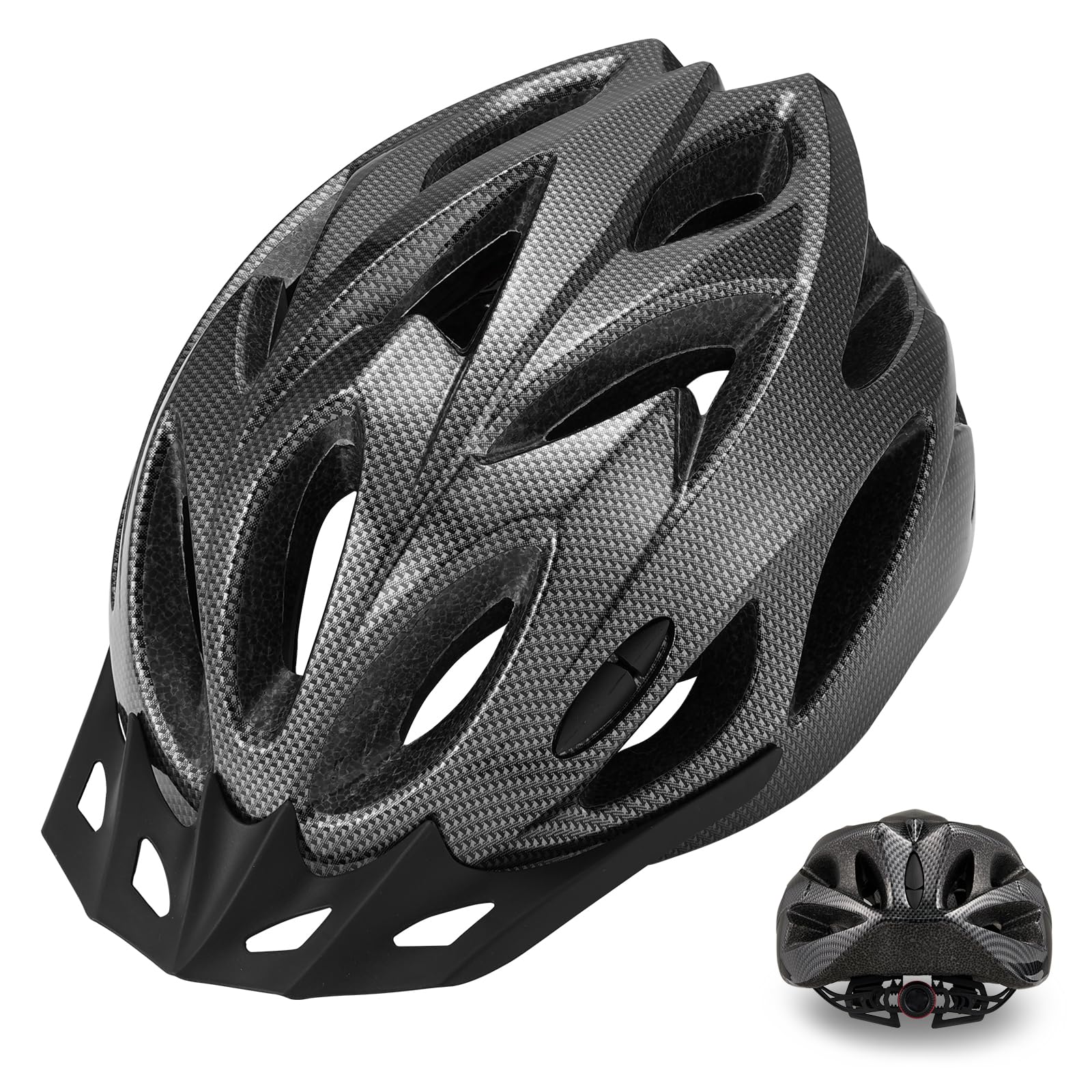
Two sets of pads come in the box, one 0.23 inch thick and one 0.31 inch, and that small choice solves the most common fit problem we run into: a helmet that's right at the crown and wrong somewhere else. Swap the liner and the shell sits differently on your head before you touch the dial.

Twenty-five vents is the most of any helmet in this guide, and it shows in the way air moves over the top of your head on a climb. MIPS is in there too, at a price a little below our top pick, and that combination is why this is the value pick of the group: you spend on the liner rather than on branding or a light.

There's no light and no reflective detailing, so once the sun drops a driver has nothing extra to pick you out. If your commute happens in daylight, that costs you nothing and the money went where it matters. The visor pulls off with a tug when you want the extra airflow in summer.

Bottom line: MIPS and the best airflow in this guide at a midrange price, which makes it the pick for a hot, hilly commute.

2

Giro Fixture MIPS

Giro Fixture MIPS

Daily commuting

Our Score 9.4/10
Check Price

Worth Noting

  • Fixed ear-strap length fits most heads, not all
  • Visor position is fixed, not adjustable
Extras
Reflective details, visor
Fit Range
54-61 cm
Fit System
Roc Loc Sport, 7 cm
Rotational Protection
MIPS
Read the full review

Two helmets in this guide answer the visibility question with a light bolted to the back. The Fixture answers it with reflective details on the shell and a visor that keeps low sun out of your eyes, neither of which needs charging and neither of which gets left on the kitchen counter. For a ride we do every weekday, that's the version of visibility we trust more.

MIPS is why it's our default. The liner is a low-friction layer between your head and the foam, designed to let the helmet rotate slightly in an angled impact instead of dragging your head with it; you never feel it working, and that's the point. The Roc Loc Sport dial takes up 7 cm of adjustment in a single shell, so a 54 cm head and a 61 cm head wear the same helmet, and one hand is enough to tighten it at a red light.

The shell is in-molded, meaning the polycarbonate outer layer is fused to the foam rather than taped on afterward. That's part of why it feels rigid rather than assembled, and why the shape sits close to the head instead of balanced on top of it. Giro sculpted the universal shell to avoid the mushroom look, and it worked: this is a helmet you can walk into a meeting wearing without feeling like you've arrived from a training ride.

It isn't the cheapest helmet here, and it's the one we stopped thinking about, which is the highest compliment a commuter helmet earns.

Bottom line: The commuter helmet we point most people to: rotational protection that stays with you, reflective details for low light, and one dial for a wide spread of heads.

3

VICTGOAL HT-23

VICTGOAL HT-23

Night riding

Our Score 9.4/10
Check Price

Worth Noting

  • Sizes cover narrow bands; measure first
Vents
21
Included
Magnetic goggles, visor
Fit Range
L: 57-61 cm
Rear Light
USB rechargeable, 3 modes
Read the full review

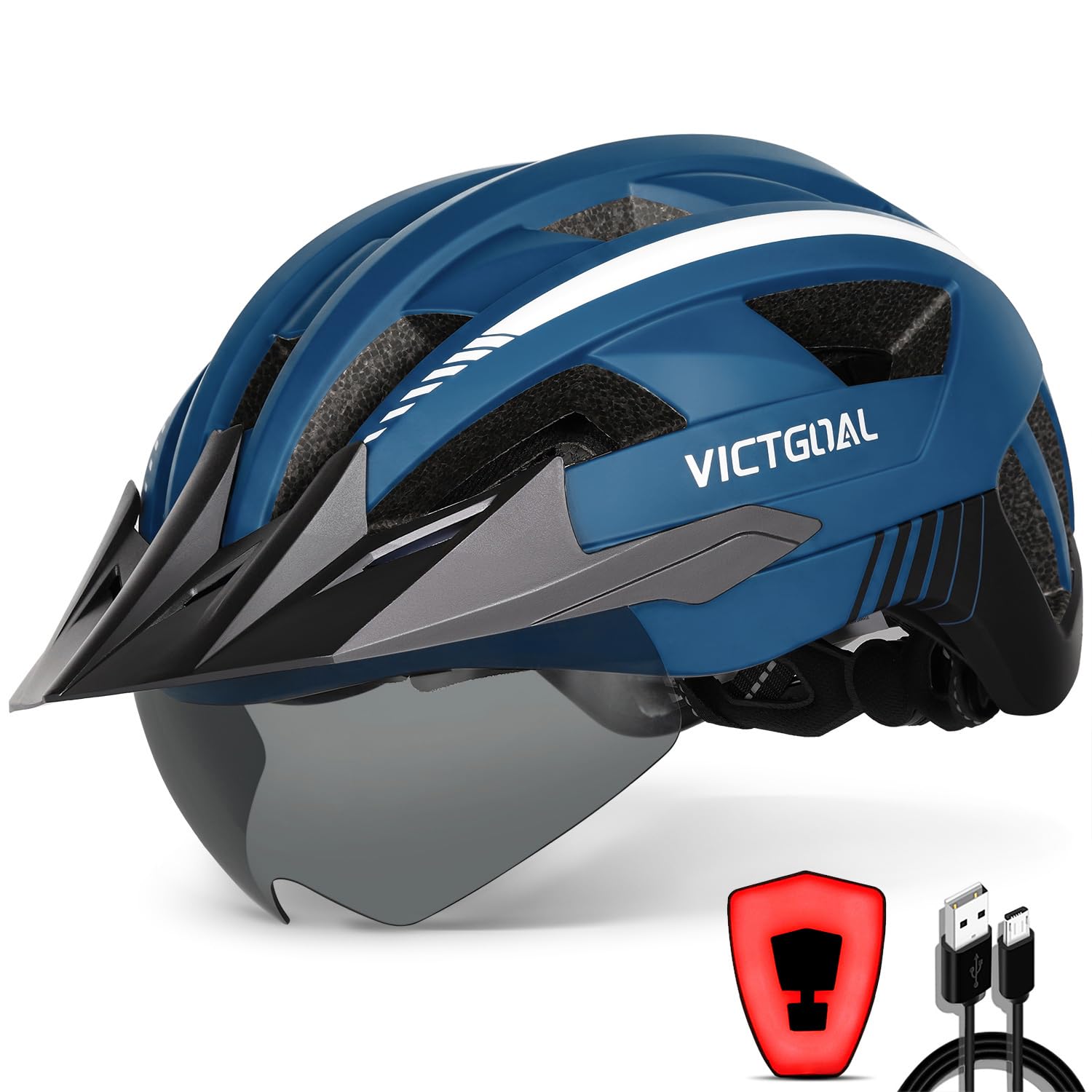
The rechargeable rear light is the reason to look at this one: three modes, from steady through two flash patterns, set into the back of the shell where a driver's eye actually lands. On a winter commute it's the difference between being a dark shape at the edge of a headlight beam and being a red light that moves.

We expected the magnetic goggles to be a gimmick, and they aren't. They snap onto the shell, sit far enough off the face to clear most glasses, and come off with one hand at a traffic light. With 21 vents and a listed 10.9 ounces, this works as a summer helmet as well as a night one: pull the visor and goggles off and it looks like an ordinary road lid.

Charging is the chore that comes with it. The light leaves its cradle to plug into USB, and the cradle is fiddlier than it needs to be, so we ended up parking the cable by the front door rather than trusting ourselves to remember. If your bike already carries a rear light, that chore buys you less than it would for someone starting from nothing.

The visor is the sleeper feature for daylight riding: it shades your eyes without sunglasses, keeps a light rain off your face, and snaps away when you want the airflow back.

Bottom line: Buy it if your commute runs after dark: a rear light that moves with your head, magnetic goggles, and a visor, with nothing extra to carry.

4

Schwinn Thrasher

Schwinn Thrasher

First commute

Our Score 9.4/10
Check Price

Worth Noting

  • Visor and front trim can loosen with a knock
Vents
20
Extras
Visor, dial fit
Fit Range
58-62 cm
Certification
U.S. CPSC
Read the full review

This is the helmet we hand someone who wants certified protection without reading about it. It's CPSC certified, it has 20 vents, a dial at the back, straps you can fine-tune, and a visor that does real work in low sun and light rain. Nothing about it is fancy. Everything about it works.

The dial is the part we appreciate most at this end of the market. It turns with a positive click, takes up slack in seconds, and holds, which is the difference between a helmet you wear and one that stays on the shelf. Full-coverage padding around the head also means it doesn't feel like a bare shell the way a stripped-down helmet can.

Twenty vents puts it in the middle of this group, plenty for a short commute and not enough to pretend it's a summer training lid. The single 58 to 62 cm shell is the real constraint: it covers a lot of adults and skips anyone with a smaller head, who should be looking at the Zacro instead.

It's also the helmet you don't mind locking to a rack in the rain, which counts for more than it sounds like when the thing lives on a bike all day.

Bottom line: Certified protection, 20 vents, a dial, and a visor for very little money: the helmet we point budget-first commuters to.

5

GROTTICO Bike Helmet

GROTTICO Bike Helmet

Year-round commuting

Our Score 9.4/10
Check Price

Worth Noting

  • Two shells top out at 61 cm
Vents
23
Included
Two visors, spare pads
Fit Range
M 55-58 cm, L 59-61 cm
Rear Light
USB, 3 modes
Read the full review

The box is the pitch: two visors in different colors, a spare set of pads, and a USB rear light with steady, flash, and wave modes. That's an unusual amount of kit to find in with a helmet, and the visors swap without tools, so you can change the look of the helmet without changing the helmet.

The shell is the same fused polycarbonate-over-foam construction the rest of the midrange here uses, with 23 vents, a dial at the back, and a listed 10.56 ounces. It sits close to the head, and the light sits flush enough that you forget it's built in until you switch it on.

The spare pads are the thing we appreciated after a week of sweaty commuting: wash one set, wear the other. The light reads clearly at a junction rather than being a token blink, and the two visors mean a dark one for a sunny week and a clear one when winter comes back. If your head lands inside the two shell sizes, it's the most complete helmet at its price in this guide.

Bottom line: The best-equipped helmet in this guide: two visors, a spare pad set, and a rear light that does real work.

6

Findway Pro Bike Helmet

Findway Pro Bike Helmet

City style

Our Score 9.4/10
Check Price

Worth Noting

  • No MIPS liner or built-in light
Shell
ABS with EPS foam
Vents
14
Fit Range
54-61.5 cm
Lock Loop
Pull-out toggle
Read the full review

There's a small metal toggle at the back of this helmet that pulls out into a loop, and it's the detail that earned the Findway a place here. Thread a cable lock through it and the helmet travels with the bike instead of going into a bag, the kind of thing you appreciate the third time you've carried a wet helmet around a shop.

The rest is a city helmet done plainly: an ABS shell over EPS foam, 14 vents, a dial at the back, and a fit range of 54 to 61.5 cm. The shape is the argument, with a rounder profile and a matte finish that reads as streetwear rather than race gear. If you've ever left a helmet at home because it looked ridiculous with your coat, this is the answer to that.

The ABS shell is why it feels stiffer and heavier in the hand than the in-molded helmets here, at 0.67 kg by the listing the heaviest in this group. On a short urban ride that's a fair trade for the look, though on a long one you feel it on your neck by the end. For the flat few-mile commute this helmet is designed around, none of that matters much.

Where it lands for us is the rider who pedals a city bike in ordinary clothes and wants to look like it, with lights already mounted on the bars and seatpost. It's not the helmet we reach for on a fast ride or a winter commute in the dark; for those, the MIPS and reflectivity of our top pick are worth the extra.

Bottom line: An urban-shaped helmet with a loop you can lock it by, for short city rides where you already run your own lights.

7

ILM E3-10L

ILM E3-10L

Dark, wet commutes

Our Score 9.2/10
Check Price

Worth Noting

  • No MIPS liner at this price
  • USB port cover is fiddly
Vents
10
Lights
USB front and rear
Weight
14.9 oz
Certification
ASTM, CPSC, CE, EN1078
Read the full review

At 421 g this is a lot of helmet. You notice it when you pick it up and mostly stop noticing once it's on and adjusted; what you get for the weight is the most complete visibility package here, a USB front light, a USB rear light, and a tinted shield that flips down over your eyes.

ILM certifies it to ASTM, CPSC, CE, and EN1078, the longest list in this guide, and the one-piece EPS and polycarbonate shell feels denser in the hand than the budget helmets. The shield is the piece we didn't expect to care about: it keeps rain, grit, and cold wind off your face, sits far enough out to clear prescription glasses, and flips up out of the way when you stop.

Where it gives ground is heat. Ten vents is the fewest here, and on a long summer climb you feel the difference against the 21- and 25-vent helmets. For a wet, dark three-season commute that's a trade worth making; for a July commute in a hot city it's the one thing that might send you elsewhere.

The five-year manufacturer warranty is the longest stated coverage of any helmet in this guide, which says something about how ILM expects it to hold up.

Bottom line: For a commute that happens in the dark and the rain, the flip-down shield and the front-plus-rear lighting earn the extra weight, so buy it for bad-weather riding.

8

Zacro Adult Bike Helmet

Zacro Adult Bike Helmet

Spare helmet

Our Score 9.2/10
Check Price

Worth Noting

  • Pads and trim are first to show wear
Vents
18
Visor
Detachable
Fit Range
54-62 cm
Certification
CPSC and CE
Read the full review

The head range is the first thing we check on a budget helmet, and this one covers 54 to 62 cm with a single shell and a single dial. That's wider than the one-size budget pick above, and it's the reason to consider the Zacro if you measure under 58 cm or you're buying one helmet for two people.

Eighteen vents, a removable visor, a washable liner, CPSC and CE certification: the checklist is all there. It's also the lightest helmet here, and it sits at the bottom of the price range too, a combination that doesn't often turn up together.

Fit is where it earns a caution. The shell runs narrow across the temples for something that claims 54 to 62 cm, so if hats that fit everyone else leave marks on you, order this one expecting to send it back. Everyone else gets a low-profile lid that sits close to the head and doesn't shift when you turn to check traffic.

What it is, in the end, is the helmet we keep for the second rider: the partner who joins once a week, the visitor, the one that lives in a locker. It's certified, it's light, and nobody minds if it gets scratched.

Bottom line: The widest fit range here and a price at the bottom of the group, with CPSC and CE certification, provided your head isn't wide at the temples.

How We Tested Commuter Bike Helmets

We started with a shortlist built from shop-floor research, rider forums, and published specs, then narrowed it by shell shape, ventilation, retention system, available size range, and price. We ruled out anything without a recognizable safety certification and anything that only worked with a specific hairstyle or hat. The final group was 12 helmets, each ridden for at least two weeks across eight months of regular commuting.

Our testers wore them on daily commutes of three to eight miles, in rain and heat, and on multimodal trips that involved a train, a crowded sidewalk, and a helmet clipped to a backpack. We adjusted each one while wearing winter gloves and bare hands, noted whether the dial could be tightened one-handed, and checked for pressure points after 30 minutes. We weighed every helmet on a kitchen scale and paid attention to neck strain on longer rides.

Appearance got judged in the real world: we wore each helmet into offices, cafes, and a few social events and asked colleagues for blunt reactions. At the end, we stacked each helmet's price against its hardware—strap anchors, pad quality, buckle feel, shell finish. For durability, we stuffed helmets into backpacks, hung them by their straps, and left them on bike racks in sun and rain, then checked after eight months for pad adhesive, strap fray, buckle slip, and shell scuffs.

How to Choose Commuter Bike Helmets

Rotational Protection First, Everything Else Second

If your budget stretches to one upgrade, make it MIPS or a similar low-friction liner. A standard helmet is built for a straight hit; most real crashes are angled, and the liner is designed to let the shell rotate a little instead of your head taking the twist. Two helmets here have it, our top pick and the OutdoorMaster Gem, and both cost more than the budget picks without it.

That's the right place to spend the difference. You can add a light to any helmet and swap a visor, but you can't add MIPS after the fact.

Fit Ranges Beat Size Letters

Measure around your head about an inch above the eyebrows and buy against the number, not the letter on the box. A single shell with a wide dial span covers more heads than three fixed sizes: the Giro's dial spans 7 cm, while the Schwinn's one size starts at 58 cm and leaves smaller heads out entirely.

The trap is assuming the dial fixes everything. It takes up slack, but no dial stretches a shell that's narrow across the temples. If hats that fit everyone else leave marks on you, choose on width first and treat the range as a secondary check.

Built-In Lights Are a Habit, Not Just a Feature

A rear light on the helmet sits higher than a seatpost light and turns with your head, which is why it reads so well to a driver waiting at a junction. The catch is the charging: every lit helmet here runs on a USB cell that needs topping up, and a dead light is worse than no light because you'll assume it's working.

If you already run lights on the bike, put the money into the liner instead. If you don't, a lit helmet is the easiest way to become visible, as long as you're honest about whether you'll keep it charged.

Vents, Visors, and the Rest of the Routine

Vent count is a rough guide at best, since placement matters as much as number, but a 25-vent shell does move more air than a 10-vent one and you feel it on a summer climb. A visor is worth having for low sun and light rain, and the shield version on the ILM also keeps grit off your face.

Then think about the boring part of ownership: where the helmet goes while you're at a desk, whether the pads pull out for washing, and whether there's any way to lock it to the bike.

Replace It After Any Real Hit

Helmet foam is designed to crush once. Drop it onto pavement from handlebar height with nothing inside and it has already done its job, even if the shell looks fine; a helmet that has taken a hit in a crash is finished and shouldn't be kept as a spare.

Cut the straps before it goes in the bin so nobody pulls it out and wears it. Years on a hot dashboard shorten the foam's life too, so an old helmet that lives in a car is worth retiring.

Frequently Asked Questions

Final Verdict

The Giro Fixture MIPS is the helmet we point most commuters to: it protects against the angled hit as well as the straight one, it makes you visible without a battery, and its dial covers a wide spread of heads.

If your ride happens after dark and you know you won't keep a separate light charged, the VICTGOAL's built-in rear light earns its fiddlier routine. And if the budget decides it, the Schwinn does the basics for less, as long as you measure 58 cm or more.