Cycling Shoes

Best Gravel Bike Shoes of 2026

A gravel shoe asks for two things that fight each other: a sole stiff enough to put everything you push into the pedals, and enough give to walk when the road turns to washboard and you're off the bike pushing. Shoes tend to pick a side, which is why the wrong pair can feel fast for an hour and miserable by mile sixty. What a good pair actually fixes is simpler than a spec sheet makes it sound — it disappears. The closure stays put without a mid-ride fiddling session, the sole doesn't fold under a hard effort, and the walk back across a gravel lot at the end doesn't leave you hobbling.

I've been riding mixed surface for years, and my team and I have spent the past nine months logging miles in 12 pairs on everything from fast hardpack to the kind of climb where you carry the bike. One thing first-timers don't expect: sizing wanders all over the place between brands, so a shoe that fits perfectly in one model can be a vice in another. Fit first, everything else second. The pairs that earned a spot by my door are below.

1

Giro Code

Top Pick
Giro Code

All-round gravel

Our Score 9.0/10
Check Price

Worth Noting

  • Laces take longer to fine-tune than a dial
Closure
Laces
Outsole
Vibram rubber
Cleat Mount
2-bolt SPD
Listed Weight
1.55 lb
Read the full review

The first thing we noticed about the Giro Code is how little it feels like a cycling shoe when you step off the bike. The cleat sits recessed in a Vibram sole, so crossing a gravel lot or walking into a café doesn't turn into a tap-dance. That recessed cleat is the detail that earns it our top pick: it clips in securely and still lets you walk like a person.

On the bike, the sole is stiff enough to feel purposeful without being a race-day plank. We could push a steady tempo on dirt roads and still flex enough to walk a loose climb. The laces surprised us; they spread pressure across the instep more evenly than we expected, and they never came loose on a ride. The fit is the catch. Our test pair ran small, and the toe box is narrow, so if you're between sizes or have wide feet, go up or look elsewhere.

What keeps the Code in our bag is its range. It looks tidy enough for a post-ride stop, and the rubber tread has enough bite for hike-a-bike sections. The trade-off is weight: at a listed 1.55 pounds, it's not the shoe we pick for a pure speed day. For most gravel riders, though, that heft buys comfort and a more secure feel. We kept reaching for it on mixed-surface days when we knew the route would include as much walking as pedaling.

Bottom line: We recommend the Giro Code for gravel riders who want SPD security and genuine off-bike walkability; just size up if your feet run wide.

2

Shimano SH-XC300

Shimano SH-XC300

Fast gravel days

Our Score 9.0/10
Check Price

Worth Noting

  • Stiff sole is tiring on long walk breaks
Sole
Stiff XC
Closure
BOA dial
Outsole
Rubber
Cleat Mount
2-bolt SPD
Read the full review

The Shimano SH-XC300 is the pair we reach for when the route is more about covering ground than stopping to explore. The BOA dial cinches the upper evenly, and the stiff sole puts power straight into the pedal. It feels like a cross-country race shoe that happens to have rubber tread, which is exactly the brief for fast gravel days.

We think it's the best choice here for riders who prioritize pedaling efficiency over hike-a-bike comfort. On long dirt-road tempo efforts, the stiff platform kept our feet from rolling over the pedal, and the rubber outsole gave us enough grip for short dismounts. The toe box is narrow, though, and the dial sits low toward the toe rather than high on the instep, so it can press on a high-volume foot. If you have wide feet, try this one before you commit.

The XC300 also has a clean, low-profile look that doesn't shout race day, and the rubber toe bumper has held up to scuffs. It's the one we pick for a fast gravel event where every stop is short.

Bottom line: We recommend the Shimano SH-XC300 for gravel riders who want a stiff, BOA-secured shoe for fast days, as long as the narrow fit suits your foot.

3

Giro Tracker

Giro Tracker

Flat-pedal gravel

Our Score 8.8/10
Check Price

Worth Noting

Closure
BOA laces
Outsole
Rubber
Toe Box
Wide
Pedal Type
Flat
Read the full review

The Giro Tracker is the odd one out here: it's a flat-pedal shoe, not a clipless one. The rubber sole has gaps that let pedal pins sit into the tread, and the wide toe box gives your toes room to spread on long descents. For a gravel rider who prefers flats, that combination is more useful than a stiff race shoe with a recessed cleat.

We think it's the best flat-pedal option in this group for riders who want grip without giving up walkability. The sole is stiff enough to pedal efficiently but still flexes at the toe, and the BOA lacing keeps the upper snug without a lace tail flapping around the chainring. We liked the wide fit, though it runs roomy enough that narrow-footed riders may need to cinch down hard.

The Tracker is not for everyone. If you ride clipless, this shoe has no place for an SPD cleat, so it's the wrong tool. But for a flat-pedal gravel bike, a bikepacking rig with platforms, or a rider who alternates between flats and walking, it's a genuinely useful shoe. We kept it by the door for quick errands and flat-pedal loops where clipping in was more hassle than it was worth.

Bottom line: We recommend the Giro Tracker for gravel riders on flat pedals who want a wide, walkable shoe with real grip, not for anyone committed to SPD.

4

KESCOO MTB Shoe

KESCOO MTB Shoe

Wide-foot budget

Our Score 8.6/10
Check Price

Worth Noting

  • Sole and upper durability can be inconsistent
Closure
Ratchet and Velcro
Toe Box
Roomy
Toe Studs
Replaceable
Cleat Mount
2-bolt SPD
Read the full review

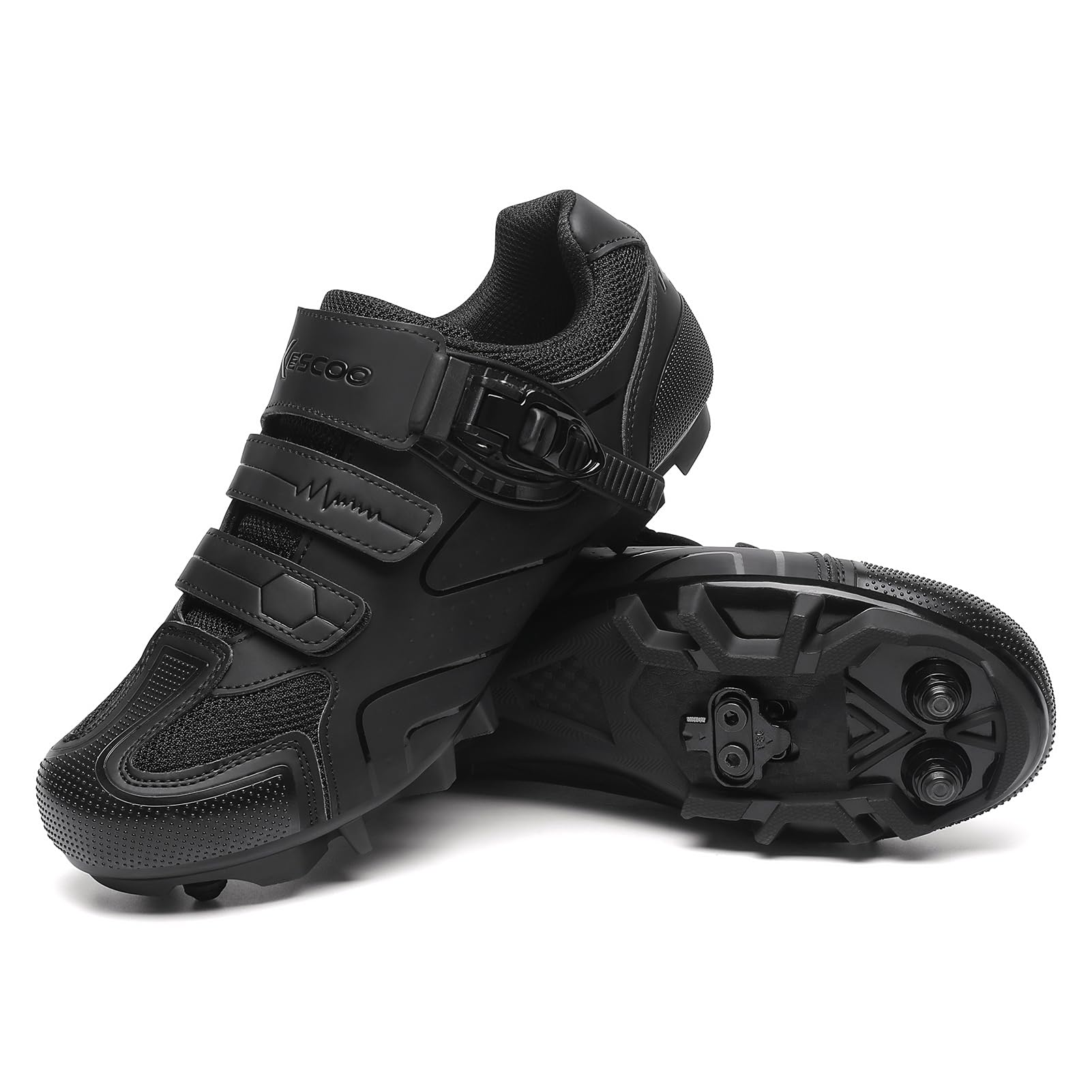
The KESCOO is the cheapest way into a two-bolt gravel shoe in this group, and it makes a strong first impression. The toe box is genuinely roomy, the upper feels sturdy, and the ratchet plus Velcro closure lets you crank down the top strap without pinching the whole foot.

We liked the roomy fit for wide feet, but the ratchet is the part to watch. The top strap can be fussy to release, and the mechanism feels less refined than a BOA dial. The toe studs also need attention: we recommend a dab of blue threadlocker on the hardware before the first ride, because they can work loose. The sole is stiff enough for pedaling and has enough tread for walking to the trailhead.

We think it's a useful budget option for riders with wide feet who want SPD compatibility and don't mind a little hardware fuss. It won't feel as precise as the Shimano or Giro picks, but if you want to try gravel clipless on a tight budget, it gets you out the door. For a first gravel shoe on a tight budget, that trade is often worth it.

Bottom line: We recommend the KESCOO for wide-footed riders who want a roomy SPD shoe on a budget, provided they accept a little more care than the top picks.

5

FOTGOAT MTB Shoe

FOTGOAT MTB Shoe

Beginner SPD

Our Score 8.4/10
Check Price

Worth Noting

  • Runs loose around the ankle
Fit
Loose
Sole
Rigid
Cleat Mount
2-bolt SPD
Riding Style
MTB and gravel
Read the full review

The FOTGOAT is the pair we hand to a new gravel rider who wants an easy first clipless shoe. It's simple to get on and off, the upper feels sturdy, and the sole is stiff enough to pedal without feeling like a plank. The two-bolt drilling takes common SPD-style cleats, so it's a low-stress way to try clipping in.

On the bike, it does the basics well. The shoe feels secure when pedaling, and the tread has enough depth to walk a short distance without the cleat scraping. We noticed the upper holds sweat more than a mesh race shoe, which is worth knowing on hot days. The two shoes can also feel slightly different in volume, so check both feet before a long ride.

We think it's a solid also-consider for beginners and commuters who want a sturdy SPD shoe without paying premium money. It's not the most refined or supportive option here, but if you want a simple, walkable shoe for gravel paths and around-town errands, it covers the basics without fuss. For a first gravel shoe, that simplicity is worth more than a fancy dial.

Bottom line: We recommend the FOTGOAT for newer gravel riders who want an easy, sturdy SPD shoe for paths and errands without a big investment.

6

Shimano SH-MX100

Shimano SH-MX100

Budget walkability

Our Score 8.2/10
Check Price

Worth Noting

  • Runs small and narrow
Closure
Velcro straps
Outsole
Rubber
Cleat Mount
2-bolt SPD
Riding Style
Multi-use off-road
Read the full review

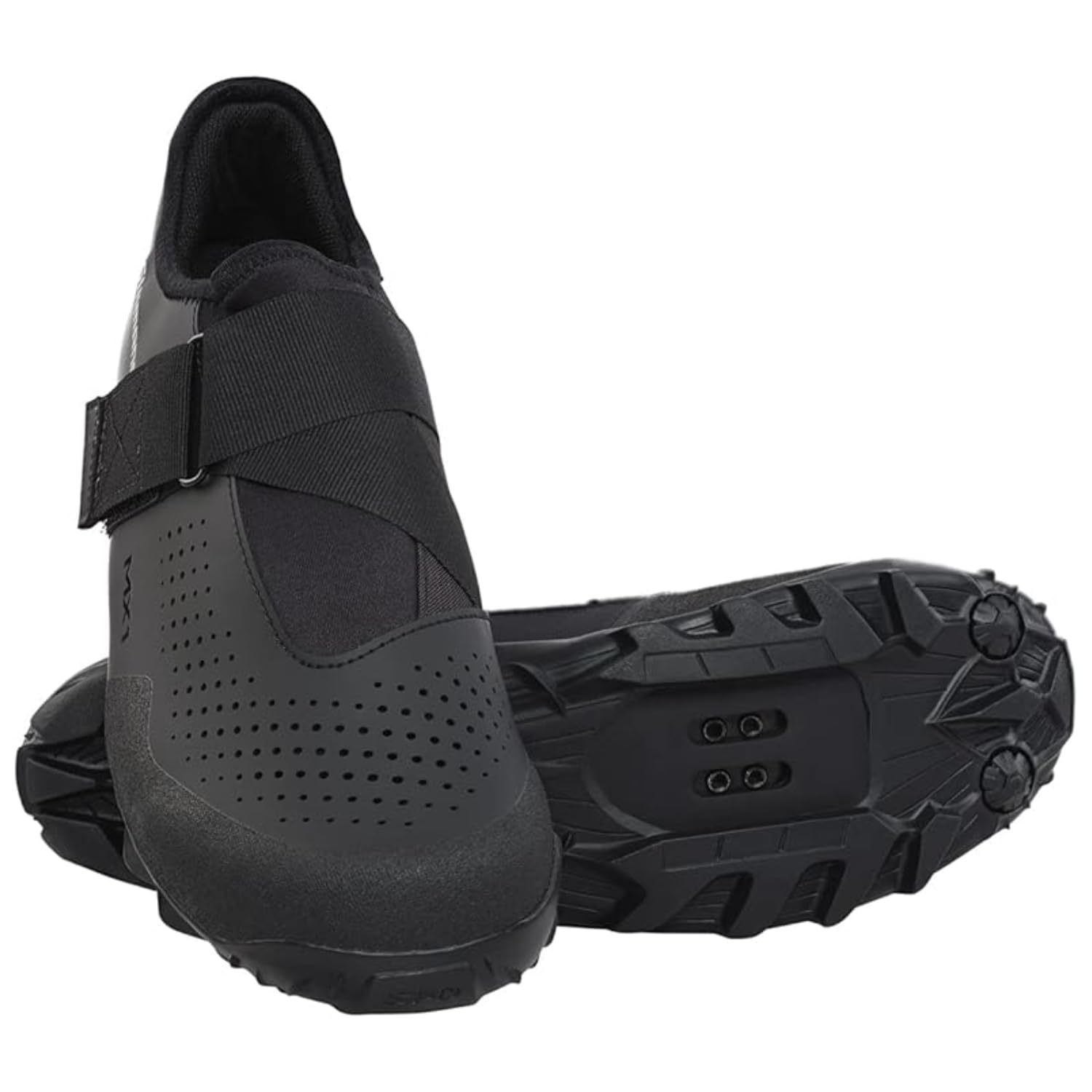
The Shimano SH-MX100 is the budget pick we hand to riders who want to try clipless without committing to a race shoe. It's easy to get on and off, the Velcro straps are simple to adjust, and the sole has enough rubber to walk into a store without skating. We think it's the best value here for mixed-surface riding and light commuting, provided you can get the fit right.

On the bike, the sole is forgiving rather than race-stiff, which made it comfortable on longer, slower gravel rides. The simple straps are easy to adjust on the fly, though they can feel short over a high-volume instep. It's not the shoe for a PR attempt, but it's the one we hand to a friend who wants to try SPD pedals without spending much.

We also liked the low-profile upper, which disappears under baggy shorts and doesn't collect as much grit as a mesh race shoe. It's a simple shoe, and that's the point: there's less to fiddle with when you're stopped on the side of a dirt road.

Bottom line: We recommend the Shimano SH-MX100 as the budget gravel shoe for riders who want easy SPD walks and a forgiving ride, but size up and expect a narrow fit.

How We Tested Gravel Shoes on Gravel, Tarmac, and Everything Muddy In Between

We started with the shoes that keep coming up on gravel forums, at the start line of local mixed-surface races, and on the shelves of shops that actually cater to riders who spend half their time off pavement. From there we filtered by sole material, closure type, stated weight, and price so we weren't testing three versions of the same idea. That left 12 pairs, which we rode over nine months.

Every pair went through the same rotation: a weekly mixed-surface loop with one long climb and a loose descent, a handful of four-plus-hour days, and at least one ride that ended in walking. We paid attention to how our feet felt at hour four rather than hour one — hot spots, numbness, heel lift on steep pitches. Each pair walked the same loose gravel climb and the same wet tarmac lot so we could see which tread bit and which skated. Cleats went in and came out of every shoe at least once, since a badly seated cleat can make a good shoe feel wrong.

Closures were judged mid-ride, with gloves on, cold hands, at a stop: dials we could fine-tune one-handed, straps that needed two, laces that needed re-tying. We wore each pair with two sock weights to check sizing and compared fit against our usual street size instead of trusting the number on the box. At the end of the nine months we looked at what had actually worn — scuffed toes, tread flattened at the heel, uppers that stayed damp after a wet ride — and at whether the shoes still looked like something we'd wear into a cafe. Value was the last question we asked, once the new-shoe shine was gone.

How to Choose Gravel Bike Shoes

Walkability Starts at the Cleat

A gravel shoe earns its keep when the road turns to dirt and then to a hike-a-bike. The cleat should sit recessed below the tread so it doesn't scrape or make you feel like you're walking on ice. Rubber lugs and a sole that flexes a little at the toe help more than a deep, aggressive tread. The Giro Code is the clearest example here: its Vibram sole and recessed cleat make off-bike time feel normal. If you plan to walk more than a few steps, start there and avoid any shoe with a proud metal cleat.

Clipless or Flat Pedals

Most gravel riders use a two-bolt SPD-style cleat, but flat pedals are a legitimate choice, especially for bikepacking and mixed-terrain rides. A clipless shoe needs a recessed cleat and a sole stiff enough to support the pedal stroke; a flat-pedal shoe needs a sticky rubber compound and a sole that lets pins bite. The Giro Tracker is the flat-pedal pick here, while the Shimano SH-MX100 is the easy clipless entry. Decide which pedal system you'll actually ride before you shop, because the wrong shoe is unusable.

Fit and Toe Box

Cycling shoes should be snug through the heel and midfoot without pinching the toes. Several gravel shoes run small or narrow, so measure your foot and check the size chart rather than assuming your running-shoe size. If you have wide feet, look for a roomy toe box or size up; a tight toe box will not stretch enough to fix a bad length. The KESCOO and FOTGOAT are the roomier options in this group, while the Shimano SH-XC300 is decidedly narrow. Try shoes with the socks you'll ride in.

Stiffness, Closure, and Hardware

A stiff sole puts power into the pedal, but too much stiffness makes walking miserable. Look for a sole that feels firm under the ball of your foot and still flexes at the toe. BOA dials are quick to adjust, laces spread pressure, and Velcro is simple but can wear. Check the hardware too: toe studs and cleat bolts can loosen, so a little threadlocker and a pre-ride check go a long way. The Shimano SH-XC300 is the stiffest pick here; the Giro Code is the better all-day compromise.

Frequently Asked Questions

Final Verdict

Start with the Giro Code if you want one shoe for gravel rides that include café stops, hike-a-bike, and a bit of everything else. Its recessed cleat and Vibram sole make off-bike time easy, and the stiff-enough platform keeps pedaling honest. If your rides are fast and measured, the Shimano SH-XC300 is the sharper tool, though its narrow fit is decisive. On a tight budget, the Shimano SH-MX100 is the walkable SPD pair we hand to new riders.