Components

Best Mountain Bike Cranksets of 2026

Every watt your legs produce passes through one part before it reaches the rear wheel: the crankset. It's also the piece you end up staring at for hours, and the one that starts creaking the second a bearing or a bolt isn't seated right. A good one disappears under you — clean shifts, the chain staying put over roots and rock slabs, still tight after a season of mud and creek crossings. A bad one clicks, flexes, or throws the chain on the climb where you needed it most.

I've ridden the same rooty loop for years, and it taught me that chainring size and chainline change how a bike climbs more than any weight claim printed on a box. Over eight months, my team and I installed and rode nine cranksets, from budget alloy arms to carbon, on a hardtail and a 140mm trail bike. Fit and installation tripped up more of them than outright performance did. The picks below are the ones that stayed quiet.

1

SRAM NX Eagle Boost Crankset

Top Pick
SRAM NX Eagle Boost Crankset

Modern 12-speed builds

Our Score 9.4/10
Check Price

Worth Noting

  • Requires a Boost 148 frame and DUB bottom bracket
Chainring
32T steel, direct mount
Interface
DUB
Drivetrain
12-speed, Boost 148
Crank Arm Length
175mm
Read the full review

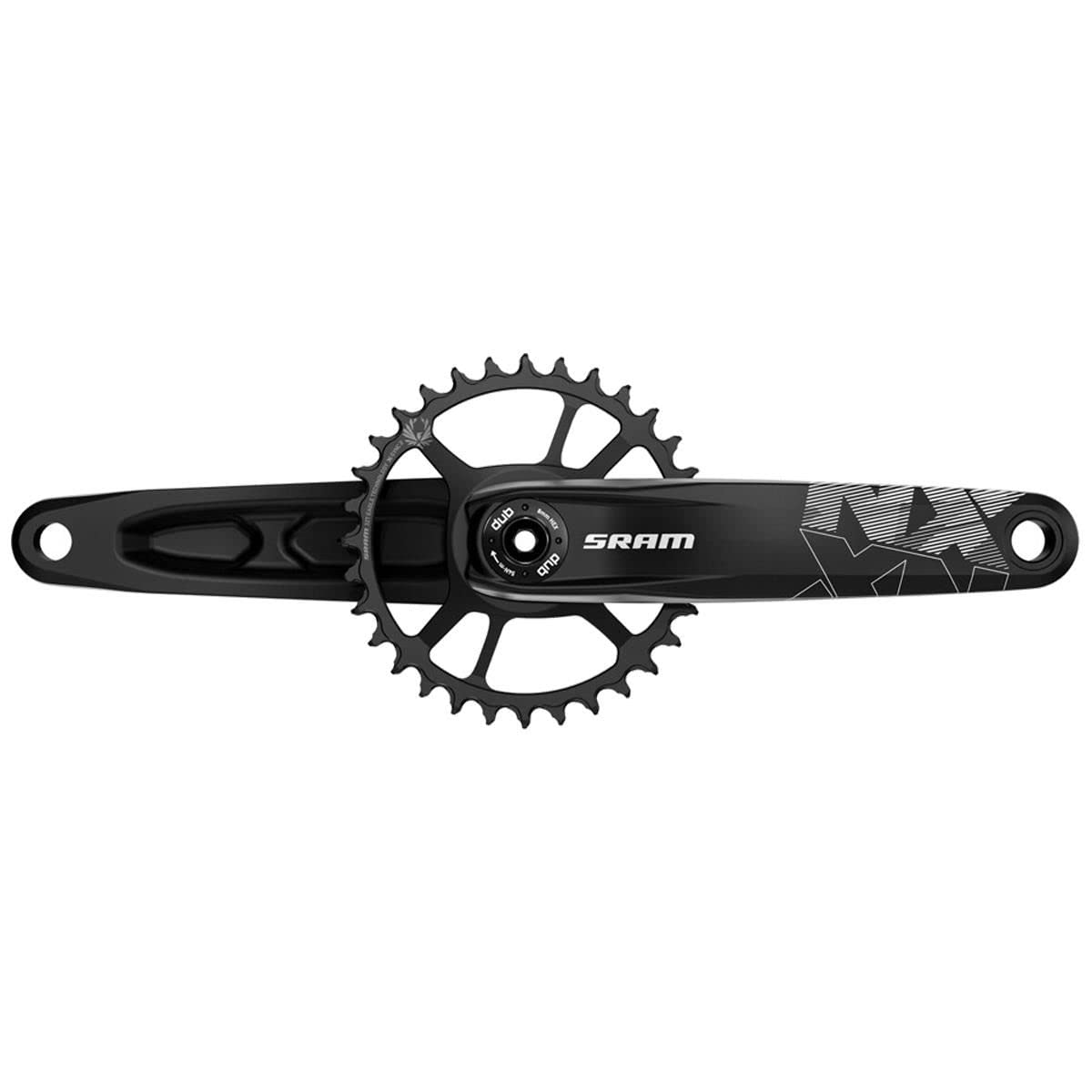
Boost 148 and DUB are the first things to check before you buy the SRAM NX Eagle. This is a 12-speed, direct-mount 32T crankset with 175mm arms, and it is built for frames using the wider Boost rear spacing and SRAM's DUB bottom bracket standard. Those details define the fit, so a modern trail bike that already uses them is the natural home. The steel chainring is worth noting: it is built for wear rather than weight savings.

We like this one for riders who want the shifting and chain retention of a current 12-speed system without stepping up to a carbon crank. The 32T size is a good all-around trail choice. The 175mm arms give a little more leverage than 170mm, which suits riders with longer legs or a preference for grinding rather than spinning. Installation is straightforward if you already have DUB tools; if you do not, add the correct bottom bracket tool to your bench.

For the right modern frame, it is the most refined crankset in this group. The steel ring and 12-speed spacing make it feel like a system rather than a collection of parts, and the direct-mount interface keeps future gearing changes simple. It rewards a rider who has already bought into the Boost/DUB standard.

Bottom line: If your trail bike already runs Boost 148 and DUB, the NX Eagle is our 12-speed upgrade pick, with a steel direct-mount 32T ring and 175mm arms.

2

THALOUS 42/34/24T Crankset

THALOUS 42/34/24T Crankset

Basic 3x8 MTBs

Our Score 9.4/10
Check Price

Worth Noting

  • Bottom bracket not included
Speeds
6, 7, 8
Chainring
42/34/24T
Interface
Square taper
Crank Arm Length
170mm
Read the full review

A 42/34/24T triple with 170mm arms is the traditional mountain bike formula, and the THALOUS crankset delivers it for riders keeping a 3x8 drivetrain alive. The forged 6061-T6 aluminum arms are a step above the cheapest stamped cranks, and the 1.50-pound weight is reasonable for a triple. The square-taper interface fits a wide range of older frames, and the 9/16-inch pedal threads are the standard size.

We see it as a replacement part rather than an upgrade. If your old crank has worn rings and you want to keep the front derailleur, this gets you back on the trail without changing the rest of the drivetrain. The 42-tooth outer ring gives useful top-end, the 24-tooth inner ring helps on climbs, and the middle 34T covers most everyday riding.

Installation is easy with the right tools, and the finish looks tidy on an older bike. The dust caps are a small detail we appreciate because they keep the crank bolt area cleaner. The 3x8 gearing is not the right choice if you want to simplify to a 1x setup.

For a basic hardtail or a city bike that still uses a triple, the THALOUS is a sensible low-cost replacement. We recommend it when the rest of the drivetrain is staying put and you want forged arms without paying for a hollow-spindle system. The standard pedal threads and familiar bolt pattern mean the rest of your parts bin still works.

Bottom line: For a 3x8 mountain bike that needs a fresh crank, the THALOUS is a straightforward replacement with forged arms and a useful 42/34/24T spread.

3

GANOPPER 152mm Crankset

GANOPPER 152mm Crankset

Short riders, kids

Our Score 9.2/10
Check Price

Worth Noting

  • 32T is the only chainring size in this variant
Weight
1.61 lb
Chainring
32T, 104 BCD
Interface
Square taper
Crank Arm Length
152mm
Read the full review

A 152mm crank arm is the whole point of this GANOPPER crankset. That shorter length reduces the circle your pedals trace, which helps shorter riders and kids reach the pedals comfortably and lowers the risk of clipping a root or rock. The 32T narrow-wide chainring and 104 BCD spider keep the setup simple, and the square-taper interface means it will fit a lot of older frames and youth bikes. The matte black finish looks clean, too.

We recommend it for a kid's 24-inch mountain bike or a short adult who has been making do with 170mm arms. The 32T ring is a good middle gear for trail riding, and the narrow-wide teeth help keep the chain on without a guide. The trade-off is chainline: the arms can sit farther out than some frames like, so check your bottom bracket spindle length before ordering. A 113mm spindle is often the safer starting point.

For an adult with average proportions, the 152mm length will feel busy and underleveraged on climbs. For the rider it is designed for, though, it is a thoughtful, affordable way to get a proper 1x crank with a shorter arm. We like that it does not treat short riders as an afterthought.

Bottom line: Kids and shorter riders get a proper 1x trail crank here: 152mm arms and a 32T narrow-wide ring that reduce pedal strikes.

4

WEEROCK 42T Crankset

WEEROCK 42T Crankset

Tall-gear 1x builds

Our Score 9.2/10
Check Price

Worth Noting

  • 42T gearing is tall for steep climbs
Mounting
104 BCD
Chainring
42T narrow-wide
Drivetrain
1x, 6-11 speed
Crank Arm Length
170mm
Read the full review

The 42-tooth narrow-wide chainring is the defining feature of the WEEROCK crankset. It gives a fast top gear, and the 170mm arms and 104 BCD mounting are familiar. The aluminum construction keeps the cost low and the finish has a clean, understated look.

We like the replaceable 104 BCD ring: when the teeth wear, you can swap the ring instead of the whole crank. The narrow-wide profile is the main reason to choose it over a cheap single-speed ring; it holds the chain better without a guide. Installation is straightforward on a square-taper bottom bracket with the right puller.

For a fast, simple 1x build on easier terrain, it is a good value and a clean-looking crank. We see it as a specialty pick rather than the default. The replaceable 104 BCD ring means you can change the gear later if your riding changes.

Bottom line: Choose the WEEROCK when you want a fast, simple 1x build on smoother terrain and can use its tall 42T narrow-wide ring with 170mm arms.

5

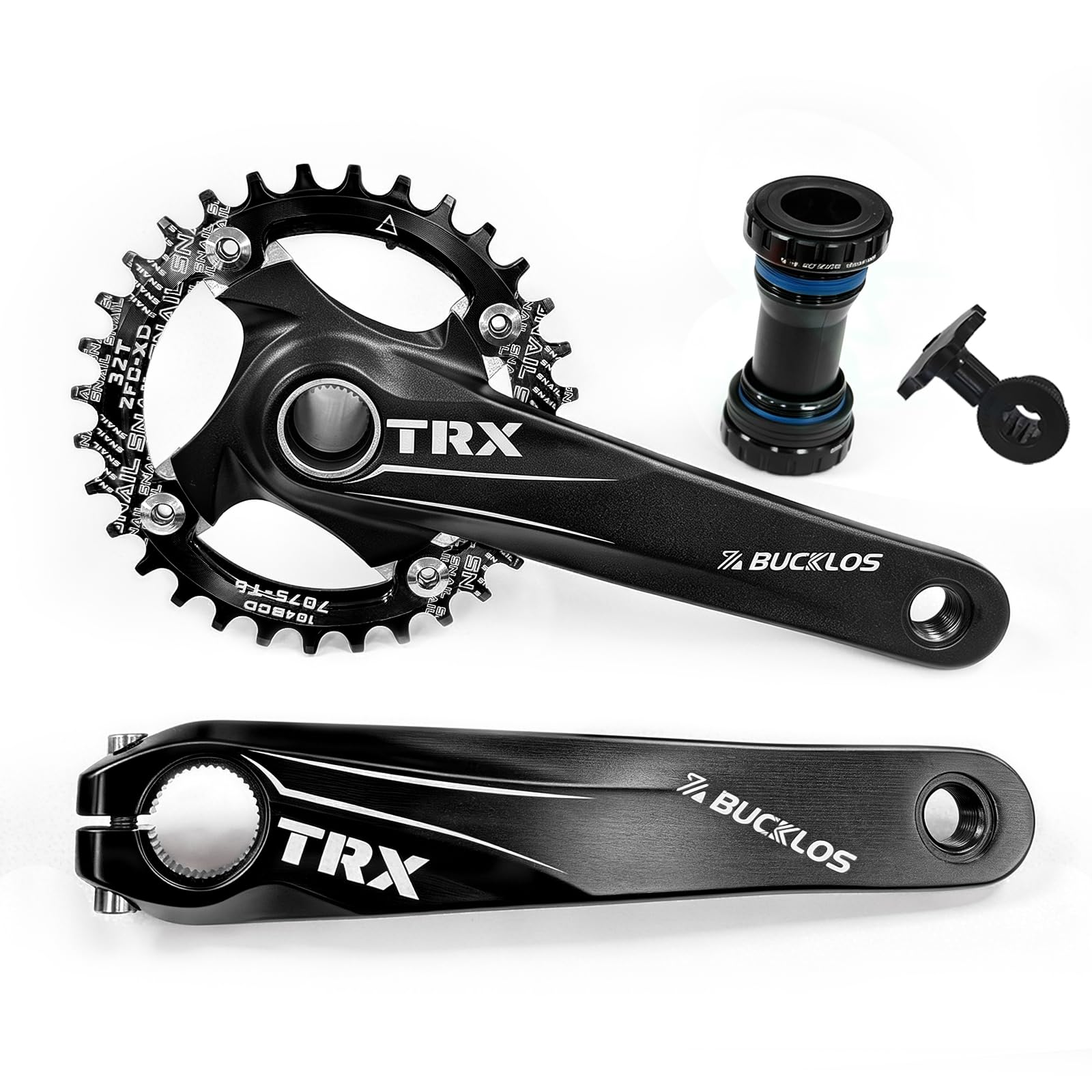
BUCKLOS 104 BCD Crankset

BUCKLOS 104 BCD Crankset

1x trail upgrade

Our Score 9.0/10
Check Price

Worth Noting

  • Single-chainring only; no 2x or 3x front shifting
Mounting
104 BCD hollow integrated
Chainring
30T-42T narrow-wide
Bottom Bracket
Threaded, 68-73mm shell
Crank Arm Length
170mm
Read the full review

A threaded bottom bracket and a narrow-wide chainring in the same box make the BUCKLOS 104 BCD crankset the easiest 1x starting point in this group. The 170mm arms, 104 BCD mounting, and 68-73mm threaded shell cover the common older trail hardtail, and the chainring range runs from 30T to 42T, so you can pick a gear that suits climbing or speed. We like that the chainring is already a narrow-wide design; it gives you chain retention without adding a guide. The crank arms are aluminum and the bottom bracket cups are included, so there is no second shopping list.

What settled this as our top pick is the combination of fit and flexibility. A lot of inexpensive 1x cranksets force one chainring size or one frame standard; this one lets you choose the ring and fits the 68-73mm threaded shells that dominate older mountain bikes. The 104 BCD interface also means you can replace the ring later without changing the arms. We did notice the bottom bracket is the part most likely to feel budget; when we spun the assembly, the bearings were smooth enough, but this is not a place to expect premium longevity. Keep the threads greased and check the cups after the first few rides.

For a 1x conversion or a worn 1x replacement, it is the most complete package here. The 170mm arm length is a sensible middle ground for trail riding, and the 104 BCD ring mount leaves room to tune the gear later.

Bottom line: Our default for most 1x trail bikes is the BUCKLOS: a narrow-wide ring, 170mm arms, and a 68-73mm threaded bottom bracket come together in one buy.

6

Shimano Altus FC-M311-L

Shimano Altus FC-M311-L

Budget 3x replacement

Our Score 9.0/10
Check Price

Worth Noting

  • 2.7 lb weight is high for a trail crank
Weight
2.7 lb
Chainring Tech
Hyperdrive SG-X
Chainring Setup
Triple with chainguard
Crank Arm Length
170mm
Read the full review

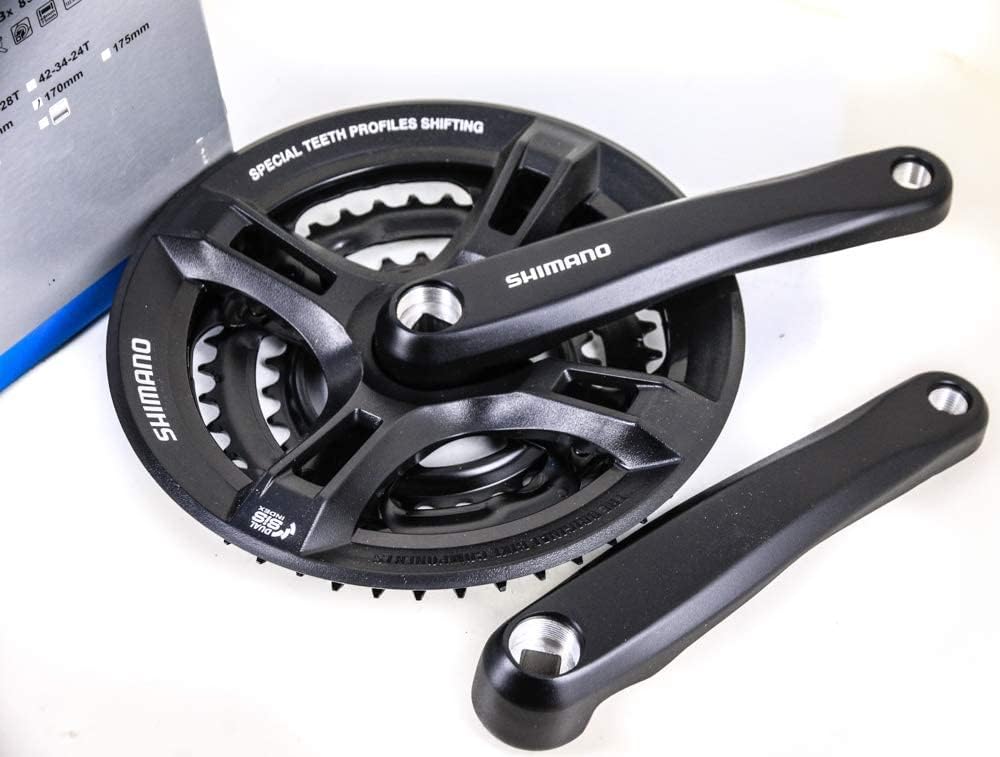
The plastic chainguard on the Shimano Altus FC-M311-L is the detail that makes it look old-school, but we think it is also the reason this crankset works so well as a commute-and-trail replacement. The guard keeps trouser legs and laces out of the rings, and the Hyperdrive SG-X chainrings are shaped for crisp front shifts. The 170mm arms and black finish give it a purposeful look, and the aluminum arms feel sturdy.

We recommend it to riders repairing a 3x mountain bike rather than converting to 1x. The 170mm length is a good fit for most adults, and the integrated guard means one less part to source. We found the front shifts clean and the guard does not rattle, which is more than we expected from a budget triple. The arms have a solid feel that inspires confidence on chunky ground.

Check the exact chainring size and bottom bracket interface on your bike before ordering. For a basic 3x rebuild, the Altus is the least fussy way to get reliable front shifting without chasing boutique parts. The plastic guard can be removed if you do not want it, but it does a good job of keeping chain oil off your leg.

Bottom line: The Altus earns our budget nod for worn 3x trail bikes because it pairs 170mm aluminum arms with a built-in chainguard and Hyperdrive rings.

7

Shimano Tourney FC-TY501

Shimano Tourney FC-TY501

Older MTB triples

Our Score 9.0/10
Check Price

Worth Noting

  • 2 lb weight is heavy beside modern 1x cranks
Speeds
6, 7, 8
Chainring
48/38/28T
Interface
Square taper JIS
Crank Arm Length
175mm
Read the full review

A 48-tooth big ring and 175mm arms give the Shimano Tourney FC-TY501 a taller, more road-like gear than most mountain bike triples. That is not a bad thing on a commuter or a lightly used trail bike: the taller gear lets you keep pedaling on smooth descents and pavement connectors, while the 28-tooth inner ring still gives you a climbing gear. The plastic chainguard and riveted rings keep the cost down, and the square-taper JIS interface fits a huge number of older bikes.

We see this as a budget fix for a 6-, 7-, or 8-speed mountain bike that has worn out its original crank. Installation is simple with a square-taper puller and the right bottom bracket tool, and the indexed shifting is precise enough for a bike of this age. The arms are aluminum and the assembly is simple, so there is less to adjust and fewer small parts to lose.

The 175mm arm length is worth a thought if you are shorter or prone to pedal strikes; it gives leverage but hangs lower than a 170mm arm. The plastic guard can be removed if you do not want it, but it does a good job of keeping chain oil off your leg. For a bike that spends most of its time on pavement and easy dirt, the gearing makes sense.

For an older hardtail used for errands, rail trails, and light singletrack, the Tourney is a dependable, low-cost way to get a complete triple back on the bike. We recommend it when the rest of the drivetrain is staying put and the budget is tight. Shorter riders should compare a 170mm crank before committing.

Bottom line: A low-cost way to put a complete triple back on an older 6-, 7-, or 8-speed mountain bike, the Tourney brings a tall 48T gear and a JIS square-taper fit.

8

BOLANY 1x Crankset

BOLANY 1x Crankset

Budget 1x builds

Our Score 8.8/10
Check Price

Worth Noting

  • Uncoated arms show scuffs readily
Material
7075 aluminum
Mounting
104 BCD, square taper
Chainring
32T, 34T, or 36T
Crank Arm Length
170mm
Read the full review

The uncoated aluminum arms on the BOLANY 1x crankset are a deliberate look, not a missed paint step. They show the raw 7075 alloy, which gives the crank a muted, industrial finish and saves the weight of a coating. We think the finish works on a simple trail build. The 104 BCD spider, 170mm arms, and 32T, 34T, or 36T chainring options cover the basics, and the narrow-wide ring is there to keep the chain on without a guide.

This is a solid choice for a rider building a simple 1x hardtail or replacing a worn square-taper crank on an older frame. The 7075 aluminum is a step up from generic 6061 in strength-to-weight terms, and the chainring options let you tune the gear without changing the arms. Installation is straightforward, and the square-taper interface keeps the cost down.

As a trail crank, it is not the lightest in this group, and the 1.1 kg package weight is a reminder that the savings come from the price, not the scale. For a casual rider or a backup bike, though, the BOLANY delivers the essentials with a finish that looks more expensive than it is.

Bottom line: A budget 1x build with a raw-metal look gets 7075 arms, a narrow-wide ring, and three chainring sizes from the BOLANY.

How We Tested Nine Mountain Bike Cranksets

We built the shortlist from three filters: a chainring between 30 and 34 teeth, a spindle standard that matched frames we already owned, and a price that didn't feel like buying a whole new bike. That left nine sets of arms, budget alloy through carbon, which we mounted on a hardtail and a 140mm trail bike. Testing ran eight months, roughly March through October, so every crank saw mud, dust, and more than one hose-down.

Installation came first, because that's where cranksets go wrong. We timed each solo install with a torque wrench, noted whether it demanded a proprietary tool or a shop visit, and re-checked bolt torque after the first 50 miles, then again at 200 and 500. Fit got judged on the bike rather than on paper: we checked chainline with a straight edge, measured Q-factor against the crank coming off, and confirmed chainstay clearance on both frames.

On the trail we counted dropped chains through the same rock garden and root section on every set, ran one particular climb two teeth apart to feel what chainring size actually changes, and listened for creak or flex during standing efforts. After eight months we pulled each crank and looked for play at the spindle, wear at the tooth tips, and scuffing on the arms — some finishes shrugged off rock strikes, others didn't. Then we weighed the cost of a replacement ring against the price of the full set. Value, in the end, came down to how rarely we had to touch them.

How to Choose Mountain Bike Cranksets

Match the interface and bottom bracket

Square-taper cranks fit a tapered spindle and are the simplest way to revive an older bike; hollow integrated cranks use outboard bearings and a through-axle, usually with a proprietary standard such as DUB. The two are not interchangeable. Before you shop, look at the bottom bracket shell and the old crank: a 68-73mm threaded shell points to a huge range of square-taper and BSA threaded options, while a press-fit or DUB frame narrows the list. If you are keeping the bottom bracket, match its spindle and interface exactly. If you are upgrading to a hollow crank, add the correct BB and installation tools to the budget.

Choose 1x, 2x, or 3x around your riding

A single chainring simplifies the front end and pairs well with a wide-range cassette, but it asks more of the rear derailleur and your legs. A 30T to 32T ring is the trail-friendly choice for steep climbs; 34T to 36T suits faster, rolling terrain; 42T is a tall gear for pavement and smooth trails. A narrow-wide tooth profile is the feature that keeps the chain on without a guide. If your bike still has a front derailleur and you want to keep it, a 2x or 3x crank is the practical route, especially on older frames.

Pick crank arm length for fit and clearance

Crank arm length changes leverage and pedal clearance. A 175mm arm gives a little more leverage and suits taller riders or those who prefer to grind; 170mm is the middle ground that fits most adults. Short riders, kids, and anyone fighting pedal strikes on a low bottom bracket should look at 152mm to 165mm arms. The difference is small on paper and obvious on the trail: too long and you catch roots, too short and you spin out sooner.

Check chainline and Boost spacing

Chainline is the straight line from the chainring to the cassette, and it affects shifting, wear, and noise. A Boost frame uses 148mm rear spacing and moves the chainring outboard; a non-Boost frame uses 142mm and needs a different offset. The bottom bracket shell matters too: 68-73mm threaded shells are common on older mountain bikes, while press-fit and DUB systems have their own dimensions. Measure the rear spacing and shell before ordering. A crankset that is technically the right BCD can still put the chain in the wrong place.

Weight, materials, and wear points

A lighter crank is nice, but the parts that end your ride are the bottom bracket bearings, the pedal threads, and the crank bolts. Aluminum arms are standard; steel chainrings last longer but add weight, while alloy rings save grams and wear faster. We prefer a modest crank with smooth bearings and clean threads to a featherweight one with a disposable bottom bracket. Check the crank bolts after the first few rides, keep the spindle greased, and replace a hooked chainring before it starts dropping the chain.

Frequently Asked Questions

Final Verdict

For most riders modernizing an older trail bike to a single chainring, the BUCKLOS is the crankset we recommend. It covers the common 68-73mm threaded frame, comes with a bottom bracket, and lets you choose a 30T to 42T narrow-wide ring. If your frame is Boost 148 with a DUB bottom bracket and you want a 12-speed drivetrain, the SRAM NX Eagle is the better match. The choice comes down to frame standard first, gearing second.