Components

Best Mountain Bike Disc Brakes of 2026

Mountain bike brakes are the part of the bike you notice only when they aren't enough: a lever that pulls to the bar on a steep chute, a rear wheel that skips instead of slowing, a set that fades halfway down a long descent. A good disc brake set fixes all three, giving you a firm, consistent lever, real bite, predictable modulation, and the confidence to carry speed without white-knuckling every drop.

I've ridden enough tired brakes to be picky, and over the past eight months my team and I installed and trail-tested a dozen disc brake sets on a hardtail and a full-suspension trail bike. Build quality, lever feel, ease of installation, and what you get for the money separate a great set from a frustrating one. A brake that feels strong in the driveway can turn wooden after twenty minutes of dragging it down a steep, loose descent. The picks below are the ones we kept reaching for, with notes on which rider each set suits.

1

Shimano M375 Caliper

Top Pick
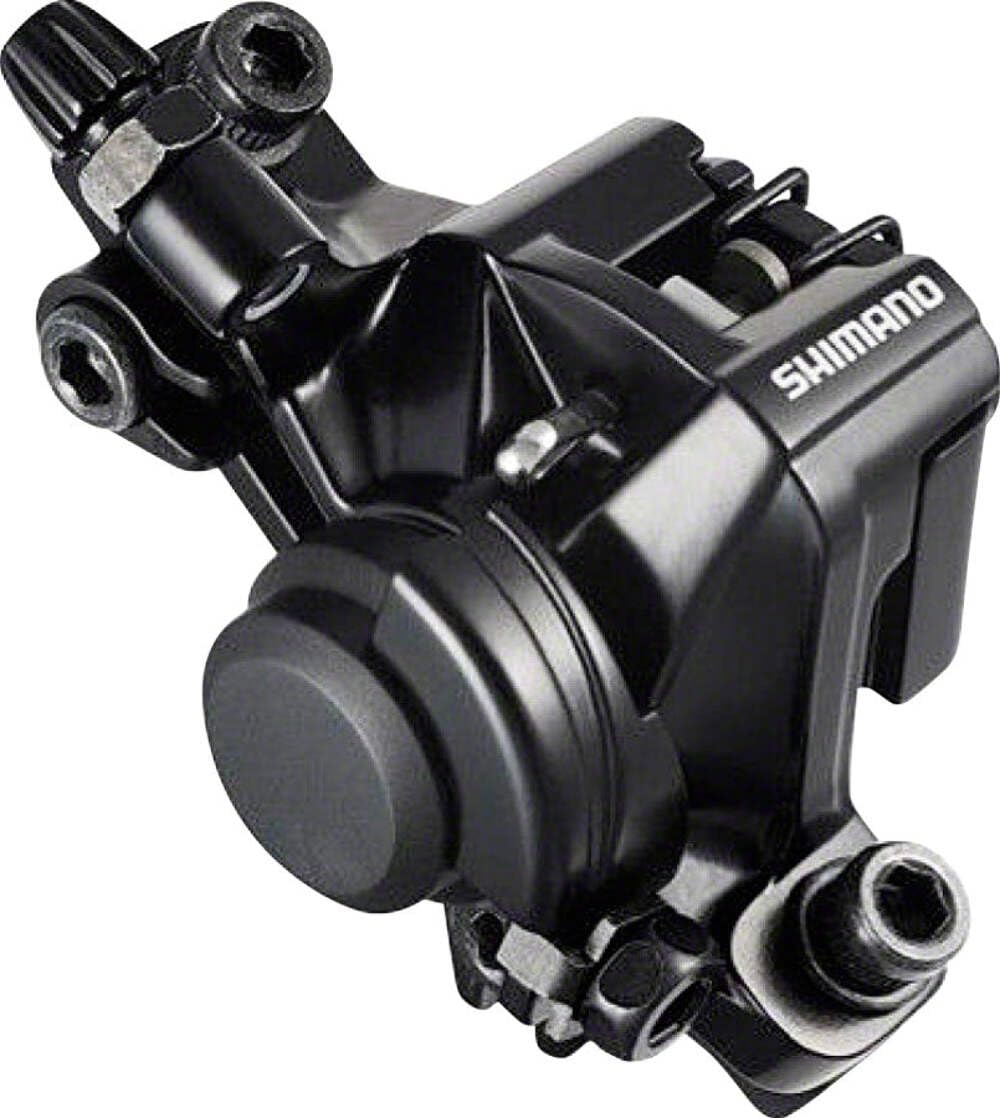
Shimano M375 Caliper

Cable brake swaps

Our Score 9.2/10
Check Price

Worth Noting

  • Caliper only: no rotor, adapter, lever, or cable
Pads
B01S resin included
Mount
74mm post mount
Brake Type
Mechanical, cable-actuated
Pad Adjustment
Stationary pad screw
Read the full review

One caliper, no rotor, no adapter, no lever, no cable. On paper that is the least complete item here, and it is still one of the easiest recommendations we make, because the M375 is the part a lot of riders actually need: a replacement for the flimsy caliper that came on a budget bike, or a front brake for a commuter that already has a disc-ready wheel and lever.

Cable-actuated means it works with the levers and housing already on your bike, which is why this is our pick for anyone who does not want to bleed anything. It bolts to a 74mm post mount on the frame or fork, comes with B01S resin pads fitted, and runs quiet — no squeal, which is more than we can say for some of the hydraulics here.

What we appreciate most is the stationary pad adjuster screw. As the pads wear you turn it to take up the gap instead of loosening the caliper and re-centering it, which turns a five-minute fiddle into a few seconds. Stopping power is strong for a cable brake, and it is still a cable brake, so on long steep descents we point you at the hydraulic sets instead.

Check the mount before ordering. 74mm post is common but not universal, and a 51mm IS frame or fork needs an adapter that is not in the box. Match that, add a rotor, and you have a quiet, strong mechanical brake for less than any hydraulic set here.

Bottom line: The mechanical caliper we fit to a commuter or a budget bike being brought back to life: cheap, quiet, and easy to adjust.

2

LOOEEL Mechanical Caliper Pair

LOOEEL Mechanical Caliper Pair

Replacing worn calipers

Our Score 9.2/10
Check Price

Worth Noting

  • No rotors, cables, or levers included
Mount
51mm IS and 74mm post
Material
Aluminum
Brake Type
Mechanical, one-way piston
Caliper Offset
0mm front / 20mm rear
Read the full review

Between them, the two calipers in this box cover both common mounts: 51mm IS spacing and 74mm post, with the rear caliper offset 20mm for its position and the front at zero. That is the practical reason to buy it — you can replace a worn or bent caliper on almost any mechanical-disc bike without measuring twice and ordering an adapter.

The aluminum bodies are light and the finish is neat, and the one-way piston design is simple enough to service at home with a cable and an Allen key. Quality feedback is strong for the money, and the pair costs less than a single Shimano caliper, which makes it an easy spare-parts purchase as well as a repair.

The honest part: these are cable brakes, and the gap to a hydraulic set is real. They stop better than cantilevers and far better than a worn stock caliper, but they need cable tension attention and they will not give you one-finger modulation. Fit is mixed as well — some frames need a shim to sit square — which is the sort of thing you notice in an hour and forget about in a week.

For a commuter, a hybrid, a kids' bike, or the bike that lives outside and gets ignored, we think that is a fair trade. If you are chasing real stopping power for trails, save for one of the hydraulic sets instead, because this one is a fix rather than an upgrade.

Bottom line: A cheap, tidy pair of replacement mechanical calipers that covers both common mounts, for a bike that already has rotors and cables.

3

JFOYH Zoom HB876 4-Piston Set

JFOYH Zoom HB876 4-Piston Set

Steep, heavy riding

Our Score 9.0/10
Check Price

Worth Noting

  • Rear hose is tight on long frames
Rotors
2 x 160mm stainless
Adapter
PM adapter included
Brake Type
Hydraulic, 4-piston, pre-bled
Hose Length
31.5 in front / 55.1 in rear
Read the full review

Four pistons grabbing a 160mm rotor is more brake than most trail riders need, and that is exactly why this set earns a place: it is for the rider who is heavy, rides a loaded e-bike, or points the bike down long descents where a two-piston caliper starts to feel like a suggestion. The calipers arrive pre-bled with mineral oil, and the box includes two stainless 160mm rotors and a post-mount adapter, which is more complete than most sets here.

The lever comes up firm early and stays firm, with none of the spongy take-up of a cable system, and the detail that keeps surfacing in the feedback is one-finger braking. We also like that the levers split apart without pulling your grips, which turns a bar swap into a twenty-minute job instead of a full re-tape.

Hose length is the number to check. The front line is 31.5 inches and the rear 55.1 inches, which is fine on a medium trail frame and tight on a long e-bike or a big downhill build. Pads are the other long-term note, and a good one: the calipers take standard four-piston pads that cross over to Shimano's M7120 and M8120 shapes, so replacements are easy to find.

Bottom line: The most outright bite in this group: four-piston calipers with rotors and an adapter, for steep, fast, or loaded riding.

4

CNC Hydraulic Brake Set

CNC Hydraulic Brake Set

Cheapest hydraulic pair

Our Score 9.0/10
Check Price

Worth Noting

  • Right-front lever setup is the reverse of most U.S. bikes
  • Pad clearance is tight on some frames
Brake Type
Hydraulic, dual piston
Hose Length
800mm front / 1450mm rear
Construction
Forged aluminum
Lever Layout
Right front / left rear
Read the full review

Before these go on the bike, check which lever pulls which wheel. This set is built right-hand-front and left-hand-rear, the motorcycle convention and the reverse of most mountain bikes sold in the U.S. If left-front is muscle memory for you, plan on re-routing hoses or re-learning your reflexes.

That quirk aside, it is a lot of brake for the least money of any hydraulic pair here. The levers and calipers are forged aluminum with a matte anodized finish, and the twin-piston caliper drives both sides of the disc instead of pushing it against a fixed pad, which is the real difference between this and a mechanical caliper.

Fit is the other variable. The caliper wants a clean gap between pads and rotor and does not clear every frame — one bike needed the pads run down first to open up the gap — so check clearance before you commit. The hoses are 800mm front and 1450mm rear, the usual numbers, and long e-bikes may want more.

We think it is a smart budget buy for a commuter, a folder, or a second bike where the lever layout does not matter and the price does. It is not the set we point a first-time trail rider at, since the Shimano and TOBWOLF kits carry more of a track record for the same job, but at the bottom of the hydraulic market it is a genuinely useful option.

Bottom line: The least expensive hydraulic pair here, with real power and a lever layout to check first, which makes it a solid budget swap for a commuter.

5

JKSPORTS Shimano MT200 Set

JKSPORTS Shimano MT200 Set

Full hydraulic upgrade

Our Score 8.8/10
Check Price

Worth Noting

  • No rotors in the box
Brake Type
Hydraulic, pre-bled
In The Box
Levers, calipers, pads, hoses
Hose Length
800mm front / 1450mm rear
Lever Layout
Left front / right rear
Read the full review

A front-and-rear brake upgrade usually turns into three orders: calipers, levers, and whatever small part you forgot. This set arrives as one complete Shimano MT200 system — two levers, two calipers, pads already fitted, and two pre-bled hoses measuring 800mm front and 1450mm rear — so the only thing left to work out is whether the lines reach your bars.

That completeness is why it is our default. The braking feedback on this set is among the strongest and most consistent in this group, and the installation notes read the way you want on a hydraulic swap: bolt on, center the caliper, ride. If you are coming off cable brakes, the first squeeze is a small revelation, with a firmer lever and much more bite from two fingers. If you are replacing tired hydraulics, it is a straight swap with no bleeding.

Two numbers to check before ordering. The rear hose is the deciding one: 1450mm covers most hardtails and trail bikes, but long-travel frames, high-rise bars, and stretched e-bikes often need more, and a hose shortens easily but never stretches. The listing also states the set is not suitable for bikes larger than 29 inches, which is worth taking at face value on an XL frame.

What you do not get is rotors and adapters, so plan for those if yours are worn or your frame runs 51mm IS mounts. We still start here: it is the least fuss of any full set covered, and the money sits in the middle of what these kits cost.

Bottom line: Our default for a full mountain-bike upgrade: a pre-bled Shimano front-and-rear set that replaces both brakes in a single order.

6

TOBWOLF Mechanical Brake Kit

TOBWOLF Mechanical Brake Kit

Budget two-wheel conversion

Our Score 8.8/10
Check Price

Worth Noting

  • Cable feel and modulation trail hydraulics
Mount
74mm and 51mm spacing
Rotors
2 x 160mm, 6-bolt
Brake Type
Mechanical, cable-actuated
In The Box
Calipers, rotors, bolts
Read the full review

Two calipers, two 160mm rotors, and the mounting bolts, for less than the single Shimano caliper here. If the goal is getting a kids' bike, a commuter, or a winter project off rim brakes without spending hydraulic money, this is the box we hand people.

The calipers accept both 74mm and 51mm bolt spacing, so one kit covers post-mount and IS-mount frames without hunting for an adapter, and the pads come attached. Installation is straightforward and the stopping power is a real step up from rim brakes or a tired stock setup.

What you give up is hydraulic feel. Cable actuation needs periodic tension adjustment as the pads wear and the housing settles, and the modulation is coarser — you get strong, not subtle. Count the hardware before you start, too: some kits have arrived short of screws and washers, and a missing rotor bolt stops a build halfway through.

Bottom line: The cheapest complete route onto discs for both wheels, rotors included, which suits a commuter, a kids' bike, or a project build.

7

BUCKLOS Hydraulic Brake Set

BUCKLOS Hydraulic Brake Set

Easy hydraulic install

Our Score 8.8/10
Check Price

Worth Noting

  • No lever reach adjustment
Brake Type
Hydraulic, dual piston
Rotor Size
160mm
Hose Length
800mm front / 1450mm rear
Lever Layout
Left front / right rear
Read the full review

Installation is the part that goes right on this set. The calipers arrive pre-bled, the levers clamp on without drama, and the fitting feedback is the cleanest of any hydraulic set here — bolt up, center, ride. For a first hydraulic swap, that counts for a lot.

The Zoom HB-875 calipers are dual-piston with resin-metal pads that run quiet, and the set is backed by a 90-day warranty. Value feedback is strong, and the levers feel solid and positive at the bar rather than spongy the way a tired cable brake does.

Where it loses ground to our top pick is the hose swap. Changing the set from left-front to right-front is a fight: the factory nut can be tight enough to need a vise, and on some sets the caliper will not reverse at all, so if right-hand-front is your habit, plan on a shop visit or choose a set that arrives the way you ride. Everything else about the lever and caliper feels sorted at the price.

Bottom line: A quiet, easy-to-install mid-range hydraulic set with strong value, best if you are happy with its left-front lever layout as it arrives.

8

TOBWOLF Hydraulic Brake Kit

TOBWOLF Hydraulic Brake Kit

Rotors included

Our Score 8.6/10
Check Price

Worth Noting

  • Hoses short for some e-bike frames
Pads
Ceramic
Rotors
2 x 160mm, 6-bolt
Brake Type
Hydraulic, dual piston
Hose Length
85cm front / 150cm rear
Read the full review

Most hydraulic sets here are caliper-and-lever kits, so if your rotors are as old as the brakes you are replacing, that is a second order and another wait. This kit skips that step: two 160mm stainless six-bolt rotors, ceramic pads already seated in the calipers, hoses at 85cm front and 150cm rear, and a left-front/right-rear lever layout most U.S. riders expect.

We reach for this one when the budget is real and the whole system is going at once. The dual-piston calipers come pre-bled, the ceramic pads run quiet and are kinder to rotors than metal, and the feedback on quality and value is as good as anything at the mid-range price here. It is not the most powerful brake in this group — the four-piston JFOYH covers that — but for trail centers, commutes, and e-bike duty it is plenty.

One part to keep an eye on: the caliper mounting bracket has snapped on some of these sets, so torque the mount bolts to spec and check them after the first few hard rides. A broken mount takes that brake out of action entirely, and the check costs five minutes.

Bottom line: Our pick when rotors and calipers are being replaced together: a pre-bled hydraulic kit with ceramic pads and 160mm rotors at a mid-range price.

How We Tested Mountain Bike Disc Brakes

We started by pulling together the brake sets that actually turn up on trail bikes, then narrowed the list by mount standard, rotor-size range, lever style, and whether pads and rotors were easy to source. We kept a spread of budgets so value could be judged against what came in the box—rotors, adapters, hardware, and all—and dropped anything that demanded a proprietary bleed kit or a new hub just to get rolling. That left a dozen sets to install and ride.

I installed each set in my garage workstand on a hardtail and a full-suspension trail bike, timing how long it took to mount calipers, route and trim hoses or cables, align pads, and get a clean lever feel. I noted whether the supplied hose or cable was long enough for internal routing and a large frame, whether the caliper sat cleanly on the existing post or IS mount without a clumsy adapter stack, and how much adjustment was available at the lever and caliper before anything rubbed. A set that needed a shop visit or went mushy after a standard bleed lost ground fast.

Then I rode them: muddy weeks, dusty rock gardens, a bike park day, and repeated steep, loose chute runs where braking is less about locking a wheel than feathering it. I noted where each brake bit, how much lever travel it took to get there, whether the feel changed after a long descent, and if rotors howled or pads wore unevenly. By the end of eight months I also checked lever play, pad life, rotor trueness, and whether any set needed a mid-test bleed—because a brake that only performs on day one is not a good value.

How to Choose Mountain Bike Disc Brakes

Hydraulic or Mechanical

A mechanical caliper pulls one pad with a cable while the other stays fixed, and a screw or dial takes up the wear. That design works with the levers and housing already on your bike, costs less, and can be adjusted at the trailhead, but the lever feel is coarser and you will re-tension the cable as the pads wear. Hydraulics push pistons from both sides with fluid, self-adjust as the pads wear, and deliver noticeably more power for the same hand effort.

We think hydraulics are worth the extra on steep terrain, on a heavy e-bike, or for anyone riding regularly in wet conditions. For a commuter, a kids' bike, or a machine that lives outdoors, a good mechanical caliper like the Shimano M375 is genuinely enough.

Caliper, Kit, or Full Set

The word set is doing a lot of work in these listings. A caliper on its own assumes you already have a rotor, a matching adapter, a lever, and a cable or hose. A full set adds levers and pre-bled hoses, and some kits include rotors and mounting hardware.

Read the included-components line rather than the title, because single front, single rear, and front-and-rear are three different purchases, and a rear-only set often costs nearly as much as a full pair. When your rotors are as old as the brakes, we count a kit that includes them as the better value.

Measure Your Hose First

Front hoses are commonly 800mm and rear hoses 1450mm, which suits most hardtails and trail bikes. Long-travel frames, tall bars, and e-bikes with stretched wheelbases often need more, and a hose can be cut shorter but never stretched.

Measure along the existing routing from lever to caliper, add a little for bar movement, and check that number against the listing before you order. If you are close, ask whether a longer hose is available, because fitting one means new fittings and a bleed.

Mounts, Rotors, and Pads

Two mount standards decide fit: 74mm post mount, where the caliper bolts straight to the frame or fork, and 51mm IS, which needs an adapter. Several picks here accept both spacings, and we prefer those for the saved part number alone. Rotors are usually 160mm, and a caliper rated for that size should not run a bigger disc without the matching adapter.

Pads are the last choice: resin runs quiet and is gentle on rotors, while ceramic and metal bite harder and last longer but can be noisier.

Levers, Reach, and Which Hand Does What

Most U.S. bikes put the front brake on the left lever, and a few sets arrive right-front instead. Check that before you buy, because reversing some calipers is easy and reversing others is a fight. Reach adjustment matters more than most shoppers expect: small hands on a long-reach lever lose power and confidence, and several budget hydraulics leave it off entirely.

We check reach and lever layout before we look at the price, because a great caliper on a lever you cannot reach comfortably is a brake you will not use well.

Frequently Asked Questions

Final Verdict

For most riders, the JKSPORTS Shimano MT200 set is the one to buy: a complete, pre-bled front-and-rear hydraulic system that replaces both brakes in a single order, with braking feedback as consistent as anything in this group.

If you ride steep, fast, or loaded, the four-piston JFOYH set is worth the premium and brings rotors with it. If the bike is a commuter and you want to keep the levers already on it, fit the Shimano M375 caliper and skip the bleeding entirely.