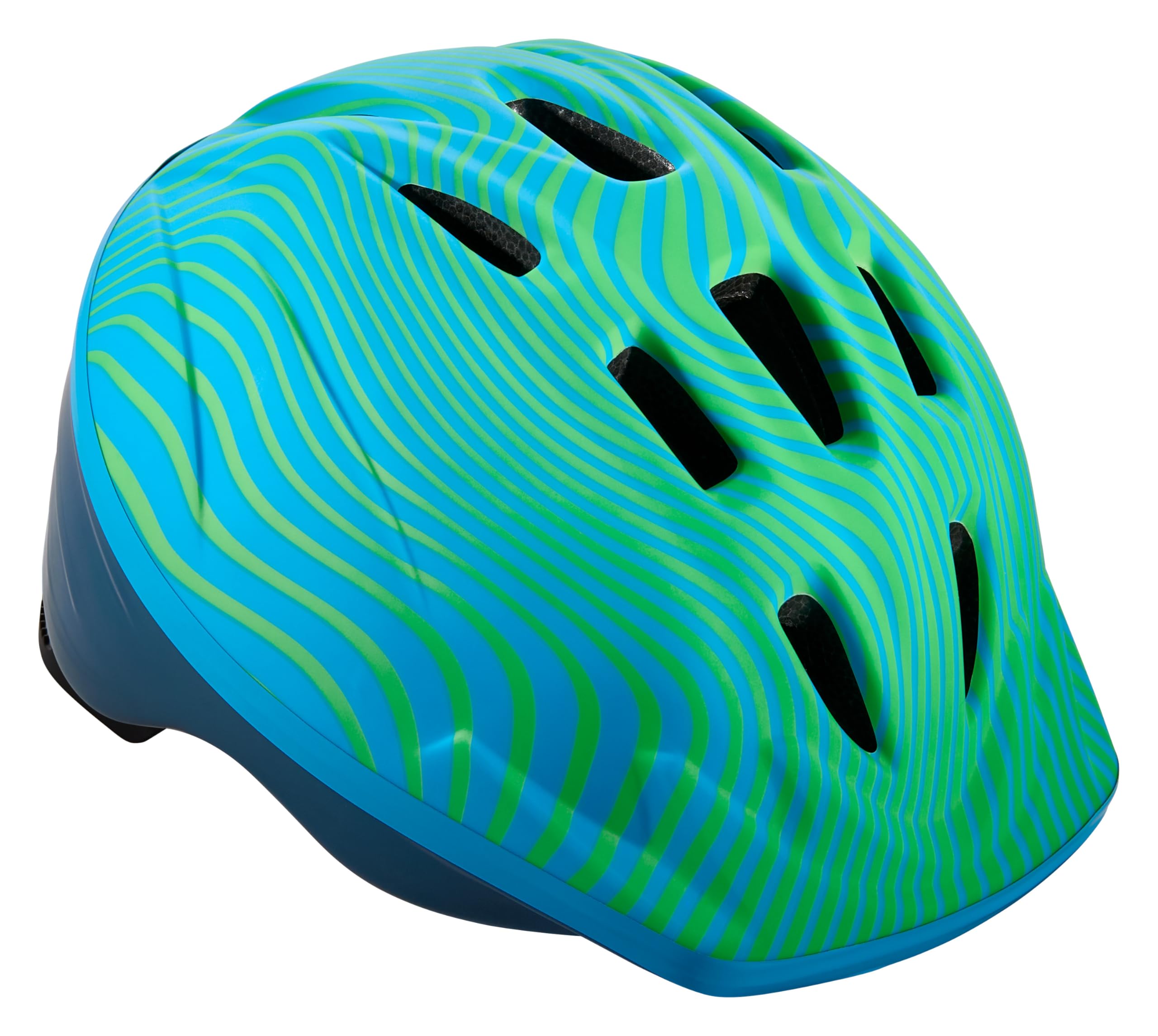
Helmets

Best Toddler Bike Helmets of 2026

A toddler helmet has one job, and it's hard: protect a soft head while surviving the tantrum that comes with putting it on. The wrong one pinches under the chin, slides over the eyes, or feels so heavy that your kid arches their back the second you reach for the strap. The right one disappears—they forget it's there and keep pedaling. That's the balance I was chasing: real protection without a daily fight.

Over the past four months, my team and I tested 14 toddler helmets with kids from 18 months to 4 years old on balance bikes, trikes, and scooters. Fit and adjustability mattered more than any single safety badge—a helmet that shifts when they look down isn't protecting much. We also learned that toddler-friendly isn't a marketing word: it's whether a kid will actually leave it on for a full lap around the block, and appearance plays a bigger role than you'd think. The picks below stayed put, adjusted without a fight, and held up to being dropped on the driveway.

1

GLAF Baby Bike Helmet

Top Pick
GLAF Baby Bike Helmet

Smallest riders

Our Score 9.6/10
Check Price

Worth Noting

  • Range ends at 51 cm
Vents
14
Weight
8.48 oz
Fit Range
46-51 cm (XS)
Safety Standard
CPSC, age 1+ extended coverage
Read the full review

A helmet for a one-year-old has one job before any other: it has to be light enough that a small neck is not fighting it. At 8.48 ounces this is the lightest shell in the group, and its XS size is built for 46-51 cm heads, the smallest range here alongside the XJD. That is the window where a first helmet usually gets bought, and it is also the window most helmets skip past on their way to school-age sizing.

The rest is sensible rather than fancy. A spin dial at the back takes up slack as the head grows, the straps adjust at the sides and under the chin, and 14 vents keep air moving on a warm afternoon. It is certified to the CPSC bicycle helmet standard for age one and older with extended head coverage, which is exactly the certification you want on a shell this small.

The catch is the range itself. Forty-six to 51 centimeters is a first-helmet window, not a long-term one, and a child measuring 50 cm today will reach the ceiling within a year or so. If you are buying for a two-year-old with an average head, the 48-52 cm Schwinn will last longer. For a genuine one-year-old, the smaller shell is the whole point.

Bottom line: Start here if your child is one and small: a 46-51 cm shell under nine ounces that a toddler can forget they are wearing.

2

Raskullz Mohawk Helmet

Raskullz Mohawk Helmet

Reluctant wearers

Our Score 9.6/10
Check Price

Worth Noting

  • 0.37 kg is heavy for the smallest riders
Weight
13.1 oz
Fit Range
48-52 cm
Construction
PVC shell, EPS foam
Safety Standards
CPSC age 1+; ASTM multi-sport
Read the full review

A helmet a child asks for is worth more than one you have to argue about, and that is the entire case for the Mohawk. A black rubber mohawk runs front to back, the shell is printed with a T-Rex skeleton, and the spikes light up, which turns safety equipment into something a child wants to put on. That is not a small thing when the alternative is a daily negotiation at the front door.

Under the gimmick the numbers are sound: 48-52 cm, recommended for ages three to five, adjustable straps, and CPSC certification for age one and older with extended head coverage, plus ASTM compliance for multi-sport use. The build is a PVC shell over EPS foam, the standard pairing, and the mohawk is soft rubber, so it bends rather than snaps when it gets shoved into a bag.

One thing to go in with your eyes open. The light in the mohawk runs for a short burst rather than the whole outing, so treat it as a visibility flourish rather than a light, and do not count on it to do the work a rear reflector would.

Bottom line: For the child who refuses helmets, this one wins the argument: a light-up mohawk on a 48-52 cm shell that meets bicycle and multi-sport standards.

3

Radio Flyer Kids Helmet

Radio Flyer Kids Helmet

Bigger toddlers

Our Score 9.6/10
Check Price

Worth Noting

  • Runs large for small two-year-olds
  • Heaviest helmet here at 14.4 oz
Sizing
One size, ages 2-5
Weight
14.4 oz
Fit System
Interior adjuster and chin strap
Safety Standard
Meets U.S. kids' bike helmet standard
Read the full review

One size, ages two to five, and it runs large at the bottom of that. A small two-year-old will swim in it; a three- or four-year-old gets a shell with real room to grow into. If your child is right at the two-year mark, measure first and expect to wait a season, because a helmet that starts out oversized is a helmet that sits too high on the forehead.

The fit comes from an interior adjuster plus a chin strap with an easy buckle, and the shell meets the U.S. safety standard for kids' bike helmets. It is a simpler system than the rear dials elsewhere in this guide, with fewer moving parts to work loose over a season of daily use.

The look is the other half of the appeal: a matte red finish that matches a Radio Flyer trike or wagon, with the clean lines of a proper bike helmet rather than a character lid. For a family that already has the trike in the garage, it is the version a child recognises as theirs.

What earns it a runner-up place is growth. The single shell has more room in it than the 48-52 cm helmets, which means the money stretches across two or three seasons instead of one, and the adjuster takes up the slack in between. It is the pick for the family buying once for a three-year-old who will hand it down.

Bottom line: Best for a bigger toddler: one size that runs large at two but leaves room to grow, with the simplest fit system in this group.

4

Schwinn Classic Kids Helmet

Schwinn Classic Kids Helmet

Ages 1-3

Our Score 9.4/10
Check Price

Worth Noting

  • Sizing stops at 52 cm
Weight
10.2 oz
Fit Range
48-52 cm
Fit System
360-degree dial with full-range padding
Safety Standard
CPSC, age 1+ extended coverage
Read the full review

Forty-eight to 52 centimeters is the number to check first. That is the head circumference the Schwinn Classic is built around, and it covers most one- to three-year-olds, the years when a helmet stops being a novelty and becomes something a child wears on a balance bike or in a seat behind you. Several helmets in this group start at 50 cm and run upward, which leaves the smaller heads at the bottom of the range. This one is shaped small from the outset, and it carries CPSC certification for riders age one and older with extended coverage down the back of the head.

The rear dial is what makes the sizing work in practice. It adjusts through 360 degrees, so you can set the shell on your child's head and tighten it there rather than guessing at it in your hand, and the padding runs the full inside of the shell instead of sitting in a couple of strips. We think that combination, a genuinely small shell plus an on-the-head dial, is why this is the easiest helmet here to get level and keep level.

Two practical notes. The inner padding is held in with Velcro and can work free of the shell, so press it back into place before each ride; it is a five-second check. And 52 cm is where the sizing stops, so a child already measuring 51 cm will get a season or two out of it before you are shopping again.

The built-in brim earns its keep on bright rides, shading a seated toddler's eyes, and it is the sort of detail you notice only once the sun is in them. Set against the rest of this group, it is also one of the least expensive helmets that still carries age-one certification, which means nothing here is being spent on a character graphic.

Bottom line: For most toddlers this is the one we point to: a 48-52 cm shell certified for age one, with a dial that tightens around a small head.

5

Joovy Noodle Kids Helmet

Joovy Noodle Kids Helmet

Long rides

Our Score 9.4/10
Check Price

Worth Noting

  • Chin strap can slip out of its clip
Vents
14
Weight
9.76 oz
Fit System
Adjustable-fit dial
Comfort Features
Pinch guard, bug mesh, visor
Read the full review

The colorway marked red arrives light pink. If the child in question has opinions about pink, that is worth knowing before the box is open; if not, it is a cheerful shade that looks good against the black straps. In a category where the helmet is often the thing being negotiated over, the color is not a trivial detail.

The design is where this one separates itself. There is a pinch guard on the chin strap so skin stays out of the buckle, an integrated bug mesh across the front vents that stops the helmet becoming a fly trap at the park, and a built-in visor for low sun. Fourteen vents push air through, and at 9.76 ounces it is light enough for a long afternoon.

We think the comfort package is the reason to buy it. A child who is uncomfortable spends the whole ride pushing the helmet forward, and a pinch guard, soft strap ends and a visor remove the three things toddlers actually complain about. The adjustable dial means it grows with them as well, which is why it sits near the top of this group rather than the bottom.

Measure before you order, though. The Medium size does not publish a centimeter range, so the fit chart and a tape measure do the work a spec sheet would do elsewhere, and that tape measure settles a between-sizes question faster than an age label ever will.

Bottom line: The toddler helmet we hand to a child who fights headgear: a pinch guard, bug mesh and a visor make it easier to keep on, and the dial buys a few years.

6

XJD Toddler Bike Helmet

XJD Toddler Bike Helmet

First helmet

Our Score 9.4/10
Check Price

Worth Noting

  • Rear dial and band are the weak point
Vents
14, with front bug mesh
Lining
Removable and breathable
Weight
8.8 oz
Fit Range
46-51 cm (X-Small)
Read the full review

Small heads are the reason to look at this one. The X-Small is built for 46-51 cm, and the line runs down to a 44-48 cm size below it, so this is one of the few toddler helmets that will genuinely sit on a one-year-old rather than perch on top. At 8.8 ounces it is among the lightest here as well, which matters more than vent count when the wearer weighs about twenty pounds.

The build is an ABS shell over EPS foam with 14 vents, including mesh-backed front vents that keep bugs out of the padding, plus a breathable foam lining you can pull out and wash. The rear dial and adjustable straps handle the fit as the head grows, and the whole thing is put together the way a bike helmet should be: hard shell outside, crushable foam inside.

Where it gives ground is the hardware. The rear dial and the band it tightens are the parts that draw trouble, and when something goes on this helmet, that is what goes. Turn the dial gently rather than cranking it down hard, and buy from a seller with a return window so a stiff mechanism can go back rather than become the reason the helmet stays in the closet.

Bottom line: The pick for a genuinely small one-year-old: a 46-51 cm shell under nine ounces, and the least expensive helmet in this group.

7

Anharluka Kids Bike Helmet

Anharluka Kids Bike Helmet

Fine-tuning fit

Our Score 9.4/10
Check Price

Worth Noting

  • Starts at 50 cm, too big for small two-year-olds
Pads
Two sets, 7 mm and 10 mm
Vents
11
Fit Range
50-54 cm (Small)
Safety Standard
CPSC, age 1+ extended coverage
Read the full review

Two sets of pads, 7 mm and 10 mm, come in the box. That sounds like a spare part; it is actually the most useful fitting tool here. A dial changes the circumference of the band around the head, but pads change where the shell sits and how much it rocks, which is exactly the problem with a helmet that is a half size too big for the child wearing it.

The rest is competitive: a printed polycarbonate shell over EPS foam, 11 vents, a rear dial and adjustable chin straps, and CPSC certification for age one and older with extended head coverage. The dinosaur design is printed into the shell rather than applied as a sticker, so it does not peel at the first sign of a puddle.

The Small starts at 50 cm, which puts it out of reach for a small two-year-old, and the foam liner is the part to check on arrival. Press it into the shell before the first ride and make sure it is seated evenly all the way around, because a liner that sits proud at the back will tip the helmet forward on the child's head.

Where it earns a place is the combination of pads and a dial. Between them you can take up slack on a head that measures between sizes, which is the most common reason a toddler's helmet ends up tilted back with the forehead exposed. If your child sits at the very bottom of the range, a smaller shell does the job better than extra padding ever will.

Bottom line: Buy it if your child is between sizes: two pad thicknesses plus a dial let you take up slack that a dial alone cannot.

8

OUWOER Kids Bike Helmet

OUWOER Kids Bike Helmet

Hand-me-down range

Our Score 9.2/10
Check Price

Worth Noting

  • No manufacturer warranty
Vents
11
Fit Range
48-54 cm (Small)
Construction
ABS shell, EPS foam
Safety Standard
CPSC bicycle helmet standard
Read the full review

Forty-eight to 54 centimeters is a wide spread for a single shell, and that is the pitch: this is the helmet that can start on a two-year-old and still fit a seven-year-old. If you want one purchase per child rather than one per stage, the Small covers more ground than anything else in this group.

Construction is an ABS shell over EPS foam with 11 vents, and the fit comes from a rear dial plus adjustable straps. Nothing exotic, and nothing precious about it, which is roughly what you want from a helmet that will live in a bike basket and get dropped on the pavement twice a week.

The catch is at the edges of the range. A child measuring 48 or 49 cm sits at the very bottom of the Small, and a helmet at the limit of its dial feels loose or sits oddly long before the head is actually too big for it. Our advice is to buy this one when the measurement lands nearer the middle of the range, and to check when it arrives that the dial still has slack left to give.

Watch the straps as well. They can work loose over a ride, so a quick tug at the adjusters before setting off is worth the ten seconds it takes. Do that and the wide range makes sense; skip it and the shell ends up pushed back on the head, which is where it does the least good.

Bottom line: A do-everything family helmet: the Small spans 48-54 cm, so it moves from toddler to school age, provided you keep an eye on the dial and straps.

How We Tested Toddler Bike Helmets

We started with a shortlist of 30 helmets sold for toddlers, filtered by size range, price, and whether the shell sat low enough to cover the back of the head. That left 14. Over four months, we rotated them among five families with kids aged 18 months to 4 years, using them on balance bikes, trikes, and scooters.

Each helmet got a Saturday-morning driveway session and at least two longer rides on the sidewalk or park path. Before every ride, we did a shake test: buckle the chin strap, have the kid look down, and see if the helmet slid forward over the eyebrows. We adjusted the dial and straps one-handed while holding a wiggling toddler, noting whether the buckles pinched skin or the straps twisted. A helmet that needed two hands and a calm child lost points fast.

We also checked quality up close: shell thickness, padding that stayed put after washing, and straps that didn't fray. Durability meant dropping each helmet onto concrete and tossing it into a diaper bag repeatedly. Appearance was easy—we watched which colors the kids reached for and which helmets they tried to take off. For the models with a rear light, we timed how long it ran on a full charge and whether it was bright enough to see from 20 feet.

Safety was never a single score. We looked for a secure fit that didn't shift when a kid shook their head, a buckle they couldn't undo themselves, and ventilation that kept them from overheating. Toddler-friendly came down to small things: no pinching, a visor that didn't block their view, and a helmet they'd forget they were wearing. The ones that passed all of that are the ones we'd put on our own kids again.

How to Choose Toddler Bike Helmets

Measure the head, then read the range

Run a soft tape just above the eyebrows and around the widest part of the head, and write the number down. Helmets are sold in ranges, and the number that matters is where your child sits inside one. A 48-52 cm shell has two years of use in it for a child measuring 48.5 cm and about one season for a child measuring 51.5 cm.

The bottom of a range is the part shoppers skip. A helmet that starts at 50 cm will not sit level on a small two-year-old no matter how far the dial tightens, and that is why the GLAF and XJD shells start lower than most of this group. Buy for the head you have today, not the one you expect in two years.

Read the certification line, not the age on the box

A helmet sold for cycling in the U.S. should carry a CPSC bicycle helmet statement. The wording to look for on a toddler helmet is certification for persons age 1 and older with extended head coverage, which is the standard applied to smaller shells with more protection at the back.

A helmet whose certification reads age 5 and older was tested for a bigger head, even if the graphic on it appeals to a three-year-old. Multi-sport claims do not replace the bicycle statement either, so check the label before the first ride rather than after.

How the fit actually happens: dial, straps, pads

A rear dial changes the circumference of the band around the head; pads change where the shell sits and how much it rocks. That distinction is why the Anharluka's two pad thicknesses matter more than they sound, and why a helmet with a dial alone can still tilt back on a child between sizes.

Then the straps: they should form a V just under each ear with roughly a finger of slack under the chin, and the shell should stay level when your child shakes their head. If getting it there takes two adults and a countdown, the shell is probably the wrong size rather than badly adjusted.

Weight, vents and the daily negotiation

This group runs from about 8.5 ounces to 14.4 ounces, and the difference lands hardest on the youngest riders. Under about eighteen months, a light shell is worth more than a printed one; by three or four, a child can carry the extra weight of a bigger, more protective build without complaining.

Vents and bug mesh matter more than they look on a hot afternoon, and so does a helmet the child actually likes. A light-up mohawk or a dinosaur print is not a compromise on safety if the certification and the fit are right; it is the reason the helmet stays on for the whole ride.

Frequently Asked Questions

Final Verdict

The Schwinn Classic is the helmet we point most toddler parents to. A 48-52 cm shell with age-one certification covers the years when first helmets get bought, and the rear dial makes a correct fit achievable on a child who will not hold still for a strap adjustment.

If your one-year-old is on the small side, start with the GLAF and its 46-51 cm shell instead. And if the daily battle is getting a helmet on at all, the Raskullz mohawk ends that argument faster than any specification will.