Cycling Shoes

Best Winter Mountain Bike Shoes of 2026

Every winter ride has a moment where your feet stop being feet. Mine comes about forty minutes in, on a frosty climb where the descent that follows turns my toes into blocks of wood and no amount of wiggling brings them back. Winter mountain bike shoes are supposed to push that moment past the end of the ride, and the good ones manage it without turning pedaling into a vague, mushy feeling or leaving you tiptoeing across an icy parking lot.

I've ridden through cold, salty, wet months for years, and over the last eight months my team and I have put a dozen pairs through slush, frost, and the mud that follows. What surprised me wasn't the insulation. It's how much sizing and fit vary from one model to the next, and how fast a cheap closure gives up once it's packed with grit. The picks below are the ones that stayed warm, held their shape, and felt like money well spent.

1

Five Ten Freerider Pro Mid

Top Pick
Five Ten Freerider Pro Mid

Mid-cut coverage

Our Score 9.2/10
Check Price

Worth Noting

  • Narrow toe box
Cut
Mid-top
Fit
Snug
Weight
2.43 lb
Sole Feel
Stiff
Read the full review

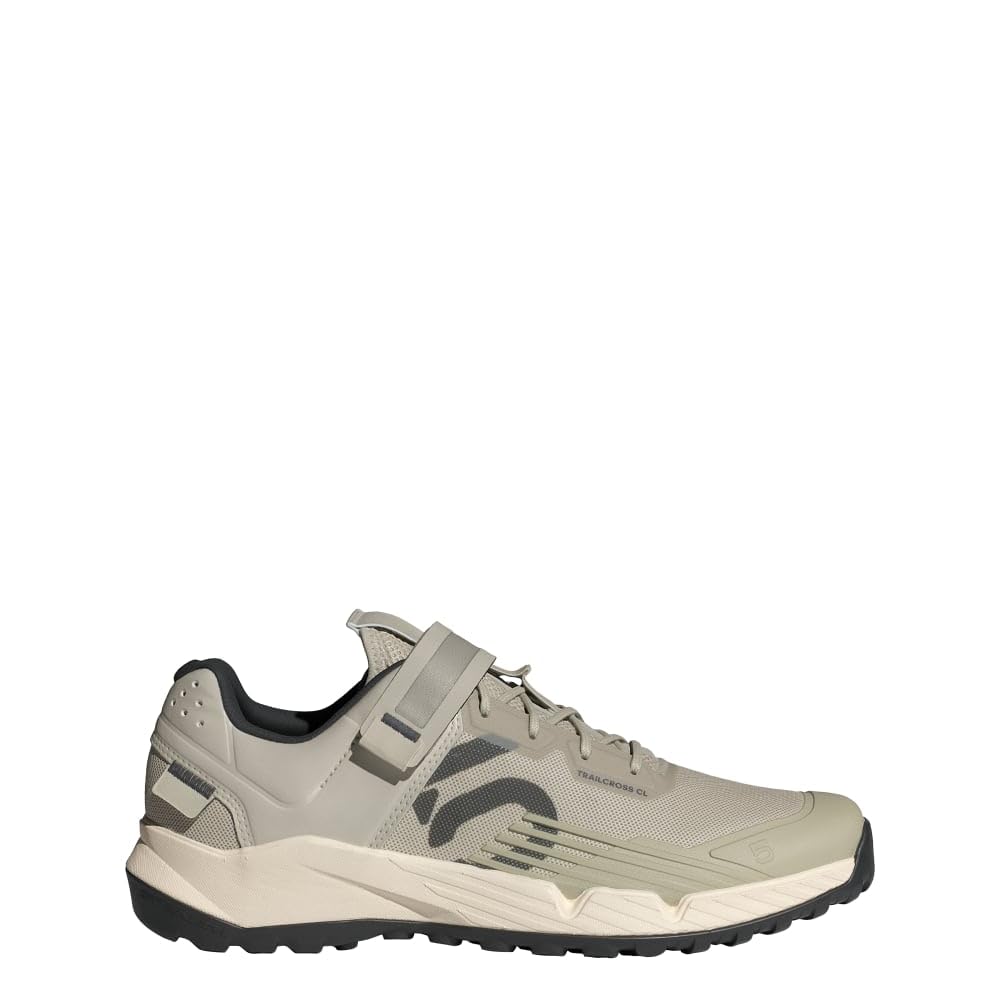
The mid-cut collar is the reason this one stays on our winter list. It adds coverage around the ankle, which matters on cold days when spray comes off the trail. The shoe is also built around a stiff sole that transfers power without feeling like a plank when you walk. We like that balance for cold-weather trail riding, where you might pedal hard and then scramble over a wet root section.

The build feels durable, and the casual look is a bonus if you wear your riding shoes off the bike. The mid-cut collar adds coverage without making the shoe feel bulky. The shoe is listed at 2.43 pounds, which is on the heavier side for a trail shoe but not unreasonable for the coverage.

For cold, dry rides where ankle coverage and a stiff, walkable sole matter, the Freerider Pro Mid is a strong option. It's not our first choice for wet weather; the Rincon's water-resistant upper is the better bet there. The thin metal plates under the footbed are a small detail we appreciated for keeping grit out.

Bottom line: The Freerider Pro Mid is our pick for cold-weather riders who want ankle coverage and a stiff, walkable sole in a casual-looking shoe.

2

Giro Rincon

Giro Rincon

Wet winter trails

Our Score 8.8/10
Check Price

Worth Noting

  • Upper can wear faster than expected
Sole
Nylon and glass fiber
Closure
BOA L6 dial
Water Resistance
Water Resistant
Cleat Compatibility
3/2-bolt
Read the full review

The Rincon's water-resistant upper and BOA dial are the combination we trust when the trail is wet and the temperature is low enough to make every stop feel like a negotiation. The upper gives you a useful buffer against spray and puddles without turning the shoe into a sweaty boot. We like the dial because it's easy to tighten or loosen on the fly, especially when cold hands make laces feel like a chore.

The sole is injection-molded nylon and glass fiber, with over-molded heel and toe pads. On the pedals, that translates to a stiff, efficient feel; off the bike, it's still walkable enough for short hike-a-bike sections. The 3/2-bolt pattern works with common mountain bike cleat setups, and the reflective details are a small bonus for gray winter commutes.

The fit is the thing to get right. This is a closer, more race-oriented shape than a roomy winter boot, and the upper can feel narrow across the foot. If you're between sizes or plan to wear thicker socks, go up. For most riders, that close fit is a fair trade for the efficient pedaling feel, as long as you get the size right.

Bottom line: For wet, cold trail rides, the Rincon is the winter shoe we recommend first: water-resistant, dial-adjustable, and stiff enough to pedal efficiently.

3

Crankbrothers Stamp Lace

Crankbrothers Stamp Lace

Flat-pedal grip

Our Score 8.8/10
Check Price

Worth Noting

  • Sole durability can be uneven
Closure
Lace-up
Pedal Type
Flat
Lace Storage
Hide-away pocket
Read the full review

The Stamp Lace's flat-pedal grip and lace pocket are the two details that make it our flat-pedal pick for winter. The rubber sole and tread pattern hold onto pedal pins, and the lace-up upper gives you a secure fit without a dial to fiddle with. The hide-away lace pocket is the detail we didn't expect to care about: it keeps the laces out of the chain and mud.

The shoe is sturdy and comfortable enough to wear off the bike, which matters when winter rides include a coffee stop or a walk to the trailhead. The sole feels solid without being a plank, and the shape is stable on the pedals. Sizing is the trap: this one runs small, so go up if you're between sizes or plan to wear thicker socks.

For flat-pedal trail riding, the Stamp Lace gives you the grip and tidy details we want in a winter shoe. The fit and ride feel are right for aggressive trail use, and the lace pocket keeps the upper clean. The navy-and-gum colorway is the one we like most, and it looks less like a dedicated cycling shoe than the race-oriented picks.

Bottom line: For flat pedals, the Stamp Lace is the winter shoe we choose when grip matters more than cleats: sticky, secure, and tidy.

4

Giro Ranger

Giro Ranger

Budget winter rides

Our Score 8.6/10
Check Price

Worth Noting

  • Snug fit can press on a high instep
Sole
Nylon plate
Closure
Three straps
Water Resistance
Water Resistant
Cleat Compatibility
2-bolt
Read the full review

The Ranger is proof that a winter-ready shoe doesn't have to be a premium purchase. Its water-resistant upper is the feature that earns it a place here, and the three-strap closure gives you a wide range of adjustment without a dial or laces. We like that for winter because you can fine-tune the fit around thicker socks and then leave it alone.

The nylon plate is stiff enough to feel efficient on the pedals, and the dual-injected rubber outsole gives you something to walk on when the trail turns into a hike. The shoe is listed at 1.4 pounds, which is reasonable for a trail shoe with this much coverage. It's not a plush cruiser, but the three straps let you dial in the fit. We think that's the right trade-off for a budget trail shoe.

For a first winter shoe, a spare pair, or a budget build, the Ranger covers the essentials: water resistance, a secure three-strap fit, and a sole that doesn't fold under power. It's the pair we keep as a spare for quick rides and friends who need a loaner.

Bottom line: The Ranger is our budget pick for wet winter rides: water-resistant, easy to adjust, and stiff enough to pedal without feeling disposable.

5

Tommaso Montagna

Tommaso Montagna

Wide-foot value

Our Score 8.6/10
Check Price

Worth Noting

  • Durability of straps and sole can be uneven
Cleats
Not included
Closure
Three hook-and-loop straps
Cleat Compatibility
SPD
Read the full review

The Montagna is the one we point to when a rider needs room across the toes without paying premium money. It's built for SPD pedals and gravel or trail riding, and the three hook-and-loop straps are easy to adjust on the fly. We like that for winter because you can open the shoe up, get your foot in, and tighten it down without fighting a wet lace.

The shoe is easy to put on and take off, and the upper feels sturdy for the price. The fit is not a guarantee: it's roomy for some wide feet and narrow for others, so use the size chart and expect to exchange if you're between sizes.

For dry cold rides, wide feet, and SPD setups, the Montagna is a useful value pick. It's not our first choice for a wet-weather epic, but it gives you a roomy option that's simple to live with. The cleats are not included, so factor that into the setup.

Bottom line: The Montagna is our wide-fit value pick: SPD-ready, easy to strap in, and roomy for riders who struggle with narrow shoes.

6

Shimano SH-MX100

Shimano SH-MX100

Easy on/off

Our Score 8.2/10
Check Price

Worth Noting

  • Runs small and narrow
Use
Multi-use off-road
Closure
Velcro straps
Pedal Type
Clipless
Read the full review

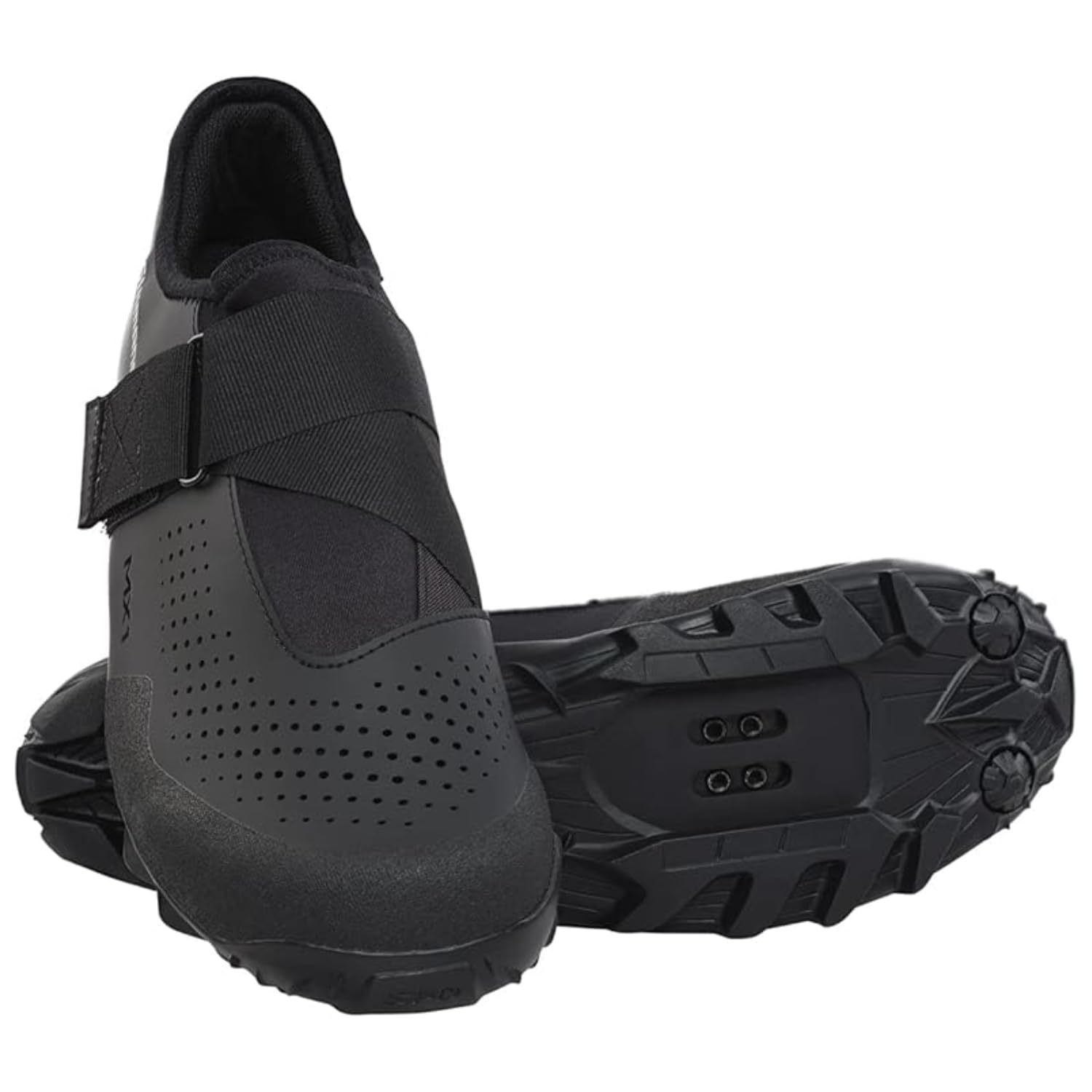
The MX100's velcro straps and walkable sole are the reason we hand it to someone who wants to get out the door without a fight. The straps are simple to adjust, even with cold hands, and the multi-use off-road design is easy to live with. It's a clipless shoe, so you get the pedaling efficiency of a mountain bike shoe, but the walkable sole makes it feel less specialized than a race shoe.

We like the comfort for longer rides; the shoe is easy to put on and take off, and the cleats attach without drama. The value is strong, too. The velcro is simple, but it doesn't offer the micro-adjustment of a dial.

For quick winter laps, mixed-surface rides, and riders who want a straightforward clipless shoe, the MX100 does the job. It's not the most refined shoe here, and the closure is basic, but the simplicity is the point. The upper has a little stretch, which helps when you pull them on with cold hands.

Bottom line: The MX100 is our easy-on winter pick: simple straps, a walkable sole, and a price that leaves room for warm socks.

How We Tested Winter Mountain Bike Shoes

To build the shortlist, we filtered out anything that wasn't genuinely built for cold riding. We looked at published temperature ratings where brands offered them, the closure system (ratchets, dials, laces, straps), whether the shoe was two-bolt clipless compatible, and how the price sat against the materials. That cut the field to twelve pairs, running from budget to premium, because value was one of the things we most wanted to measure — a well-made pair that survives two winters beats a cheap one that splits a seam in March.

Testing ran from late October into early June, so we got real frost, real slush, and a great deal of mud. Every pair went on pre-dawn trail loops, a wet commute, and at least one hike-a-bike up an icy fire road. We also did the unglamorous work: stood in puddles, hosed each shoe down afterward, and left them overnight in a cold garage to see how they dried and whether they still flexed in the morning.

Fit and sizing got the closest attention, since that's where most riders get burned. We measured each insole against its stated size and against the tester's regular summer shoes; several ran a half size short, and one pinched badly across the toe box. We clipped in and out more than a hundred times, half of those wearing winter gloves, to see how workable the closures were with cold, clumsy hands. Comfort got judged on long rides and on the walk back across a frozen lot, durability on seams, sole stiffness, and whether the closures still clicked cleanly after eight months of grit. As for appearance, we noted how each pair looked out of the box and again after a season of mud, salt, and scuffs.

How to Choose Winter Mountain Bike Shoes

Prioritize weather protection over insulation

For wet winter riding, a water-resistant upper is the most useful feature you can buy. It won't keep you dry in a river crossing, but it buys time against spray, puddles, and road grit. The Giro Rincon and Ranger are the two picks here with water-resistant uppers, and that's why they lead our wet-weather recommendations. Insulation is harder to judge from a listing; if you ride in deep cold, look for a mid-cut collar and enough room for the socks you actually wear. A snug shoe with no air space feels colder, not warmer.

Match the shoe to your pedals

The shoe has to match the pedal, not the other way around. If you ride clipless, choose a two-bolt mountain bike shoe with a recessed cleat so you can walk without clacking. If you ride flat pedals, choose a flat-specific sole with a sticky rubber compound and a tread that lets the pins bite. The Crankbrothers Stamp Lace is the flat-pedal pick here; the Giro and Shimano options are clipless. Don't buy a flat shoe for a clipless pedal or a cleated shoe for a flat pedal and expect a happy winter.

Fit for winter socks, not just summer feet

A winter shoe has to fit the sock, not just the foot. Start with your normal size, then check toe room with the thickest sock you'll ride in. You want a secure heel and a toe box that doesn't pinch, with enough room to wiggle. A close-fitting race shoe can be fine in summer and miserable in winter. If you're between sizes, going up half a size is usually safer than squeezing into a tight shoe and cutting off circulation.

Balance stiffness with walkability

A stiff sole puts power into the pedal, but winter riding often includes walking: a muddy portage, a slick root, a closed gate. Look for a sole that is stiff through the pedaling platform but has enough rubber and tread to walk safely. The Rincon's nylon and glass fiber sole is the most pedal-focused here; the Ranger's rubber outsole gives up a little stiffness for traction. If your rides are mostly hike-a-bike, favor grip over race stiffness. If you never leave the saddle, favor the stiffer shoe.

Frequently Asked Questions

Final Verdict

For most winter mountain bikers, the Giro Rincon is the shoe we recommend first. It has the combination that matters most in cold, wet conditions: a water-resistant upper, a dial that's easy to adjust, and a sole that stays efficient on the pedals. It's not a winter boot, and the fit runs close, but it's the most complete package here for riders who want to keep riding through the wet months.

If the budget is tighter, the Giro Ranger gives you water resistance and a stiff plate for less. If you ride flat pedals, the Crankbrothers Stamp Lace is the one to choose for grip. Start with the Rincon unless your pedals or your feet send you to one of those alternatives.