Cycling Shoes

Best Winter Road Cycling Shoes of 2026

The first truly cold ride of the season is an honest test of your gear. Cold toes can ruin a good base ride, and a bulky shoe that feels vague on the pedals makes every climb feel like a negotiation. A proper winter road shoe keeps your feet warm and dry without turning the pedal stroke into a mushy compromise, and it should still fit cleanly with the socks you actually wear in January. That’s the balance I went looking for.

Over eight months, my team and I logged rides in nine pairs, from damp dawn spins to long gray base miles and the coffee-stop walk across a wet parking lot. Warmth and waterproofing were obvious priorities, but fit and sizing separated the keepers from the compromises—especially once thick wool socks entered the picture. I also paid attention to zippers that jam with cold hands, seams that fray after road spray, and soles that stay stiff enough to feel efficient. Looks are nice, but value and durability matter more when you’re buying for winter.

1

Giro Cadet

Top Pick
Giro Cadet

Mild wet days

Our Score 9.0/10
Check Price

Worth Noting

  • Can feel narrow for wider feet
Closure
BOA L6 dial
Outsole
Carbon composite
Visibility
Reflective details
Water Resistance
Water resistant
Read the full review

The Cadet is not a winter shoe in the insulated sense, and we do not want to pretend otherwise. It is a water-resistant road shoe with reflective details, a BOA L6 dial, and a carbon composite outsole—the kind of shoe that makes sense for damp, mild winter rides when a fully insulated boot would feel like overkill.

What we like is how easy it is to live with. The BOA L6 dial gives finer adjustment than a strap, and the carbon composite outsole is stiff enough to feel efficient without being a race-only plank. The water-resistant upper handles road spray and light rain, though it is not a sealed winter shell.

The reflective details are the kind of thing you notice only when headlights catch them, and that is exactly when they matter on a winter commute. For a damp, mild ride, this is the road shoe we prefer.

Bottom line: For mild, wet winter rides on a road bike, the Cadet is the easier shoe to live with—water-resistant, reflective, and stiff.

2

Fizik Tempo Overcurve R5

Fizik Tempo Overcurve R5

Dry cold rides

Our Score 9.0/10
Check Price

Worth Noting

  • Not water resistant
Upper
Microtex
Closure
Bungee
Outsole
R5 nylon composite
Water Resistance
Not water resistant
Read the full review

The Overcurve R5 is the one we keep for dry, cold rides: a road shoe with a supple Microtex upper, an asymmetrical wrap over the top of the foot, and a nylon composite sole that is stiff enough to pedal but not punishing. It is a different approach from the Fizik Modern Winter: this one is built to feel comfortable with a winter sock, and the difference is obvious the moment you pull it on.

At 8.5 ounces, it keeps the weight down, and the simple bungee closure has less to fumble with than a dial when your hands are cold. There is no dial to freeze up or wire to snag, which is a small thing until you are trying to get a shoe on with numb fingers. The R5 nylon sole gives up a little snap to the carbon-soled shoes here, but it is easier to live with on a long winter base ride. We also like the shape of the Overcurve wrap: it pulls across the top of the foot without the pressure point you can get from a straight strap, and the Microtex upper has a soft, broken-in feel from the first ride.

The supple upper and low weight make it an easy shoe to keep on for a long, dry base ride. It is the one we choose when the sky is clear and the temperature is low.

Bottom line: For dry, cold rides, the Overcurve R5 is a comfortable, roomy road shoe with a supple upper and a balanced nylon sole.

3

Fizik Modern Winter

Fizik Modern Winter

Cold, wet rides

Our Score 8.0/10
Check Price

Worth Noting

  • Too insulated for mild, wet days
Closure
Internal speed lacing
Outsole
Carbon composite
Insulation
Fleece-lined insole with aluminum foil underside
Waterproof Upper
Waterproof outer with waterproof zip
Read the full review

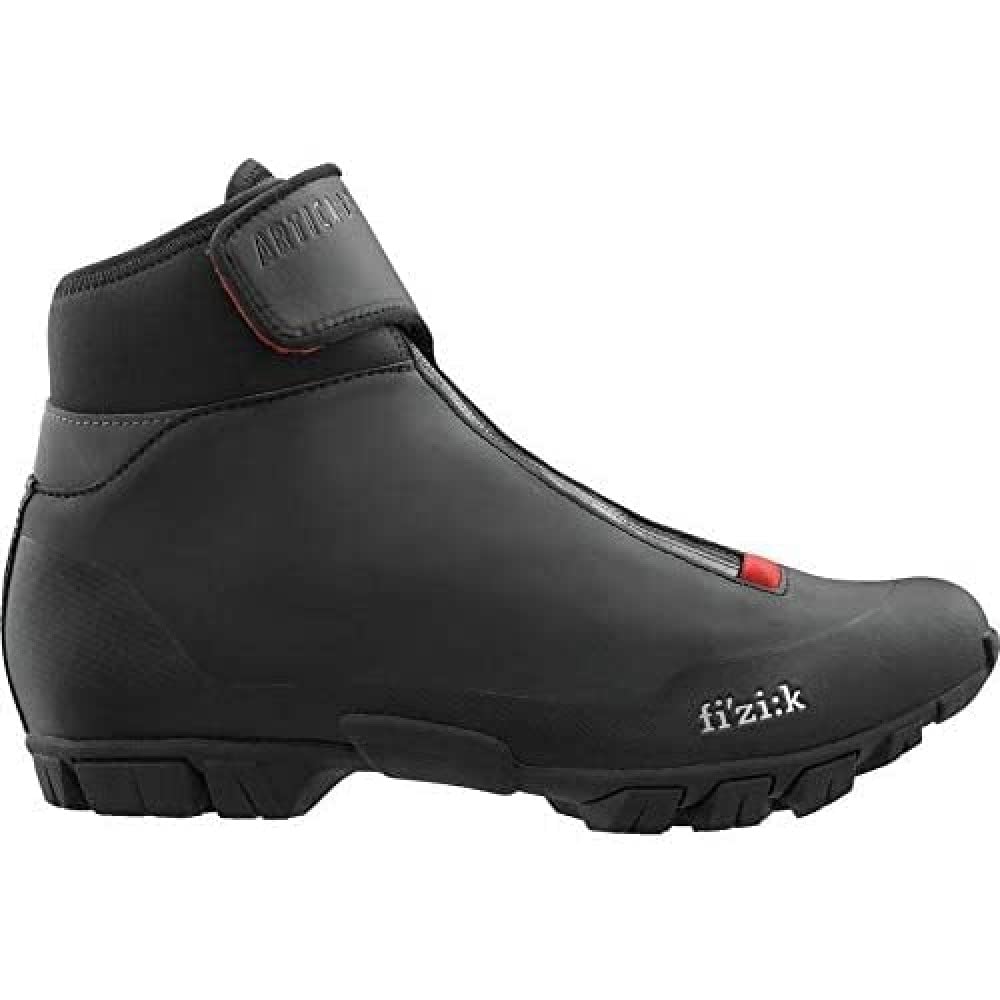
The first thing we look for in a winter road shoe is a closure that does not leave a wet tongue flapping, and this Fizik is the only shoe here built around that idea. The waterproof outer runs into a waterproof zip, and the insole gets a fleece lining with an aluminum foil underside. That combination is why it is our top pick for genuinely cold, wet rides: it does winter work at the places where a regular road shoe leaks heat and water.

The carbon composite outsole gives it a stiff, efficient feel at the pedals, and the rubber treads mean you are not skating across a wet café floor or a cold gas-station forecourt. We also appreciate that the speed-lacing system is protected under the waterproof zip rather than sitting exposed on the tongue. It is a practical winter design, not a road shoe with a thicker sock.

The catch is compatibility. The product page does not spell out the cleat standard, so check the drilling against your road pedals before you order; that is the one thing we cannot settle from the spec sheet. If you want a shoe you can order without that check, the Giro Cadet below is the safer bet.

Bottom line: For genuinely cold, wet road rides, this is the winter shoe we reach for—waterproof zip, insulated insole, carbon sole—as long as you confirm the cleat drilling first.

How We Tested Winter Road Cycling Shoes

We built the shortlist from winter-specific road shoes sold by brands we trust, filtering for insulated uppers, waterproof membranes, road-cleat compatibility, and soles stiff enough for training and racing. I narrowed that to nine pairs available in a useful size range and spread across the category’s price tiers. Testing ran for eight months, from late fall through early spring, with every pair ridden through cold dawn spins, wet road spray, and long base miles.

On the bike, I noted when toes went cold, whether water crept through seams or around the closures, and how much the sole flexed under hard efforts and steady climbing. Off the bike, I walked through wet parking lots and cafe stops to see how the soles wore and how easy the shoes were to pull on and off with cold, stiff hands. I tested fit with thin summer socks and thick wool socks, compared sizing across brands, and watched for heel lift, toe-box room, and hot spots.

Zippers and closure systems got their own scrutiny: I zipped and unzipped each pair with gloves on, checked for snags, and noted whether the storm flap stayed put. After wet rides, I cleaned and inspected the uppers for scuffs, seam separation, and how the finish held up over the months. At the end, I weighed what each pair delivered against its price and asked whether the quality justified the outlay.

How to Choose Winter Road Cycling Shoes

Match the shoe to your winter

Winter means different things in different places. A damp, mild climate calls for a water-resistant road shoe with reflective details, while freezing rain and long wet rides need a sealed upper, a waterproof zip, and an insulated insole. We do not buy a fully insulated shoe for a mild winter any more than we buy a vented summer shoe for sleet. The Fizik Modern Winter is the only shoe here built for the cold, wet end; the Giro Cadet is the better match for mild, damp days.

Check cleat compatibility before anything else

A winter shoe is only useful if it works with your pedals. Road bikes usually use a three-bolt cleat, but winter-specific shoes can use a different drilling, and the product page may not spell it out. Before ordering, match the shoe's cleat pattern to your pedal system and check that the mounting slots have enough fore-aft range. The Fizik Modern Winter is the one here where we confirm that detail first.

Leave room for winter socks

A shoe that fits perfectly in summer can pinch once you add a wool sock. Look for a roomy toe box and a closure that still has adjustment left when the sock is on. We prefer a little extra room to a tight shoe that restricts circulation, which is the opposite of what cold feet need. The Overcurve R5's supple upper is more forgiving; the Cadet is the one to try on if your feet run wide.

Insulation, closures, and visibility

Insulation is not just a thicker sock. A fleece-lined insole with a reflective foil underside is a simple way to hold heat, and a waterproof zip keeps the opening from becoming a wet spot. Closures matter too: a dial is easy to fine-tune, but a simple strap or speed lace can be easier to manage with cold hands. Reflective details are worth having on short winter days, especially if your ride finishes in the dark.

Sole stiffness and off-bike grip

A stiff sole transfers power, but winter riding often includes wet stops and a walk across a parking lot. A carbon composite outsole with rubber treads gives you road efficiency without making every stop feel like a skating rink. If you never leave the pedals, a nylon sole is comfortable and forgiving; if your winter route includes café stops and ferries, prioritize the tread.

Frequently Asked Questions

Final Verdict

If you ride through genuine cold and wet, the Fizik Modern Winter is the one we recommend first. It is the only shoe here built around a waterproof zip and an insulated insole, and the carbon sole and rubber treads keep it feeling like a road shoe at the pedals and more secure at wet stops. Confirm the cleat drilling before you order.

If your winter is mostly damp and mild, the Giro Cadet is the easier, more breathable choice. If it is dry and cold, the Overcurve R5 is the comfortable one, as long as you keep it for clear days.